


What Is Prostate Cancer?
Prostate cancer begins in the prostate gland, which is a small organ found only in males. The disease develops when abnormal cells within the prostate start to divide in an uncontrolled manner, eventually forming a lump or tumour. Prostate cancer is one of the most common cancers among men. In the UK alone, around 48,600 men are diagnosed with it every year.
One of the most important things to understand is that many prostate cancers grow very slowly. They may take decades to cause any symptoms or health problems. As a result, far more men have prostate cancer than die from it. In fact, a significant number of men pass away from other causes without ever knowing they had the disease. However, some prostate cancers are aggressive. They can grow and spread quickly, which makes early detection vital.
Origin of the Prostate
The prostate is an essential part of the male reproductive system. It is situated just below the bladder and in front of the rectum (back passage). The gland is typically about the size of a walnut and surrounds the urethra, the tube that carries urine and semen out of the body.
The main function of the prostate is to produce a fluid that nourishes and transports sperm. During ejaculation, the prostate secretes this fluid, which makes up the majority of the semen volume. Although the gland is small, it contains between 30 and 50 individual glands that empty into the urethra through a network of ducts. The prostate becomes fully active at puberty, when it begins to produce its secretions under the influence of male hormones.
Causes of Prostate Cancer
Doctors and researchers do not yet know the exact cause of prostate cancer. However, several factors have been identified that significantly increase a man’s risk of developing the disease.
Age is the strongest risk factor. Prostate cancer is uncommon in men under 50, but the chance of developing it rises sharply after age 65. Family history also plays a major role. Men whose close relatives (such as a father or brother) have had prostate cancer are at a higher risk. The risk is even greater if multiple family members have been affected or if the cancer occurred at a younger age.
Black men are at a particularly high risk. Around one in four Black men will develop prostate cancer in their lifetime. Black men are twice as likely to die from the disease as white men, and they are often diagnosed at a younger age and with more advanced disease. The reasons for this disparity are not fully understood, but research suggests a combination of biological, genetic, and socioeconomic factors. Studies have found that prostate cancers in men of African descent are biologically distinct from those in other populations.
Other factors that may increase risk include obesity, a diet high in processed foods, and smoking. Living in a deprived neighbourhood, which is often linked to chronic stress and poorer access to healthcare, has also been associated with higher prostate cancer risk.
Symptoms of Prostate Cancer
One of the most challenging aspects of prostate cancer is that it usually causes no symptoms in its early stages. This is why regular screening is so important, especially for Black men.
When symptoms do occur, they are often related to problems with urination. This is because the cancer may grow large enough to press on the urethra. Common urinary symptoms include needing to urinate more frequently, particularly at night; difficulty starting to urinate; a weak or interrupted urine flow; and a feeling that the bladder has not emptied completely. Less common symptoms include blood in the urine or semen and pain during ejaculation.
Symptoms of advanced prostate cancer occur when the disease has spread beyond the prostate to other parts of the body. The bones are the most common site of spread, particularly the pelvis, ribs, and spine. Bone pain, which can be dull and persistent, is the most frequent symptom. Advanced disease can also cause weight loss, loss of appetite, extreme fatigue, and, if the spinal cord is compressed, numbness or weakness in the legs.
Stages of Prostate Cancer
Staging is the process used to describe how far a cancer has spread. For prostate cancer, the stage helps guide treatment decisions and provides an idea of the likely outcome.
Prostate cancer is divided into three main stages:
- Early (localised) prostate cancer: The cancer is contained entirely within the prostate gland. It has not spread to surrounding tissues or to other parts of the body.
- Locally advanced prostate cancer: The cancer has grown through the capsule (the outer covering) of the prostate gland. It may have started to spread into nearby tissues or organs.
- Advanced (metastatic) prostate cancer: The cancer has spread to other parts of the body, most commonly the bones.
In addition to these broad stages, doctors use a detailed system called the Gleason score to determine how aggressive the cancer is. The Gleason score is based on the appearance of cancer cells under a microscope. Scores range from 6 (low-grade, slow-growing) to 10 (high-grade, likely to grow and spread quickly).
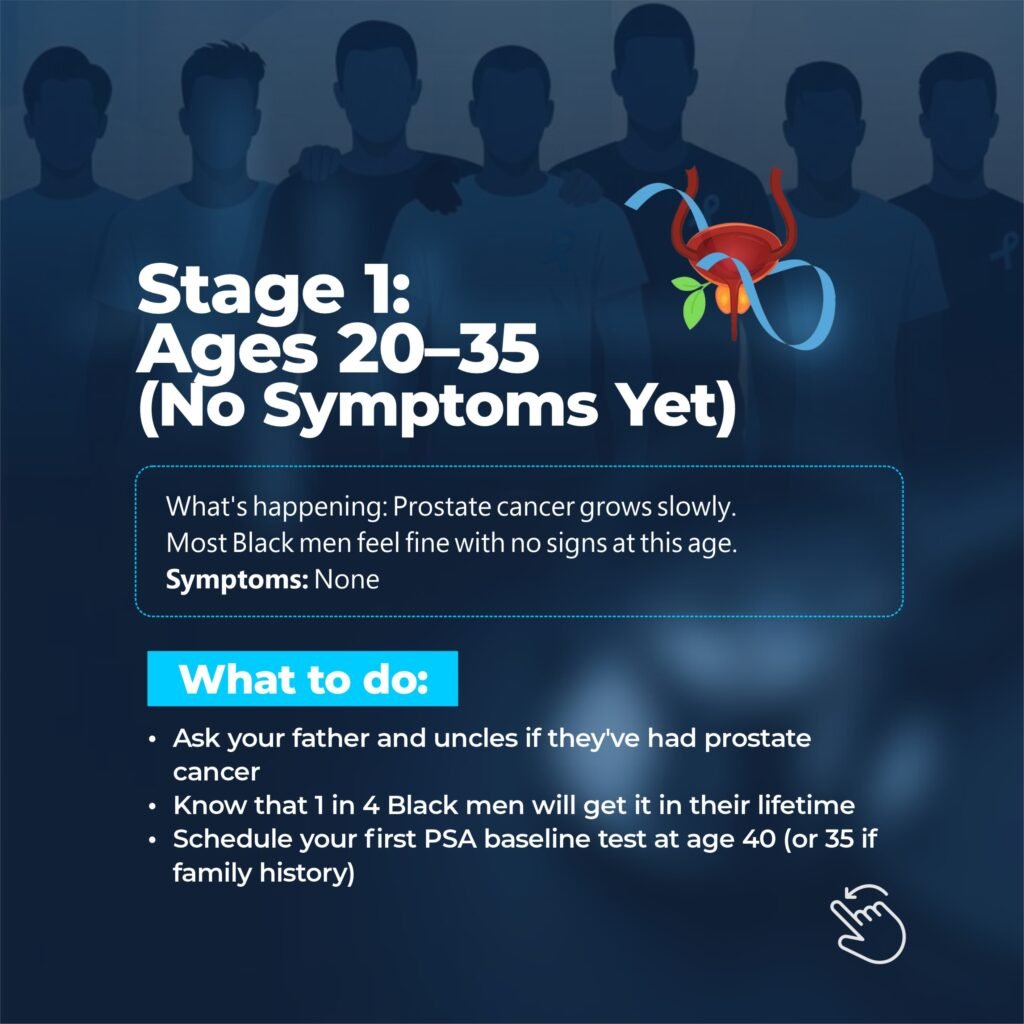
To help Black men recognise the warning signs at every age, here is a practical stage‑by‑stage breakdown. The following flyer content matches the symptoms and actions to specific age ranges.
Stage 1: Ages 20–35 (No Symptoms Yet)
What is happening: Prostate cancer grows slowly. Most Black men feel fine with no signs at this age.
Symptoms: None
What to do:
· Ask your father and uncles if they have had prostate cancer.
· Know that one in four Black men will get it in their lifetime.
· Schedule your first PSA baseline test at age 40 (or 35 if there is a family history).
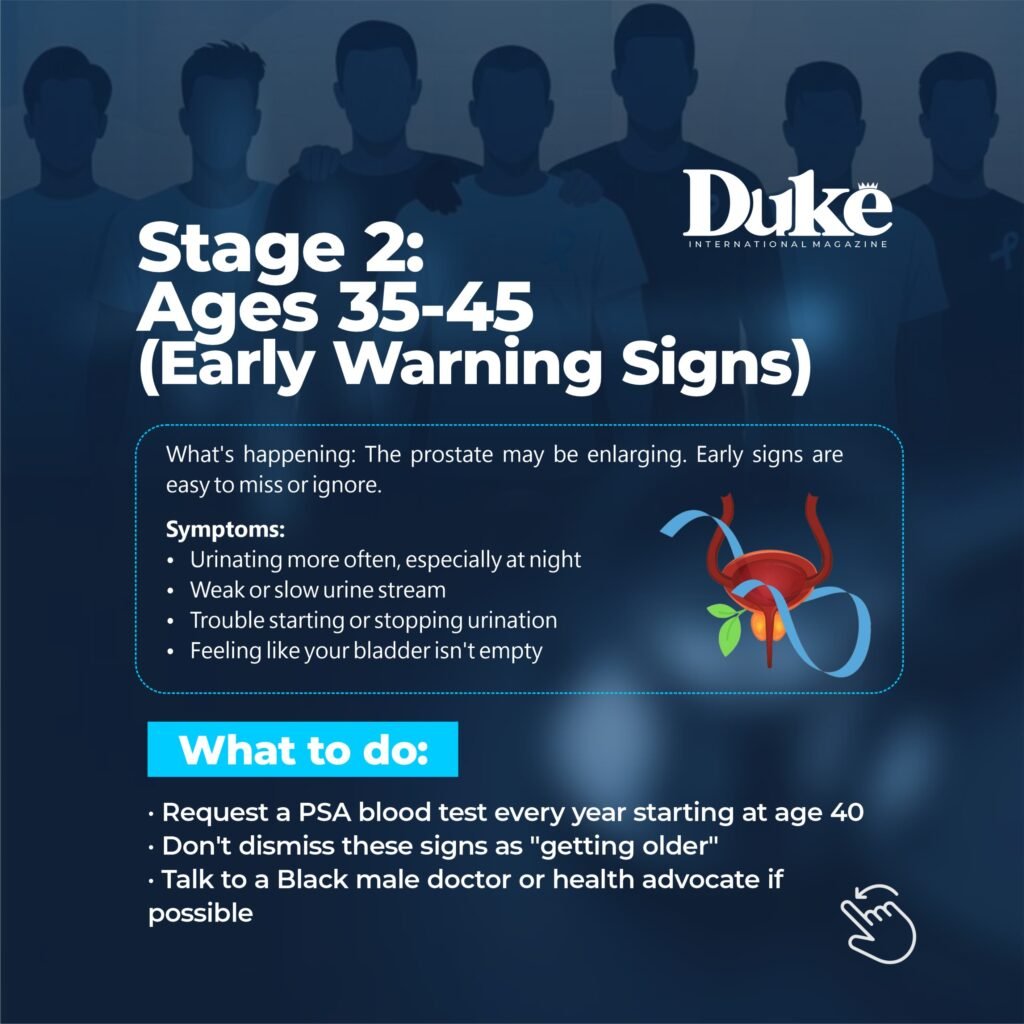
Stage 2: Ages 35–45 (Early Warning Signs)
What is happening: The prostate may be enlarging. Early signs are easy to miss or ignore.
Symptoms:
· Urinating more often, especially at night.
· Weak or slow urine stream.
· Trouble starting or stopping urination.
· Feeling like your bladder is not empty.
What to do:
· Request a PSA blood test every year starting at age 40.
· Do not dismiss these signs as “getting older”.
· Talk to a Black male doctor or health advocate if possible.
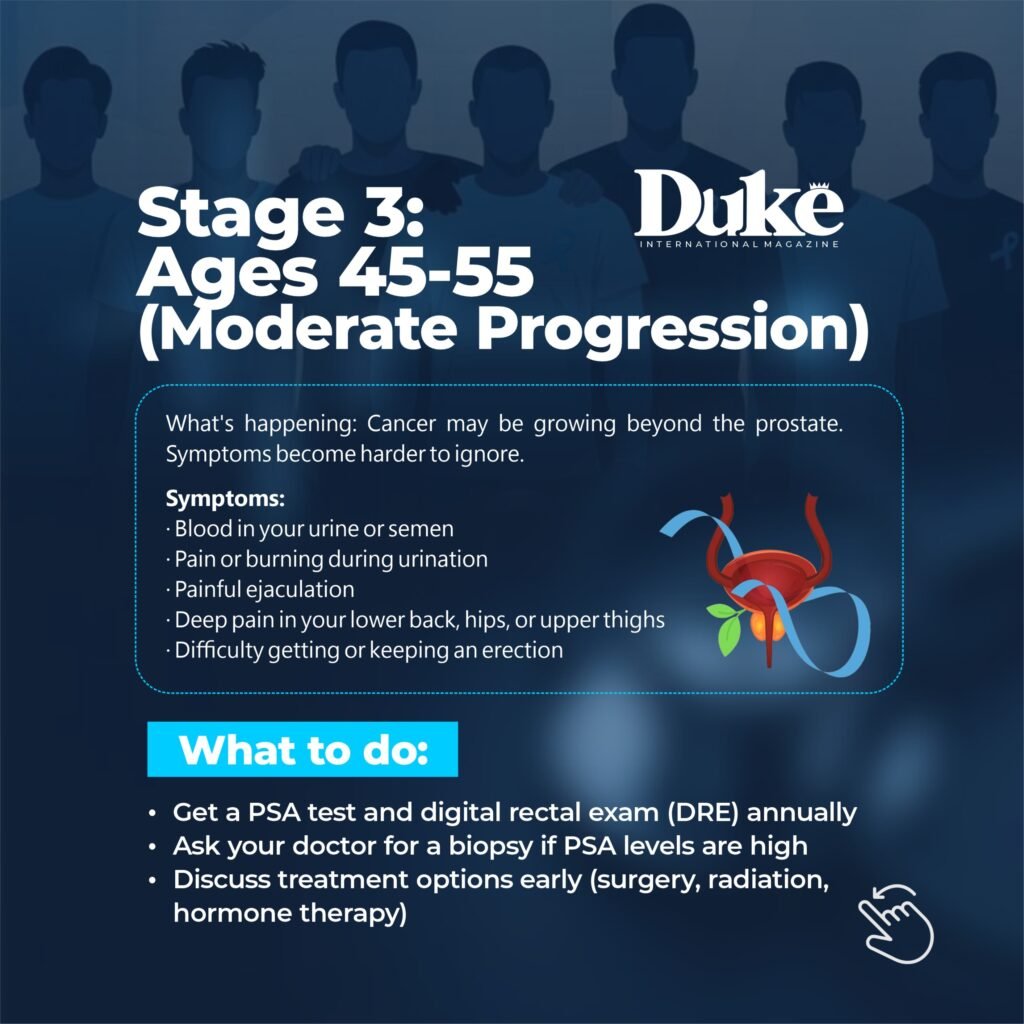
Stage 3: Ages 45–55 (Moderate Progression)
What is happening: Cancer may be growing beyond the prostate. Symptoms become harder to ignore.
Symptoms:
· Blood in your urine or semen.
· Pain or burning during urination.
· Painful ejaculation.
· Deep pain in your lower back, hips, or upper thighs.
· Difficulty getting or keeping an erection.
What to do:
· Get a PSA test and digital rectal exam (DRE) annually.
· Ask your doctor for a biopsy if PSA levels are high.
· Discuss treatment options early (surgery, radiation, or hormone therapy).
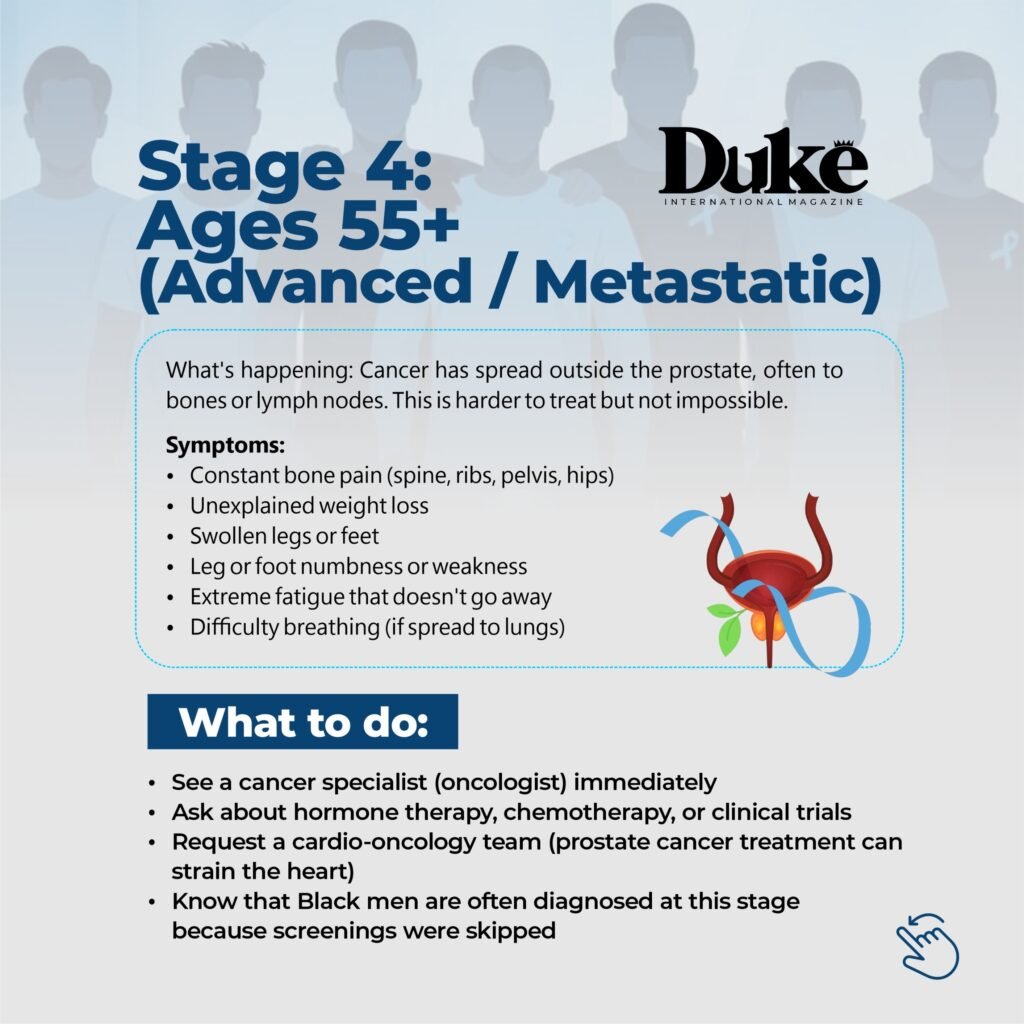
Stage 4: Ages 55+ (Advanced / Metastatic)
What is happening: Cancer has spread outside the prostate, often to bones or lymph nodes. This is harder to treat but not impossible.
Symptoms:
· Constant bone pain (spine, ribs, pelvis, hips).
· Unexplained weight loss.
· Swollen legs or feet.
· Leg or foot numbness or weakness.
· Extreme fatigue that does not go away.
· Difficulty breathing (if spread to the lungs).
What to do:
· See a cancer specialist (oncologist) immediately.
· Ask about hormone therapy, chemotherapy, or clinical trials.
· Request a cardio‑oncology team (prostate cancer treatment can strain the heart).
· Know that Black men are often diagnosed at this stage because screenings were skipped.
Solutions to Prostate Cancer
The approach to prostate cancer depends on the stage of the disease, the Gleason score, the man’s age, and his overall health. For many men, particularly those with early, slow‑growing cancer, active surveillance is a safe and effective option.
Active surveillance involves regular check‑ups, PSA blood tests, and sometimes repeat biopsies. The cancer is not treated immediately but is closely monitored. If tests show that the cancer is growing, treatment can then be started. This approach avoids unnecessary side effects for men whose cancer may never cause problems.
When treatment is needed, several options are available. Surgery, known as a radical prostatectomy, involves removing the entire prostate gland. This is often used for cancer that has not spread beyond the prostate. Radiotherapy uses high‑energy radiation to kill cancer cells. It can be delivered from outside the body (external beam radiation) or by placing radioactive seeds inside the prostate (brachytherapy).
Hormone therapy works by reducing the levels of testosterone, the male hormone that fuels prostate cancer growth. It can be given as injections or tablets. Hormone therapy is often used alongside radiotherapy for early cancer and is also a main treatment for advanced disease. Chemotherapy is typically used for advanced prostate cancer that no longer responds to hormone therapy. It can also be combined with other treatments. For some men, newer options such as targeted therapy and immunotherapy may be available.
The most important solution, however, is early detection. Black men should speak to their GP about PSA testing from the age of 40, or earlier if there is a strong family history.
Now, before we turn to the stories of survivors, here is a direct call to action for every reader.
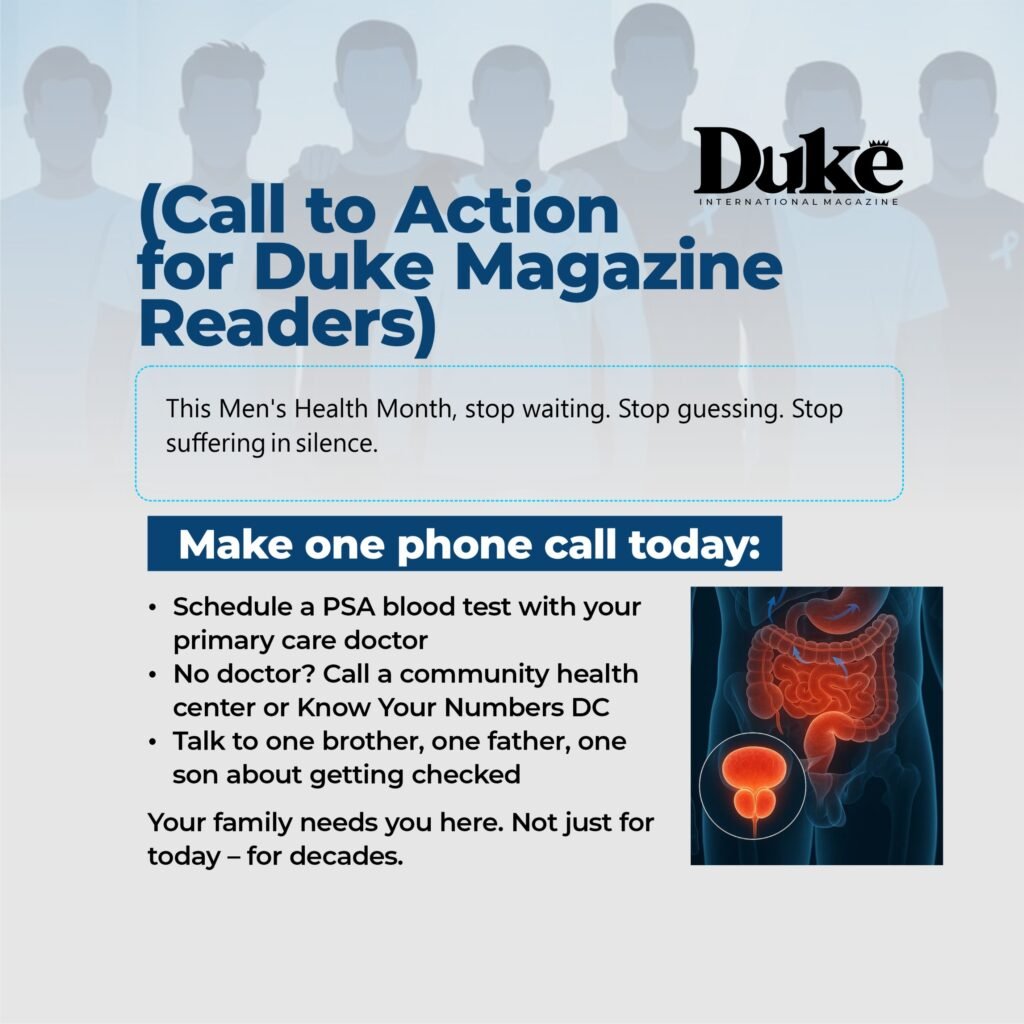
Call to Action for Duke Magazine Readers
This Men’s Health Month, stop waiting. Stop guessing. Stop suffering in silence.
Make one phone call today:
· Schedule a PSA blood test with your primary care doctor.
· No doctor? Call a community health centre or Know Your Numbers DC.
· Talk to one brother, one father, or one son about getting checked.
Your family needs you here. Not just for today – for decades.
Survivors of Prostate Cancer
Many Black men have survived prostate cancer and have chosen to share their stories publicly to encourage others to get tested. Their courage is helping to break down stigma and save lives.
Across Africa, the Caribbean, the United Kingdom, and North America, countless Black men have faced this disease and emerged as survivors. Some were diagnosed in their forties with no symptoms; others caught the cancer at a later stage but fought back with treatment and determination. They come from all walks of life: musicians, actors, athletes, businessmen, community advocates, and everyday fathers and grandfathers.
These survivors speak openly about the importance of regular PSA testing. They urge Black men to know their family history, to talk about prostate cancer without shame, and to support one another through diagnosis and treatment. Their message is clear: prostate cancer is not a death sentence. With early detection and appropriate care, Black men can live long, full lives after a diagnosis.
This Men’s Health Month, let their bravery inspire you. Get checked. Speak up. Do not suffer in silence.