

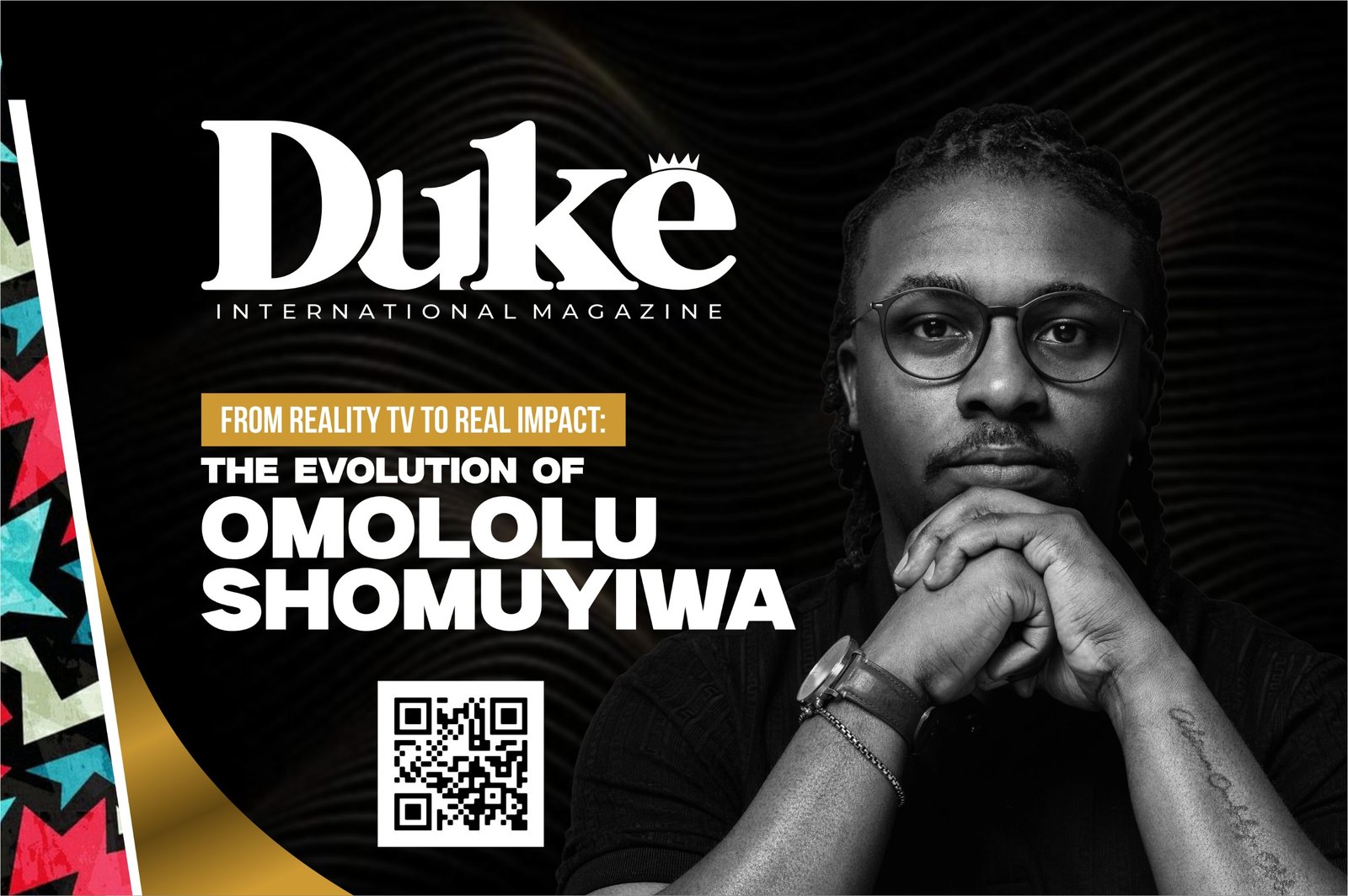
For many, the name Omololu Shomuyiwa, better known as Lolu, conjures memories of the 2018 Big Brother Naija house, where his poise, intelligence and articulate nature earned him the nickname “the wordsmith of Double Wahala”. But for Shomuyiwa, the reality show was never merely about fame; it was a platform to project a brand and a purpose. Today, that purpose has found its most significant expression yet.
Born Omololu Adetokunbo Shomuyiwa on 2 September 1989, his early life was shaped by loss and resilience. His mother, a media professional, passed away when he was young, leaving him to help care for a younger sister.
A graduate of Sociology from the University of Ilorin, he cut his teeth in radio at the university’s station before working as a publicist for stars like Tiwa Savage and Toke Makinwa. He also spent time in London working in investment banking, a detour that speaks to his diverse ambitions.
It was his third audition for Big Brother that finally succeeded. Coming second runner-up, Shomuyiwa used the exposure to build a media career, hosting Chronicle of Lolu, an online show addressing social issues. His commitment to civic life was further recognised with an appointment to the University of Ilorin Advocates Council in 2024.
However, it is his latest role that marks a true turning point. Now based in the United States, Shomuyiwa has been appointed Director of Global Operations and Partnerships for the Protect The Boy Child Initiative (PTBCI).
Founded by fellow BBNaija alumnus Adekunle Olopade, the Lagos-registered NGO seeks to mentor, educate and nurture boys and young men across Nigeria. The initiative’s documentary, Close The Gap, launches its “2026: The Year of The Man” campaign.
Shomuyiwa’s conviction is clear. “For too long, society has assumed boys are born resilient, leaving them to navigate isolation, trauma, and ambition entirely on their own,” he states. “We are not just offering a lifeline; we want to rewrite the script of what modern manhood looks like.” In doing so, he is redefining celebrity not by the noise of an audience, but by the quiet transformation of a single life.