

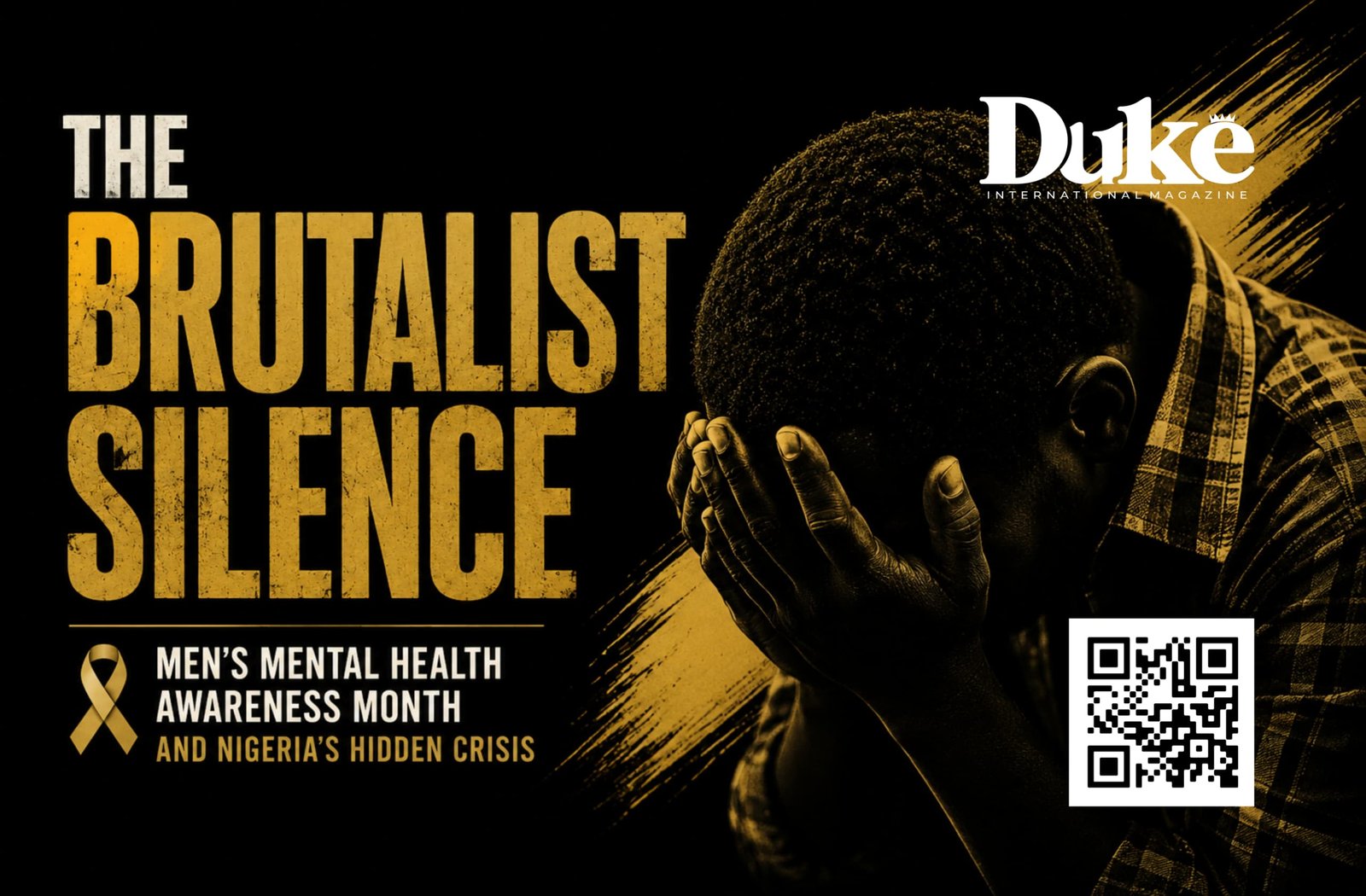
The statistics are stark. One in ten Nigerian boys will experience sexual abuse before they turn eighteen, and the vast majority will never tell a soul. For Men’s Mental Health Awareness Month this June, the campaign known as Moji Delano TV has been breaking what it calls the ‘Brutalist’ silence, urging Nigerians to confront a deeply uncomfortable truth: the nation’s boy child is suffering in plain sight, and society is failing to listen.
The 2015 Nigeria Violence Against Children Survey (VACS) found that six out of every ten children under the age of eighteen experience some form of physical, emotional or sexual violence before reaching adulthood. One in four girls and one in ten boys experience sexual violence specifically, while the majority of children never tell anyone about their ordeal. Less than five per cent of children who experience violence ever receive the support they need to recover.
Yet for male victims, the barriers to speaking out are compounded by a particularly insidious set of cultural norms. In a deeply patriarchal society, boys are taught from a young age that men do not cry, that vulnerability is weakness, and that emotional suppression is the price of masculinity. The Instagram campaign notes that a boy’s silence is often his only perceived survival strategy. Society tells him that his involuntary physical responses amount to ‘consent’, and that talking about his pain is a sign of failure.
Titilola Vivour-Adeniyi, Executive Secretary of the Lagos State Domestic and Sexual Violence Agency, puts it bluntly. ‘Patriarchy is one of the reasons that would cause a man to remain silent whilst being abused,’ she has said. In a society that equates masculinity with strength, dominance and emotional detachment, sexual violence against men is routinely dismissed as implausible or minimised. Predators exploit these stereotypes ruthlessly.
The consequences are devastating. Male survivors who find the courage to seek help often encounter institutions unprepared to receive them. At the University of Lagos, for instance, infrastructure for supporting male survivors exists largely on paper, and survivors describe a justice system that dismisses their trauma. One survivor, who asked to remain anonymous, recalled how his lecturer would put on pornography and force boys under eighteen to watch, touching himself as they froze in fear. When they resisted, they were called ‘childish’.
The psychological toll is severe. Dr Maymunah Kadiri, a Lagos-based psychologist, notes that many men grow up with untreated emotional scars that later affect their mental health. ‘For every twenty attempted cases of suicide we see in women, that one completed case we see in men,’ she explains. Dr Miracle Ihuoma, a clinical psychologist, has identified a ‘self-sufficiency syndrome’ among men: an ingrained belief that they must resolve their issues independently, and that seeking help is a sign of weakness.
This year’s Men’s Health Month has spotlighted the ‘Empathy Gap’, a term used by health advocates to describe the chronic lack of support, funding and public attention directed towards men’s health, particularly mental health. Experts and survivors are raising alarms over the lack of mental health awareness, support structures and education targeted at men in Nigeria. According to Dr Tolu Olawale, a clinical psychologist, ‘Men are dying in silence. There is a deep-rooted stigma that makes men believe showing vulnerability is a weakness. That mindset is dangerous and needs to be dismantled.’
Some initiatives are attempting to crack the silence. The Lagos State Domestic and Sexual Violence Agency has launched programmes such as The Hidden Crime, Violence Against Men, Men Wey Sabi, and the Kings Club Initiative. ‘Our advocacy seeks to promote positive masculinity amongst young boys,’ Vivour-Adeniyi explains. The Kings Club, for instance, partners with schools to teach boys that strength includes seeking support.
Breaking the cycle, as the Instagram campaign insists, starts with a simple act: believing men when they speak about their pain. That means reforming a justice system that too often dismisses male trauma; training religious and community leaders to recognise signs of distress in men and boys; and embedding mental health education into schools and workplaces. It means challenging the lie that boys do not cry, and replacing it with a healthier, more honest understanding of what it means to be male.
For Nigeria, the cost of silence is measured in lives. Men account for eighty per cent of all suicides in Nigeria, and suicide remains the leading cause of death among men under thirty-five. Every boy who is abused and cannot speak, and every man who is hurting and cannot ask for help, represents a failure of empathy, a failure of systems and a failure of culture.
Men’s Mental Health Month may last only thirty days, but for millions of Nigerian men silently battling emotional pain, every day is a test of survival. The question is whether Nigeria will continue to turn away, or whether it will finally start building a nation that protects the boy child. The data is clear, the stories are harrowing, the silence must be broken.