

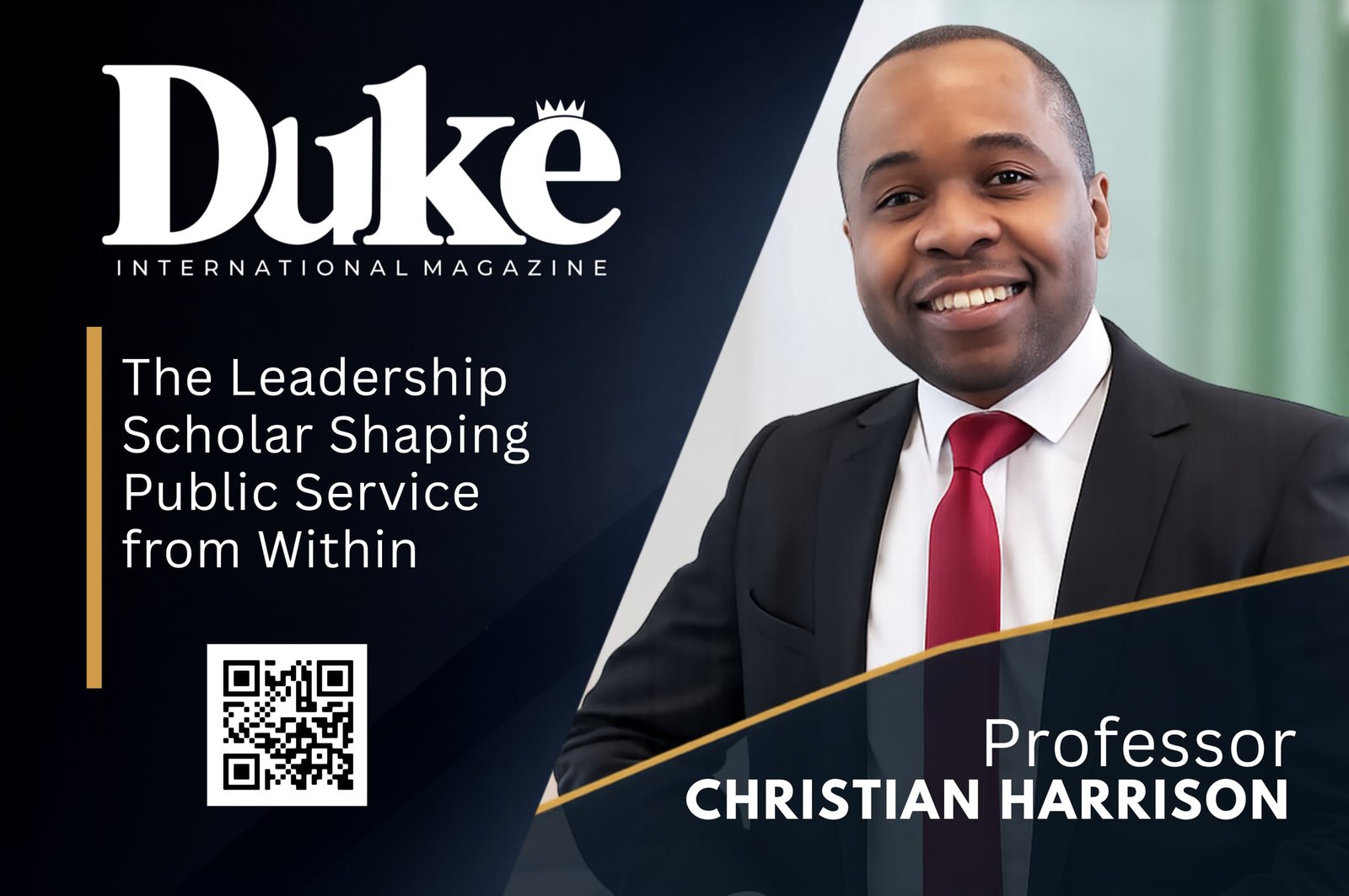
Professor Christian Harrison’s journey to the upper echelons of British academia is a testament to hard work, strategic collaboration and an unwavering commitment to empowering others. As the youngest African professor in the UK, he has already carved a remarkable path as a scholar of leadership and enterprise.
Currently a Professor of Leadership and Enterprise at the University of Bolton and Director of the Centre for Leadership and Empowerment, Professor Harrison’s influence extends far beyond the lecture theatre.
This was underscored by his recent appointment to the prestigious Government Skills College of Experts in the United Kingdom.
Selected among just 24 leading academics and expert practitioners from across the nation, he will advise the government on leadership and support leadership development, contributing directly to the strengthening of ministers, civil servants and public sector leaders.
Yet Professor Harrison’s impact is not confined to the UK. A proud Nigerian scholar, he is a vocal and respected voice on governance challenges in his home country.
He argues that Nigeria’s persistent issues have evolved beyond a leadership problem into an institutional crisis, warning that public trust will continue to decline unless leaders build systems that outlast their tenures.
For him, the solution lies in strong institutions rather than powerful individuals, and he urges citizens to scrutinise candidates’ track records beyond party affiliation.
His contributions have not gone unnoticed. In 2025, the British Academy of Management honoured him with its Medal for Contribution to Communities, recognising his outstanding leadership of its Leadership Special Interest Group and his co-founding of the African Studies Track.
With an MBA from the University of Aberdeen, where he was valedictorian, and a PhD to his name, Professor Harrison blends timeless leadership principles with contemporary challenges.
As a consultant, international speaker and mentor, his work is widely cited and he holds influential roles across academic boards, journals and professional bodies. As he states, integrity remains the “currency of leadership” – a principle that guides his own distinguished career.