

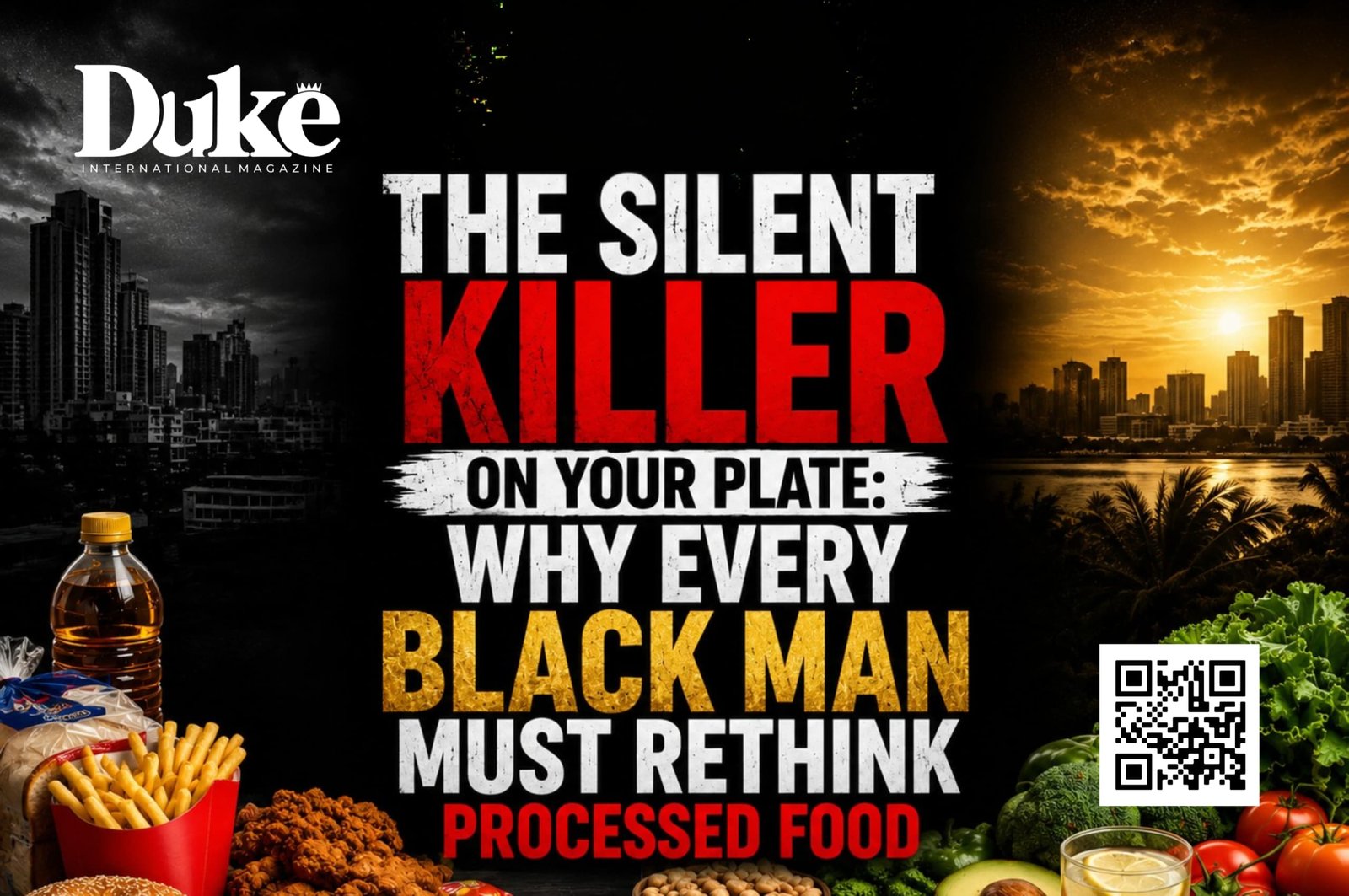
From the streets of London to the shores of Lagos, from the Bronx to Barbados, black men face a hidden health crisis that is largely ignored. The culprit is not genetic destiny. It is the ultra‑processed food that fills our shopping trolleys and our bodies.
The evidence is stark and global. Black men experience higher rates of hypertension, type 2 diabetes and aggressive prostate cancer than almost any other population. Ultra‑processed foods are not just a minor inconvenience; they are a primary driver of these disparities.
Consider the numbers. In the United States, black adults who consume high amounts of ultra‑processed foods have a 55 per cent greater risk of developing high blood pressure compared to white adults eating the same diet.
A major study found that for every 10 per cent increase in ultra‑processed food intake, black individuals had a 12.3 per cent higher risk of cardiovascular disease, compared to just 7.9 per cent for non‑black participants.
The Multi‑Ethnic Study of Atherosclerosis confirmed that each additional daily serving of ultra‑processed food is associated with a 5.1 per cent increase in incident cardiovascular disease, with risks particularly amplified in black Americans. A diet rich in fried and processed foods is the greatest factor explaining why black Americans have higher hypertension rates than white Americans.
The threat extends beyond the heart. For black men, processed and red meat consumption is linked to a significantly higher risk of prostate cancer. One study found that black men in the highest quartile of cooked processed meat consumption had a 2.7 times greater risk of prostate cancer compared to those in the lowest quartile.
Research also suggests that dietary consumption of advanced glycation end products, generated through highly processed and sugary foods, can directly accelerate prostate tumour growth. Meanwhile, processed meat consumption is associated with an increased risk of type 2 diabetes, with stronger associations generally observed in men.
This is not just an American problem. In the Caribbean, ultra‑processed foods contribute about six times the mean of free sugars compared to unprocessed foods, driving the region’s escalating rates of obesity and chronic disease.
In South Africa, processed foods are linked to a higher risk of non‑communicable diseases, leading researchers to promote traditional healthy food choices as a sustainable solution. Across Africa, common methods of charring and overcooking meat are being investigated as potential contributors to the continent’s high burden of advanced prostate cancer.
A landmark study from the University of Copenhagen delivered a sobering truth. Men gained around one kilogram more of fat mass on an ultra‑processed diet compared to an unprocessed diet, even when calories were identical.
The study also found decreases in testosterone and follicle‑stimulating hormone, which are crucial for sperm production, alongside increased levels of hormone‑disrupting chemicals.
The solution is not complicated. Replace packaged snacks with whole foods: fish, beans, leafy greens, nuts and fresh fruit. Choose grilled over processed meat. Drink water instead of sugary beverages.
This is not about perfection; it is about survival. Duke International Magazine speaks to men who build, lead and endure. Real strength demands a body capable of that work. Put down the packet. Pick up the pan. Your crown depends on it.