

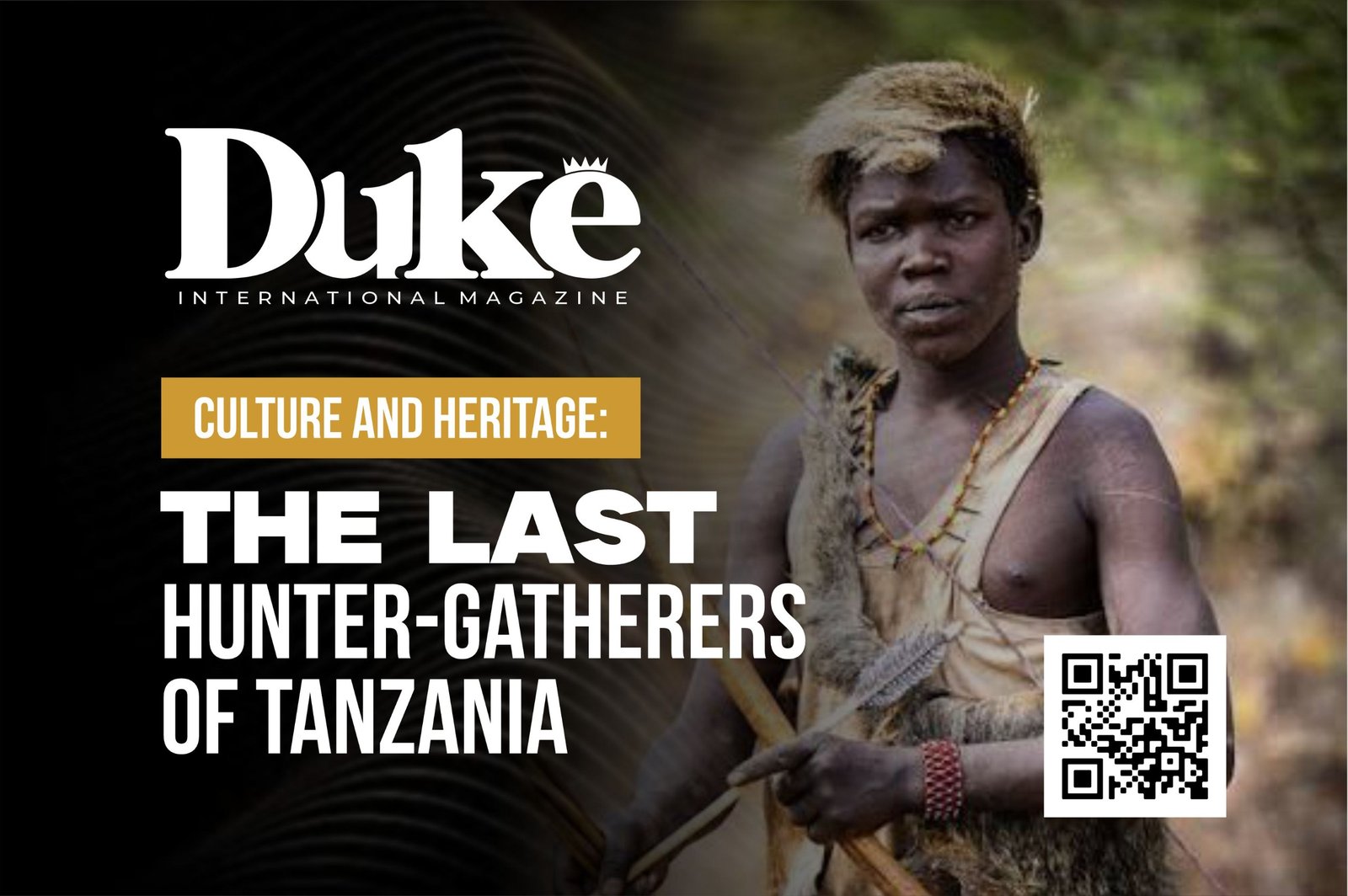
In the shadow of the Great Rift Valley, beneath the ancient baobab trees of northern Tanzania, lives a community that offers the modern world a direct connection to humanity’s deep past. The Hadza, or Hadzabe, are one of the last remaining hunter gatherer societies on Earth, with roots stretching back at least 40,000 years.
Numbering between 1,200 and 1,500 people, the Hadza inhabit the area surrounding Lake Eyasi, a region that has been their home for tens of thousands of years. Genetic studies confirm them as one of the oldest lineages of humankind, making their culture a living archive of existence before agriculture, before cities, and before the written word.
A Day in the Ancient World
Men rise before dawn to fashion bows and arrows tipped with poison from the Adenium plant. They hunt antelope, baboons, and warthogs across the savannah. Women gather with digging sticks to unearth tubers, collect berries, and harvest baobab fruit. Honey, procured from wild hives with smoke, comprises roughly a third of their diet and is their most prized food.
The Hadza own almost nothing. Their grass and branch shelters are temporary and abandoned without sentiment. They carry their possessions on their backs, challenging every assumption of the consumerist world.
An Egalitarian Society
There are no chiefs, no formal hierarchies, and no inherited status. Decisions are made through communal discussion, and meat is shared across the camp according to reciprocity customs. Neither sex holds authority over the other; leadership is situational and temporary. The Hadza offer a profound alternative vision of human social organisation.
A Language on the Brink
They speak Hadzane, a click language that is a linguistic isolate, unrelated to any other in the world. With fewer than 1,000 fluent speakers, it is endangered. Each passing year sees fewer children learning it, and its loss would mean the extinction of a unique worldview.
Spirits and the Natural World
The Hadza recognise spirits associated with the sun, the moon, and the forest, active participants in daily life requiring respect. Death is marked with ritual, involving stones and offerings to ease the spirit’s journey. These practices reflect an intimate relationship with the land.
The Greatest Threat
Over the past fifty years, they have lost approximately ninety percent of their ancestral lands to farmers and herders. Berry bushes have been cleared, water sources diverted, and game driven away. Government efforts to settle them in permanent villages have largely failed, often leading to poverty and cultural erosion. Today, only an estimated 300 to 400 Hadza continue a fully traditional nomadic life.
A Fight for the Future
Yet there is hope. The Hadza have secured communal land titles for over 20,000 hectares. With Carbon Tanzania, they run a carbon offset project that protects community forests and generates revenue. Their efforts earned the United Nations Equator Award in 2019.
A Legacy for All Humanity
The Hadza are not a relic but a living people navigating modernity while maintaining their heritage. Their culture evolves, yet at its core lies wisdom about human connection, environmental stewardship, and happiness through community rather than consumption. They remind us that progress does not always mean leaving the past behind. As one elder reportedly said, “We are the last of our kind, but we are not finished yet.”