


Pulitzer Prize-winner Colson Whitehead has been honored by the Library of Congress. On Monday, July 13, it was announced that he had won the Library of Congress Prize for American Fiction, making him the youngest winner of the lifetime achievement prize.
Whitehead has now joined the league of Toni Morrison, Philip Roth, Denis Johnson, and others in the history of the library. Recall that Whitehead had already received the Pulitzer Prize for fiction and the Orwell Prize for political fiction.
He is the first Black American author to break the bounds of being Pulitzer Prize recipient. He also doubled as the first author to win Pulitzers for consecutive works of fiction — “The Underground Railroad” and “The Nickel Boys”.
“As a kid, I’d walk into great New York City libraries like the Schomburg and the Mid-Manhattan, in a field trip or for a school assignment, and feel this deep sense of awe, as if I’d stumbled into a sacred pocket in the city,” Whitehead said in a statement.
“I hope that right now there’s a young kid who looks like me, who sees the Library of Congress recognize Black artists and feels encouraged to pursue their own vision and find their own sacred spaces of inspiration.”
Whitehead became the fourth author in history to win the Pulitzer Prize for fiction twice, joining Booth Tarkington, William Faulkner, and John Updike in that exclusive club. This means Whitehead is the first author of color to accomplish that feat.
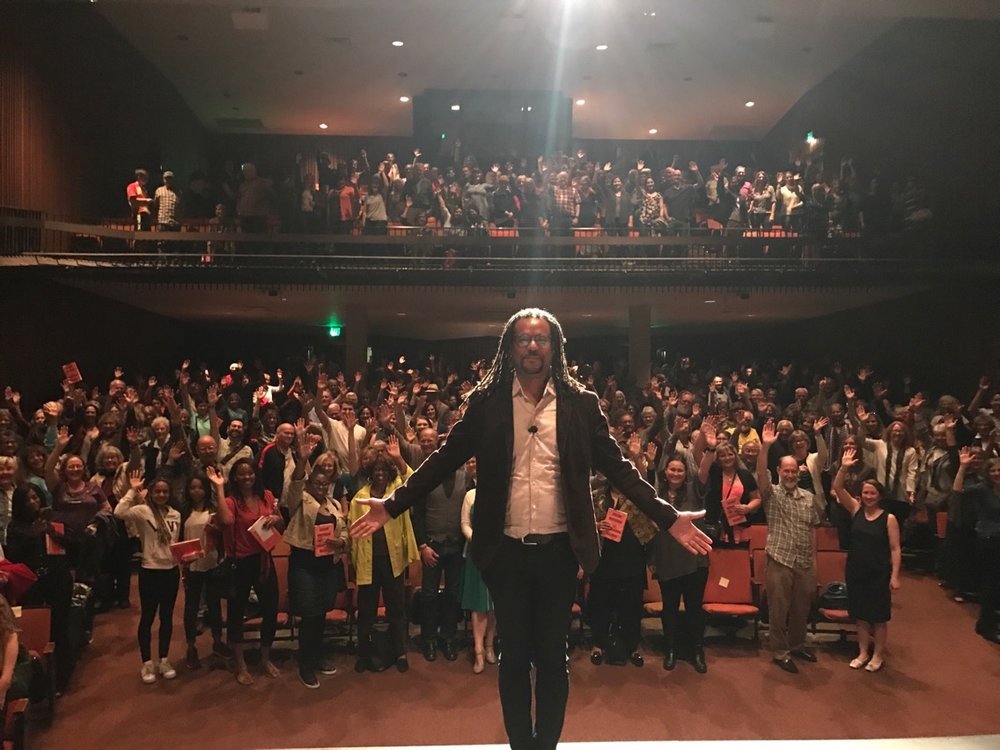
The African-American author won his second Pulitzer Prize for fiction with the novel “The Nickel Boys”, which tells the story of Elwood Curtis, a black boy growing up in 1960s Tallahassee, who found himself trapped in a grotesque chamber of horrors in a juvenile reform school.
Born in 1969, Whitehead grew in Manhattan, and he decided to be a novelist after reading Stephen King’s novels. Whitehead attended Trinity School in New York, and later, Harvard University in Massachusetts where he studied English and Comparative Literature. He tried twice to enroll in one of Harvard’s creative writing seminars but was rejected, according to Enotes.
He started working at the Village Voice upon his graduation with a B.A. in 1991, where he wrote reviews of television, books, and music. Whitehead’s first novel, “The Intuitionist”, concerned intrigue in the Department of Elevator Inspectors, and was a finalist for the PEN/Hemingway and a winner of the Quality Paperback Book Club’s New Voices Award.
His literary work was followed by “John Henry Days in 2001”, an investigation of the steel-driving man of American folklore, which was a finalist for the National Book Critics Circle Award, the Los Angeles Times Fiction Award, and the Pulitzer Prize. The novel received the Young Lions Fiction Award and the Anisfield-Wolf Book Award, his website stated.
Appraised as one of the United States’ most talented and innovative young writers, Whitehead would author seven more novels including “The Underground Railroad”, which was published in the summer of 2016. He won his first Pulitzer Prize in the fiction category, as well as the National Book Award and the Carnegie Medal for Fiction.
Whitehead is a seasoned lecturer at various universities including the University of Houston, Columbia University, New York University, and Brooklyn College. He has also been a Writer-in-Residence at Vassar College, the University of Richmond, and the University of Wyoming.