

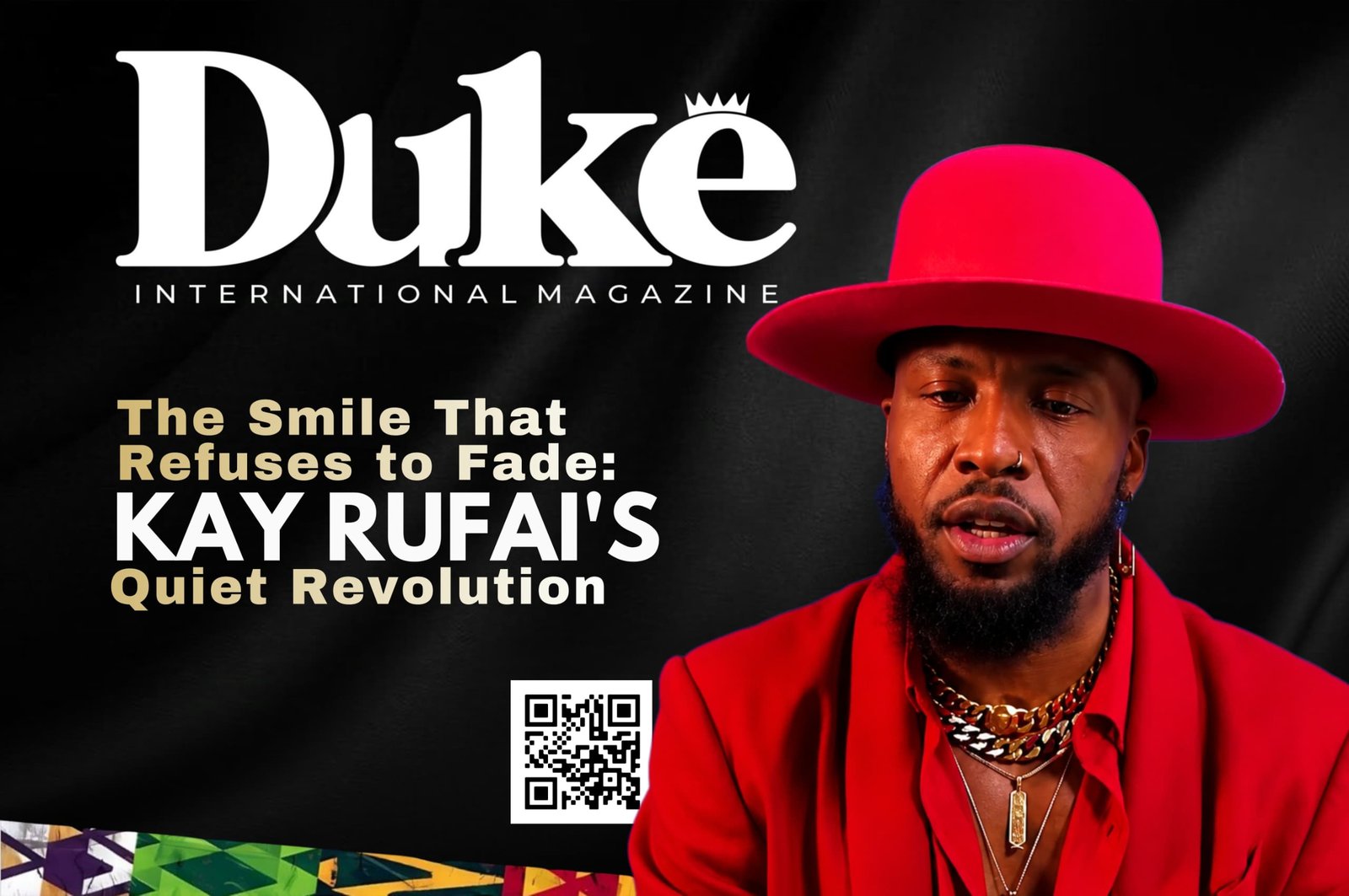
In a world too accustomed to framing young Black men through the lens of struggle, Kay Rufai offers a different exposure. The British-Nigerian artist and researcher does not point his camera at pain; he turns it towards joy.
This week, Rufai has been celebrated internationally as his S.M.I.L.E-ing Boys project landed in Rio de Janeiro. The initiative, which began on the streets of London, is deceptively simple: it invites adolescent Black men and boys to participate in therapeutic photography sessions.
The goal is not to capture glamour, but to capture truth. Through a series of workshops and portraits, participants are encouraged to smile, to laugh, and to reclaim the softness that society so often denies them.
Rufai describes the smile as an act of resistance. In his work, he notes that for many young Black men, public spaces demand a hard exterior. The smile becomes a vulnerability that he asks them to choose, not to perform for the camera, but to feel for themselves. The resulting images are striking not because they are unusual, but because they are radical in their normalcy: boys being boys, free and unguarded.
From council estates in London to the favelas of Rio, Rufai’s method remains the same. He pairs artistic direction with mental health check-ins, effectively blurring the line between art project and support group. The response in Brazil this week has been electric, with local educators praising the work for dismantling the stereotype of the angry young man.
Kay Rufai does not wait for permission to change the narrative. He hands the camera to the boys and lets them rewrite it themselves.