

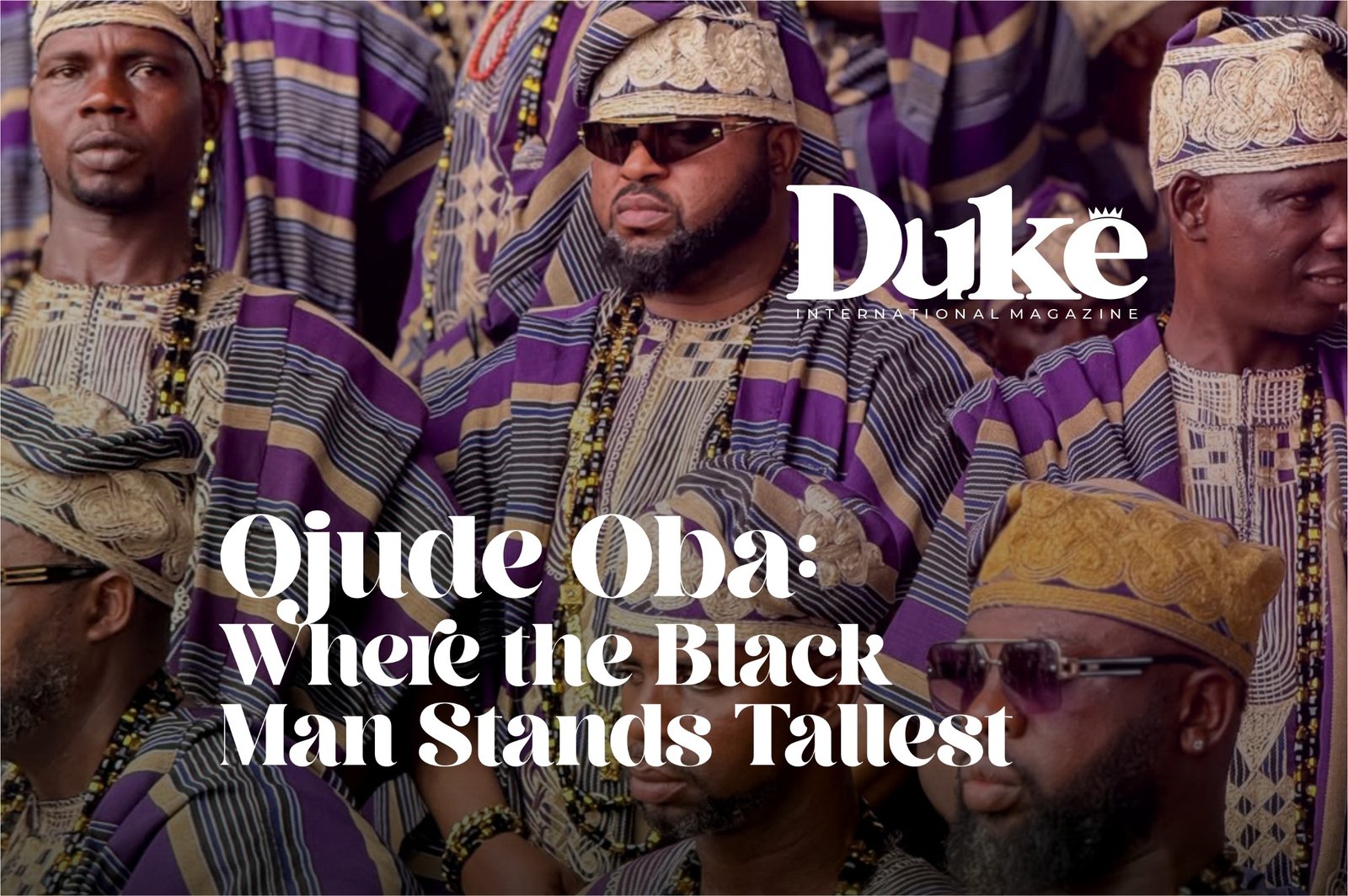
There is a day, once a year, when the black man does not apologise for his splendour. That day is the third day after Eid-el-adha. That place is Ijebu-Ode. And the occasion is Ojude Oba.
For the uninitiated, Ojude Oba which is translated as ‘the king’s frontage’ – is the annual festival held on the third day after Eid al-Kabir, where the sons and daughters of Ijebuland gather to pay homage to His Royal Majesty, Oba Sikiru Kayode Adetona, the Awujale of Ijebuland. For Duke Magazine, this festival is something more. It is the single greatest showcase of black male elegance, dignity, and brotherhood on the African continent.
The Regberegbe: Brotherhood Made Visible
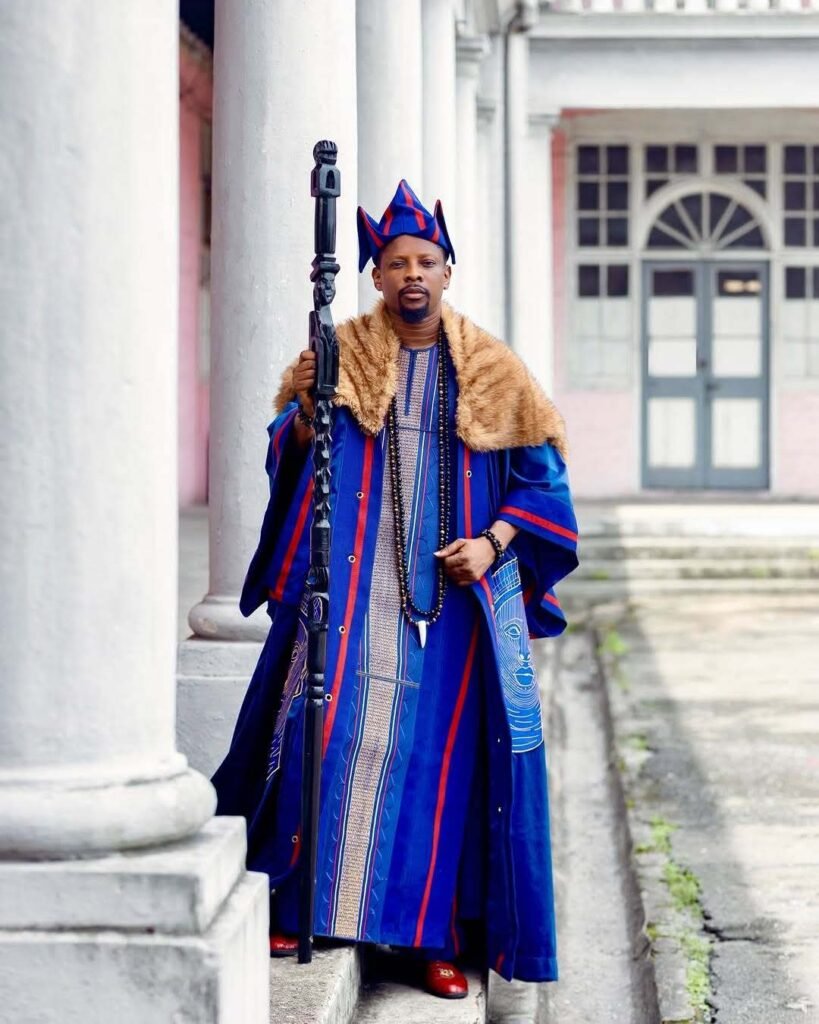
What makes Ojude Oba unique among festivals is the ‘regberegbe’ system – the age groups and family lineages that parade before the king. These are not casual social clubs. They are institutions. A man belongs to his regberegbe for life. Together, they save money. They plan. They commission matching outfits from the same tailor. They rehearse their songs and their dance steps. And on the day of Ojude Oba, they walk as one body.
Today, the regberegbes arrived in waves. The men walked shoulder to shoulder, not a man out of step. Their ages ranged from teenagers to grandfathers, but in their matching agbadas, they became equals. That is the quiet genius of this festival. It flattens hierarchy. A junior clerk may stand next to a bank executive, both dressed in identical fabric, both singing the same praise song for the king. In that moment, they are simply brothers.
The Dress: Armour of the Elegant Man
Let us speak directly about the clothing. The men of Ijebuland do not dress. They armour themselves.
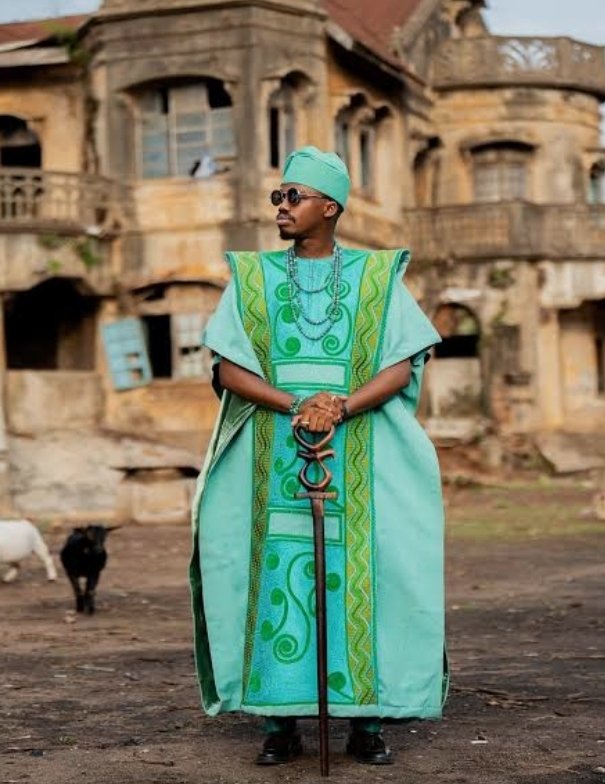
The agbada is the preferred weapon. This year’s festival has produced agbadas cut from French lace so fine it seems to float. There is Aso Oke woven in the traditional handloom style, its deep blue threads catching the midday sun. Senator suits in crushed velvet, raw silk, and brocade have appeared in great numbers. Embroidery covers chests and backs like battle maps – golden vines, silver geometric lines, intricate floral patterns that must have taken a tailor weeks to sew.
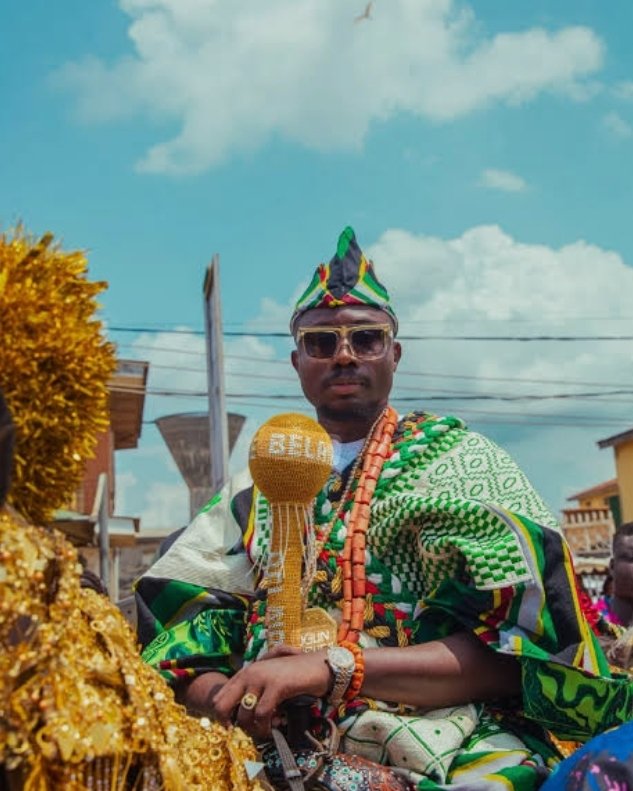
The fila, or cap, is folded with precision. The Ijebu style requires a soft crease at the front and a tilt to the right or left. No man wears his fila straight. That would be unfashionable. Many caps seen today are finished with a silk tassel hanging down the side, a detail borrowed from the Yoruba aristocracy of the nineteenth century.
Footwear matters. Leather slippers, known as bata, are everywhere – some plain, some embroidered with metallic thread, some beaded by hand. A few of the more daring men have worn horse-riding boots, a nod to the Balogun family’s mounted procession, which remains one of the festival’s most photographed moments.
Accessories are not optional. Coral beads circle necks. Ivory bangles, now rare and highly prized, appear on the wrists of elders. Walking sticks carved with royal insignia are carried by the most senior men. And sunglasses – dark, reflective aviators – have become a modern addition, giving the younger men an air of cool defiance beneath their majestic gowns.
The Balogun Horsemen: Masculinity on Horseback
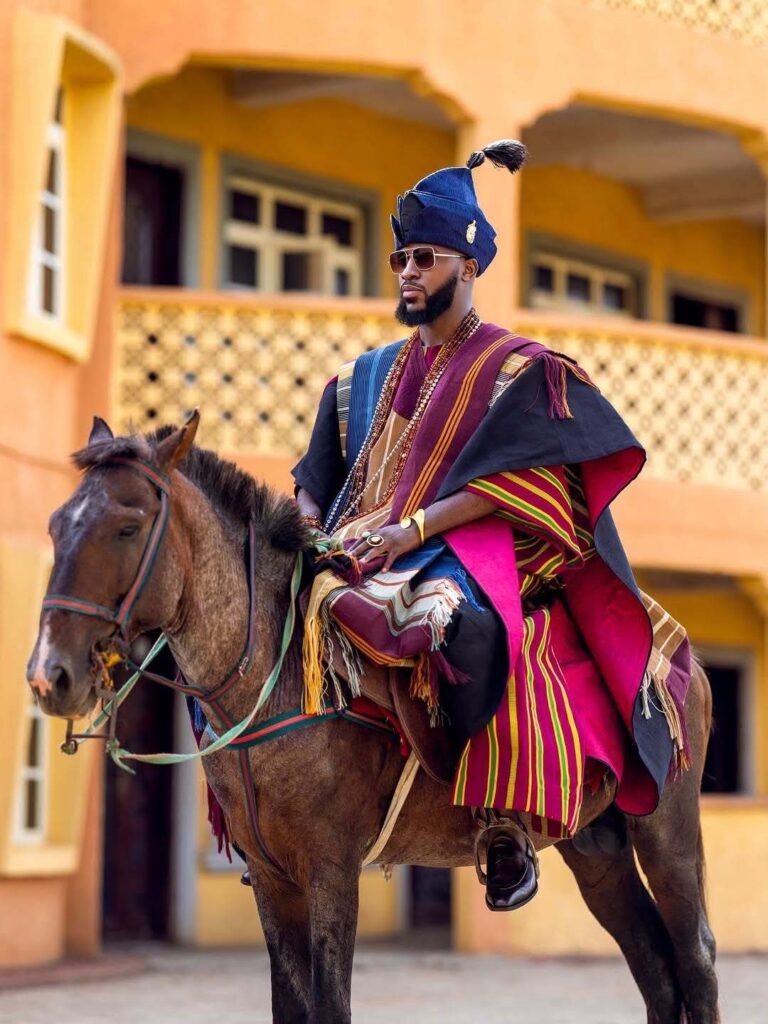
No coverage of Ojude Oba is complete without the Balogun family and their horses. Today, the Balogun riders mounted their steeds in full ceremonial dress – flowing gbariye gowns with padded chests, wide sleeves that catch the wind like sails, and turbans wrapped high above the brow. Each rider carried a wooden sword or a ceremonial staff.
The horses themselves were dressed in embroidered caparisons, their manes braided with coloured thread. As the riders charged across the palace forecourt, dust rising behind them, the crowd roared. This is not theatre. This is lineage. The Balogun have performed this ride for generations. The message is clear: we were warriors before we were gentlemen, and we remain both.
Why This Matters for Duke Magazine
Duke Magazine exists to celebrate black men in our full complexity – our style, our discipline, our joy, our brotherhood. Ojude Oba delivers all of these things without compromise. There is no Western gaze shaping this festival. There is no apology for extravagance. There is no shrinking from tradition.
In a world that too often tells black men to be small, quiet, or invisible, the men of Ijebuland stand at the king’s frontage and refuse. They wear the brightest colours. They spend months of savings on a single outfit. They sing at full volume. They embrace one another in public. They bow to their monarch and rise as kings of their own lives.
If you have never attended Ojude Oba, make the journey next year. Book your tailor now. Commission your agbada. Learn the songs. And when you walk into that palace forecourt, walk tall. You will be among your brothers.