

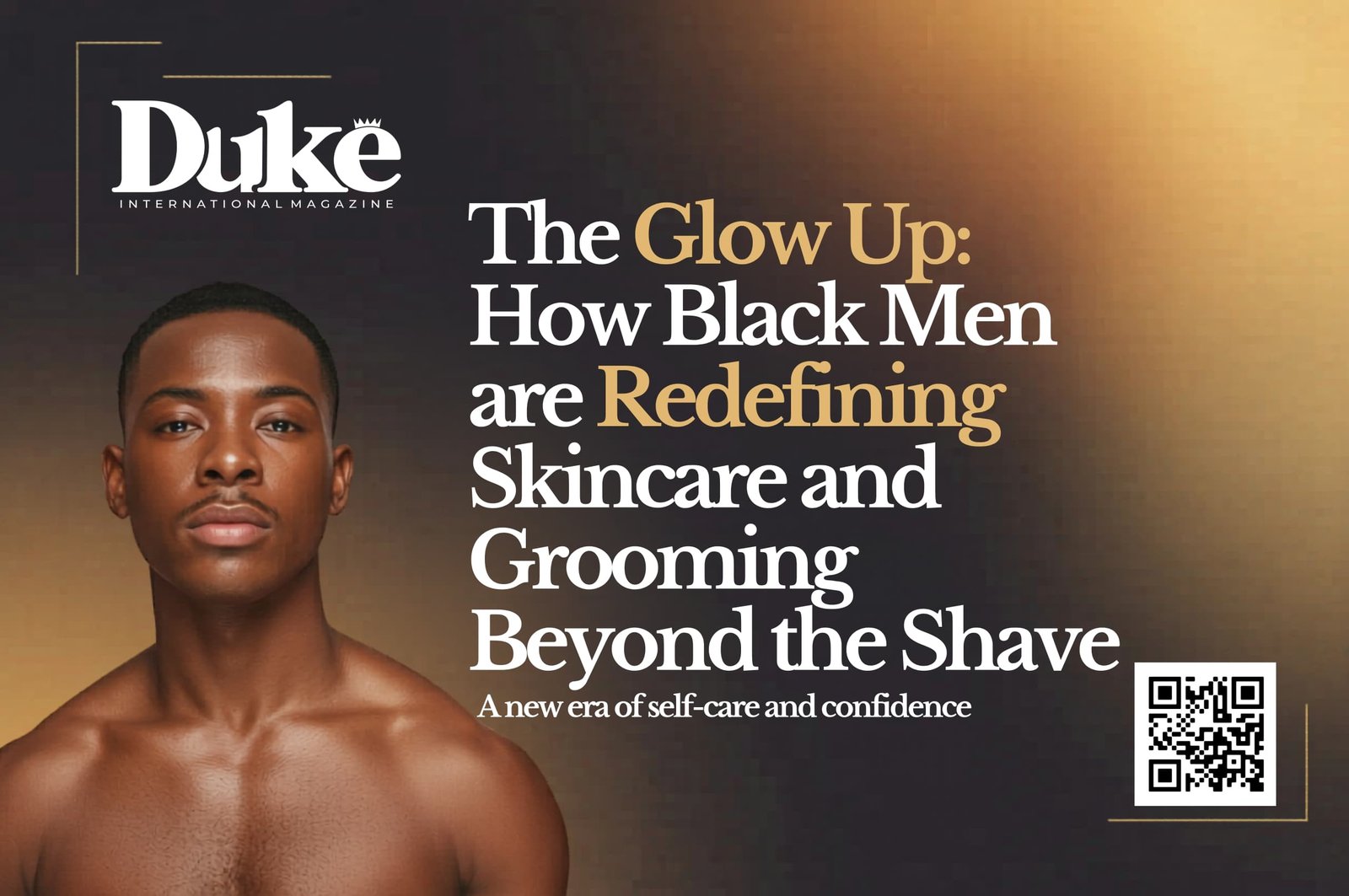
For decades, the image of Black male grooming started and ended at the barber’s chair. A fresh lineup, a clean shave, maybe some beard oil. That was the routine.
Not anymore.
Walk through any skincare aisle or scroll through wellness feeds today and a new picture emerges. Black men are comparing toners, debating hyaluronic acid versus niacinamide, and building nighttime routines with the same precision as their workout plans. This isn’t vanity. It’s a fundamental shift in how Black men relate to their own skin.
The shift is driven by something real. For Black men, skincare is rarely just cosmetic. It’s medical. Pseudofolliculitis barbae, or razor bumps, affects the majority of Black men because naturally curly hair follicles curve back into the skin.
Then comes post inflammatory hyperpigmentation, dark spots from ingrown hairs, acne, or small cuts that can linger for months. These aren’t just aesthetic issues. They can be chronic, uncomfortable, and historically undertreated.
Dermatologists now agree that melanin rich skin behaves differently. It produces more oil but loses water faster. It scars more visibly. It requires different ingredients, different tools, and different habits than the standard one size fits all grooming advice of the past.
But there has always been another barrier. Caring for skin has long been miscast as soft, feminine, or frivolous. Among Black men, an additional pressure has been stoicism. Admitting you care about your complexion used to get you dismissed.
That silence is breaking. Across social media and men’s wellness spaces, the conversation has flipped. Black men now openly discuss moisturizing, gentle exfoliation, and critically, sunscreen. The old myth that melanin offers full protection has been retired. Sunscreen prevents hyperpigmentation, slows aging, and reduces skin cancer risk, which is often diagnosed later in Black patients precisely because of that myth.
None of this is new to Black culture. Grandmothers with shea butter and cocoa butter weren’t guessing. They were practicing generations of skin wisdom, what has changed is precision.
Targeted solutions are now widely available, including ingrown hair serums, dark spot correctors, and lightweight gels designed not to clog coarse hair follicles. Even mainstream companies are following, but the most trusted products remain those formulated with melanin and curl pattern as the starting point, not an afterthought.
This is not about perfection. It is about ownership. When a Black man knows exactly which razor angle prevents bumps, which serum fades dark spots, and why SPF matters year round, he isn’t being vain. He is being informed. He is taking control of a body that mainstream grooming advice has too often ignored.
The new routine is simple but radical. Cleanse, treat, moisturize, protect. No ash, no bumps, no apology. The glow up isn’t just skin deep. It is a reclamation of care, science, and self respect.