

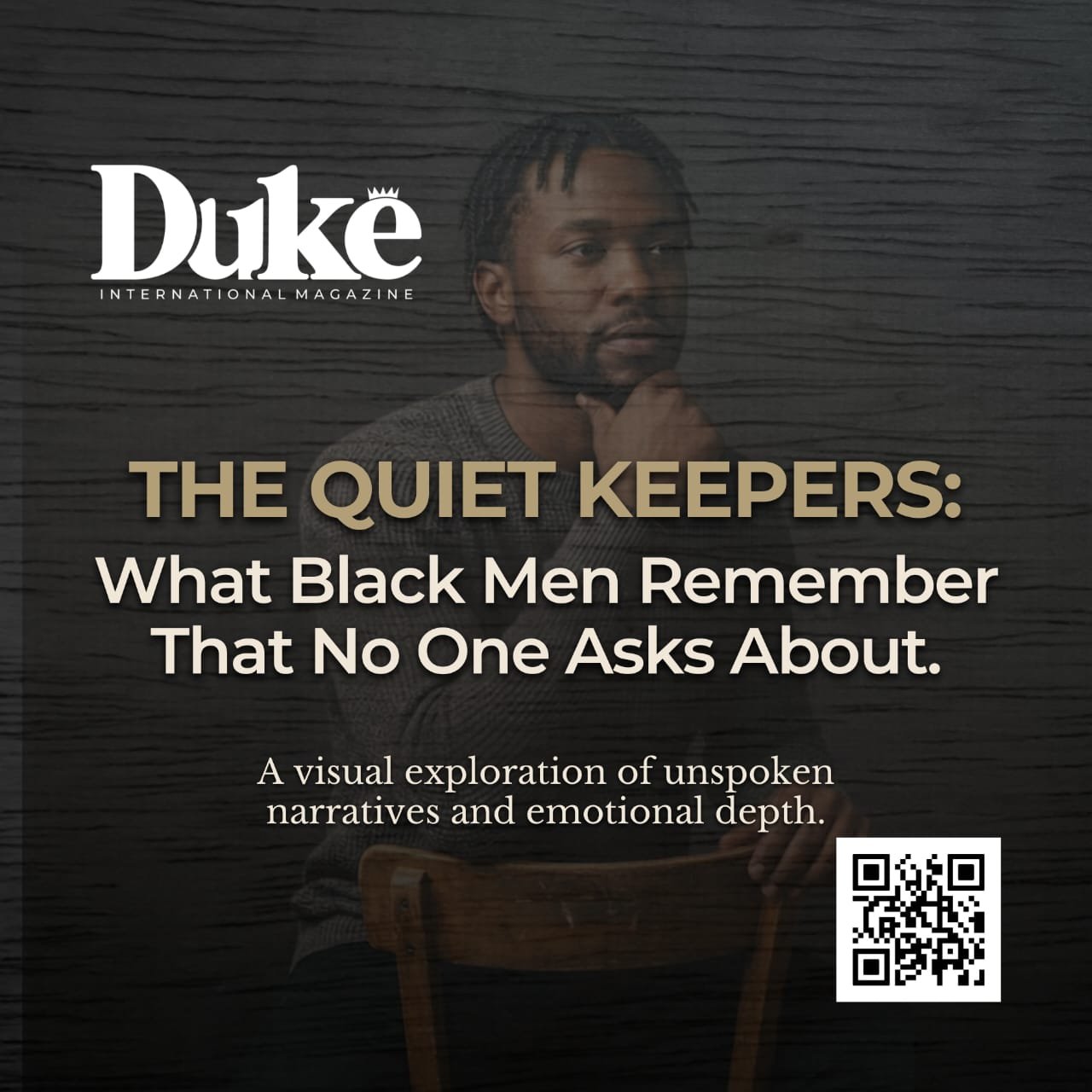
Across Africa and the diaspora, there are Black men who carry entire libraries in their heads. Libation prayers. Burial rights. The exact proverb that settles a land dispute. Which drum belongs to which ceremony.
And most of the time, nobody asks.
Not because people are cruel. Because life moves fast. And by the time someone thinks to ask, the old man has already buried that knowledge with him.
Three Things Black Men Refuse to Let Go
Some things survive. Not out of force, but out of quiet stubbornness.
Land memory. A man might forget his own phone number. But he knows exactly which patch of earth belongs to his family’s lineage and who can be buried where.
The pause. In many tribal traditions, silence before a decision isn’t hesitation. It’s consultation. Younger Black men are bringing that back into boardrooms and relationships. No app required.
Hard proverbs. “The child the village ignores will burn it down for warmth.” That line isn’t poetry. It’s a warning wrapped in wisdom. Men pass it down anyway.
Three Things Black Men Are Choosing to Forget
Not every tradition deserves a second life. Some are being dropped on purpose.
Shame-based rituals. Practices that once labeled children “illegitimate” or shamed widows are ending. This generation of men is simply refusing to pass them on.
Harmful initiations. Physical scarring. Dangerous circumcision rites. Men are asking a quiet question: just because my grandfather survived it, does my son need to?
The cooking rule. The old idea that men don’t prepare certain tribal meals is dying. Young Black men are now the ones keeping grandmother’s stew recipes alive.
The Diaspora Reality
For Black men born outside their family’s homeland, tribe feels different. It’s not a village they know, It’s a photograph. A surname with missing pieces, a greeting they almost get right.
So they build backwards. YouTube videos for language lessons. PDFs to understand lost rituals. DNA tests that raise new questions.
But strange thing: when one of them finally visits that ancestral village, the elders recognise something. Not perfect pronunciation. A walk. A laugh. A way of standing. Culture, it turns out, lives in the bones more than the books.
When He Is The Last one
There is a particular loneliness to being the last Black man in a family who still knows the old ways.
He stands at a graveside. No one else knows which side to pour the libation. He tastes a holiday dish. Everyone else smiles. He knows it’s wrong.
Then he makes a quiet decision: teach people who aren’t listening, or let the knowledge die with dignity. Most choose dignity, not out of bitterness, but out of exhaustion.
A Quiet Revolution
But some are fighting back in small ways.
Voice notes labeled “do not delete.” Hand-drawn family trees on cardboard. A single proverb sent as a text message. A recipe taught to a nephew who barely seemed interested.
No hashtag. No funding. No applause.
Just Black men deciding that some things should not disappear while they are still breathing.