

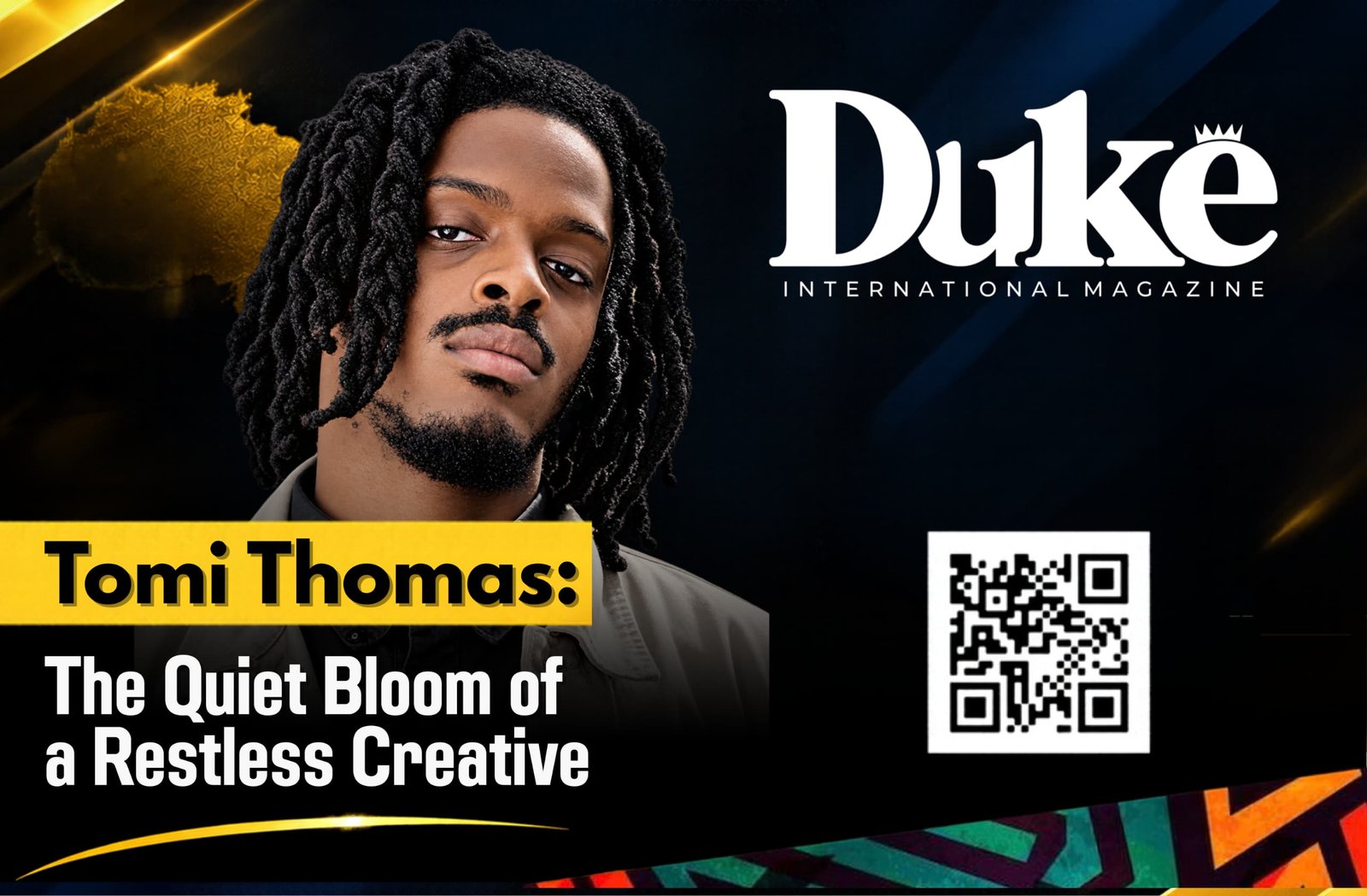
For an artist who has spent over a decade moving just outside the obvious lane, 2026 has finally given Tomi Thomas the spotlight his patience deserves.
The Lagos-born singer-songwriter has long been a quietly influential figure in Nigeria’s alternative music movement, first as a member of the collective L.O.S. (Loud on Sound) and then as a solo artist whose 2014 debut, Patience, fused Afro-pop, R&B, hip-hop and dancehall with a restless curiosity. A string of singles followed, including the 2021 EP Hopeless Romantic, but it is this year’s return that has truly marked a new chapter.
After a five-year gap between full releases, Thomas released In The Time It Takes To Bloom in September 2026. The five-track EP, his first project since 2021, features collaborations with Ghanaian heavyweights M.anifest and Efya, connecting his Lagos roots to a wider West African musical conversation.
The record does not feel like an attempt to reclaim the past; rather, it arrives as the product of incubation, a deliberate pause in an era where artists are expected to release music at a relentless pace. As one review noted, the silence felt less like an absence and more like a necessary period of creative gestation.
Offstage, 2026 has been equally transformative. In November, Thomas married Ghanaian songstress Efya in a three-day celebration in Accra. The couple held their traditional wedding on Friday 6 November, followed by a white wedding at the Underbridge Annex on Saturday 7 November.
The weekend concluded with a christening for their baby girl at Cedar Church on Sunday 8 November. The union drew attention not only for its cultural significance but also for the playful manner in which Efya acknowledged her previous public reservations about marriage, admitting with good humour that she had simply changed her mind.
For Thomas, the year represents a rare convergence of artistic and personal fulfillment. He has spent his career refusing to be boxed in by genre labels, and In The Time It Takes To Bloom extends that philosophy into a broader West African dialogue.
The comeback is here, and for an artist who has always operated on his own timeline, the next chapter may prove to be his most expansive yet.

