

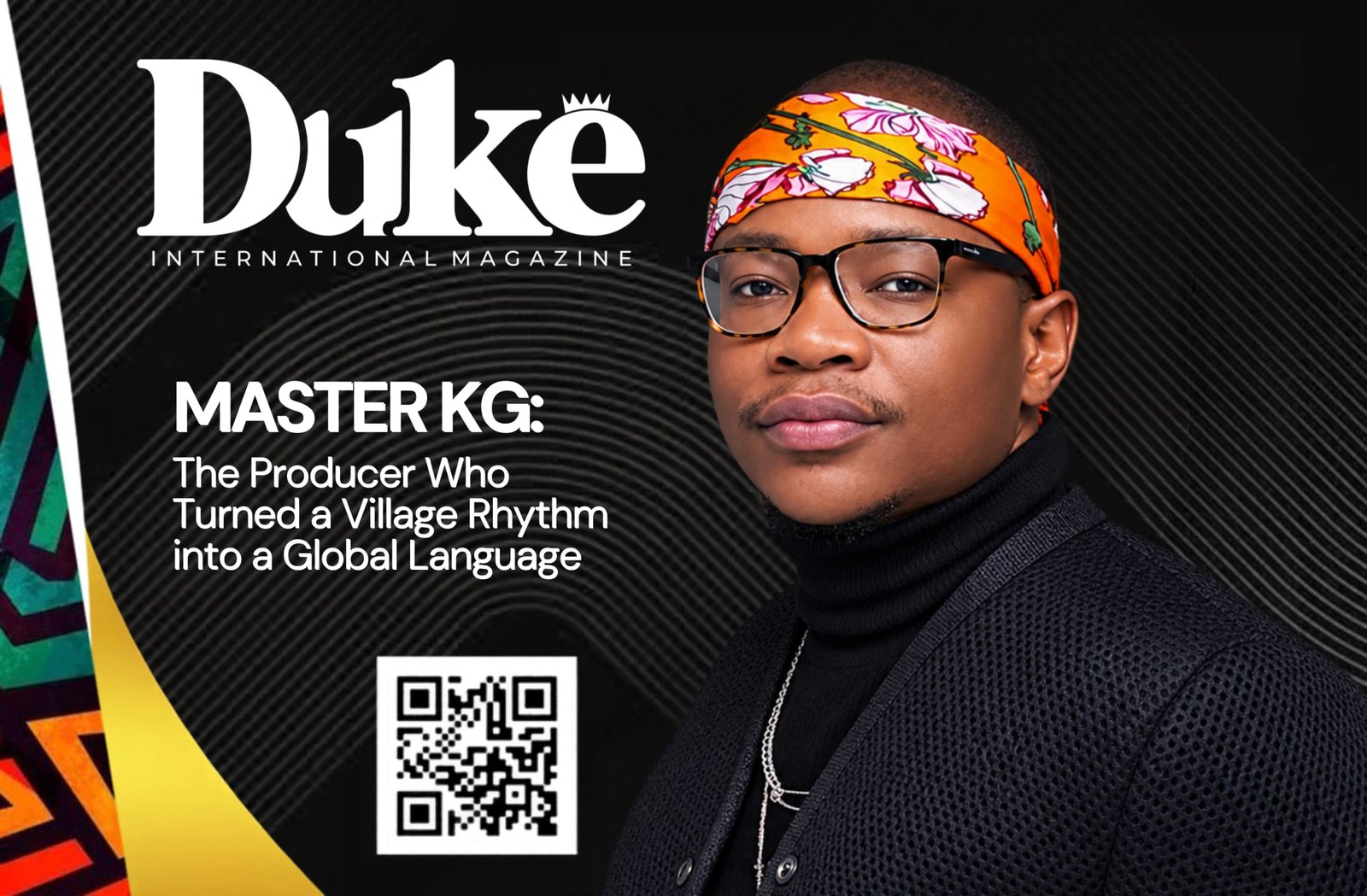
Master KG did not need a big-city launch to become one of Africa’s most recognisable music exports. Born Kgaogelo Moagi in Limpopo, he grew up far from the polished studios of Johannesburg, yet he built a sound that would eventually fill dance floors across the world.
His early experiments in music production began on a computer bought by his late uncle, and by his teenage years he was already shaping the bouncing, percussive style that became known as Bolobedu dance.
That style first reached a wider audience through Skeleton Move, a record that earned him an AFRIMA Award and signalled the arrival of a producer with a distinctive rhythmic signature.
But it was Jerusalema, released in 2019 with vocalist Nomcebo Zikode, that changed the scale of his career. The song began as a local success and then became a global phenomenon during the pandemic, helped by a dance challenge that drew in nurses, police officers, schoolchildren and footballers. A remix featuring Burna Boy widened its reach further, and the track topped Billboard’s World Digital Song Sales chart.
The success of Jerusalema brought Master KG international recognition, including Best African Act at the 2020 MTV EMAs. He has since worked with artists such as David Guetta and Akon, carrying his Bolobedu-rooted sound into new collaborations without losing the warmth and simplicity that made his breakthrough so powerful.
His music succeeds because it is communal rather than complicated: a beat that invites movement, a melody that travels easily and a sense of celebration that crosses languages.
For all the international acclaim, Master KG’s story remains closely tied to home. He represents a generation of South African producers who have used digital tools to take local rhythms global, and he has done so with a sound that is unmistakably his own.
From Limpopo to international playlists, his career shows how a distinct regional voice can become a shared global language.

