

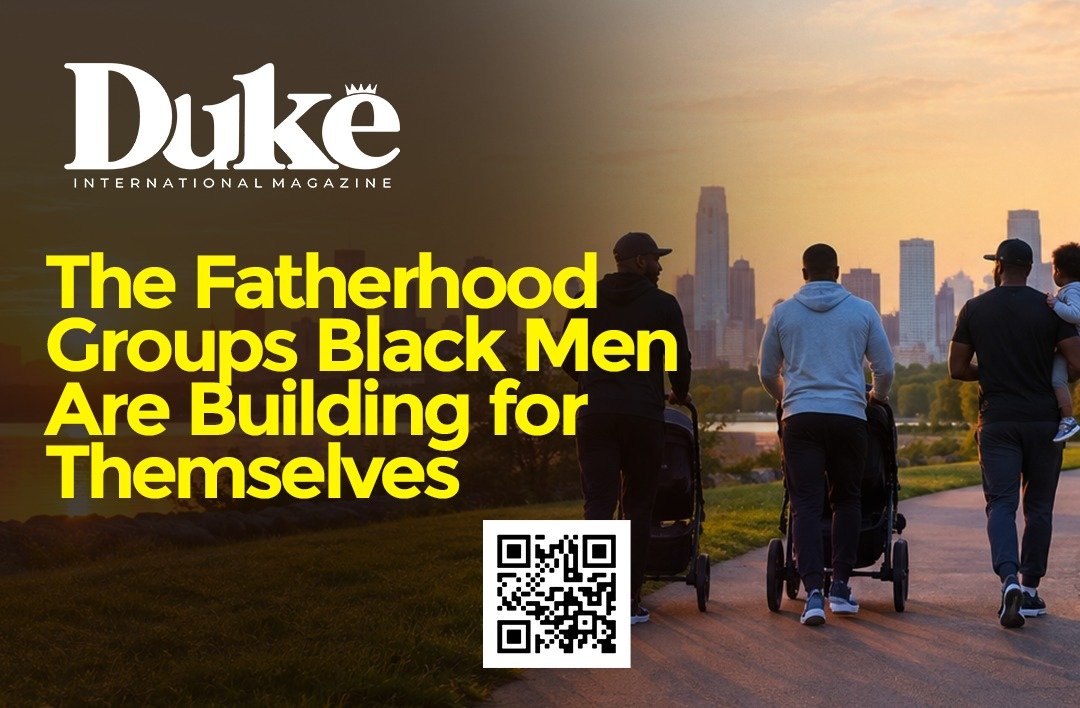
When Kouri Marshall and his wife were expecting their first son, he searched for resources in Chicago. Every class and group pointed toward his wife. The main advice was to support Mom. That advice was right, but Marshall asked a question few institutions answer: What about fathers? Where could they prepare emotionally?
Marshall launched Daddy Victory Club in summer 2024, shortly after his son was born, when he struggled to find resources for himself. “My wife had access to mom yoga, parenting groups, and a number of programs for her, so I didn’t see any for me,” he told CBS News Chicago. The Chicago nonprofit now connects with more than 300 dads through walks, fitness events, and fatherhood conversations.

Its Fathers Flow yoga program, hosted with Axon Yoga and Brand B Sports, draws dozens of Black fathers to the Obama Presidential Center on Saturday mornings.
“It’s really about providing an opportunity for Black men to engage and commune without the expectations of society,” says instructor Jason Campbell. “It allows us to tap into our inner selves and create a safe space for us to be vulnerable.” The first session drew about 20 dads. The latest saw 65 sign up.
The Movement Beyond Chicago
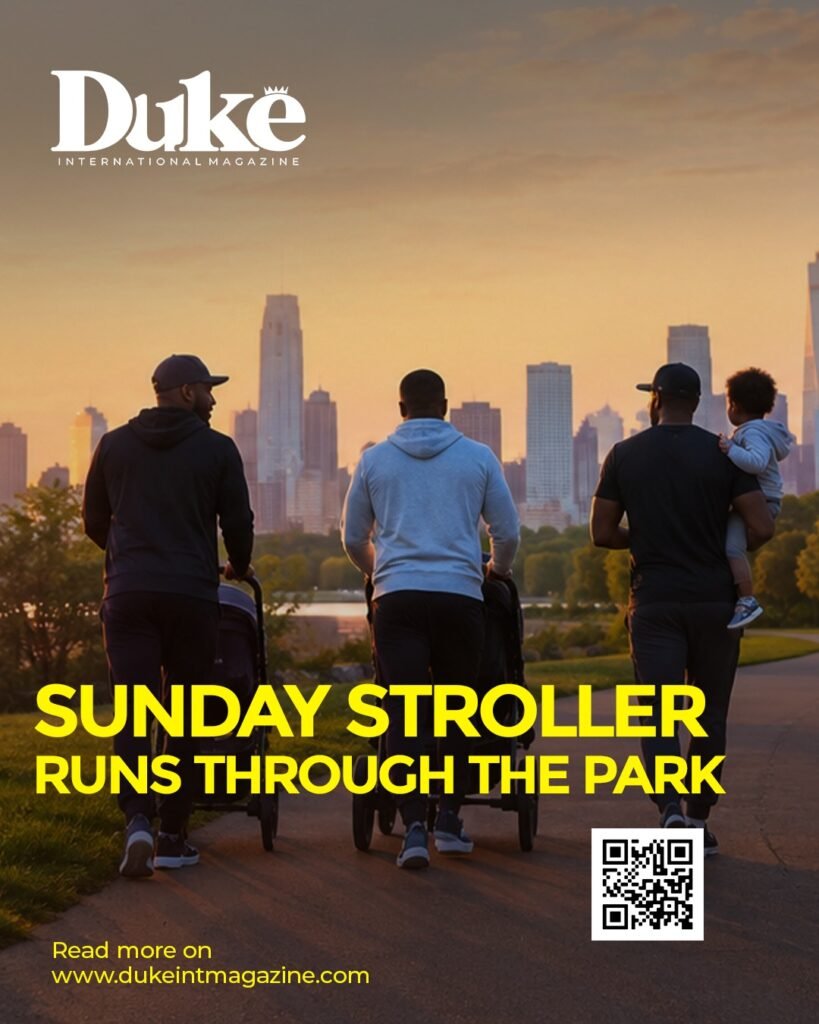
In Los Angeles, Hezekiah “Hez” Johnson founded Rolling With Dads. A personal trainer and nutritionist, Johnson started the Dads Stroller Running Club to get fathers back in shape and create space to talk about fatherhood. “It led me to want to build a community where fathers could have that space and get the help, the resources that they need to better themselves for their family,” Johnson told ABC7.
The Sunday stroller runs through Los Angeles State Historic Park have become a fixture. The nonprofit now has a contract with L.A. Care Health Plan to expand its programming across the city.
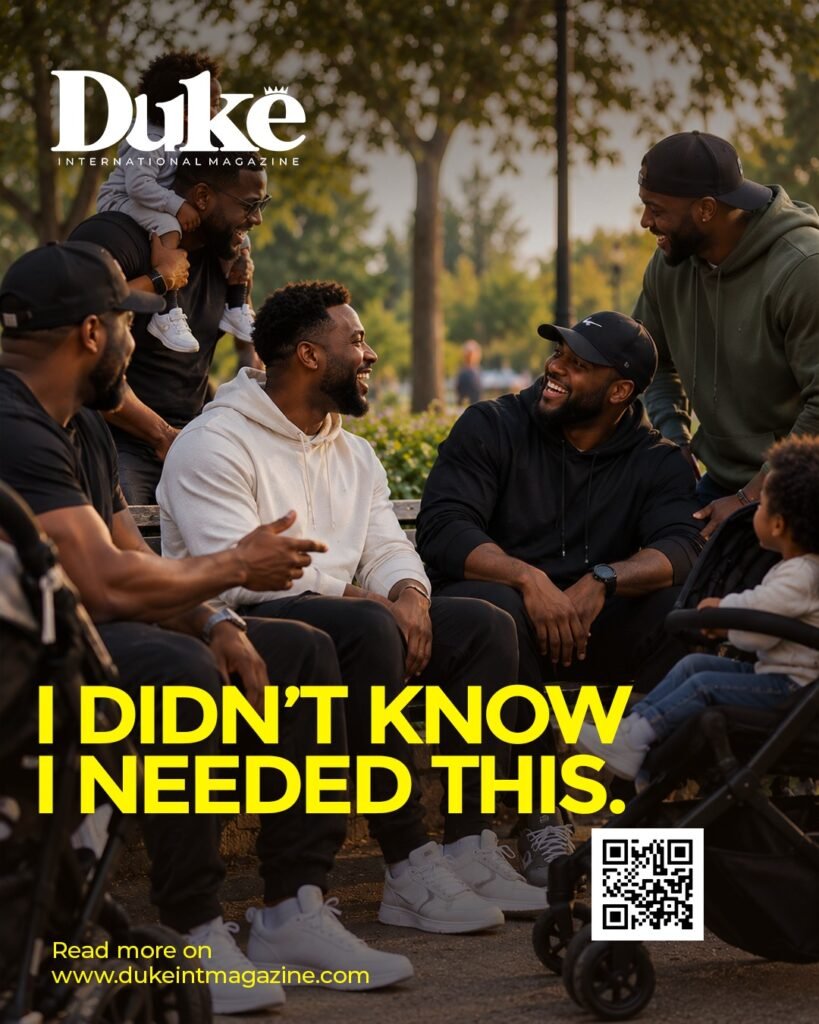
In Charlotte, Rashamod “Mod” Torrance founded Active Dad. “One of the greatest compliments is when guys say, ‘I didn’t know I needed this,'” Torrance told WBTV.
What started as a playdate that only two people attended has grown into a community of hundreds of young fathers connecting virtually and in person. Active Dad hosts a monthly Dad Tribe virtual call focused on men’s mental health. “The interactions that we have, the conversations that we have, it allows for men to know that they’re not alone,” Torrance said.
In Ontario, Canada, the Black Fathers Alliance offers a confidential peer support group designed to empower Black fathers and help them navigate systems that often present barriers. Its activities include educational webinars, virtual hangouts, and in-person father-child events. The group received a $298,800 grant over three years from the Ontario Trillium Foundation to offer tailored support groups and personalized system navigation.
What the Research Says
A study published in the American Journal of Public Health found that fatherhood in Black men is associated with lower rates of all-cause mortality by middle age compared to men who are not fathers. Among Black men in the study, fathers had lower death rates than nonfathers. The same association was not observed in White fathers.
But the findings come with caveats. This is an observational study, not a randomized trial. It cannot prove that fatherhood itself causes longer life. Fathers may differ from nonfathers in income, marriage, and social support.
“Fatherhood is increasingly recognized as a social influencer of health, but we were surprised to uncover racial differences in health outcomes of fathers, especially in relation to early death,” said lead author John James Parker, MD, of Lurie Children’s Hospital of Chicago. He said the protective effect for Black men needs more study.
The study also found that Black men who became fathers before age 25 had worse health trajectories. That makes support for young fathers even more urgent.
In 2023, U.S. Surgeon General Vivek Murthy declared loneliness an epidemic. Social isolation is associated with a 29% increased risk of heart disease. Black men already face a higher risk of dying from heart disease than the rest of the U.S. population. These father-led communities offer a countermeasure.
The Conversation in Nigeria
The conversation is also growing in Nigeria, though the context is different. In Nigeria, being Black is the majority experience. Fatherhood is shaped by culture, religion, economy, and extended family, not the same racial dynamics as North America.
The podcast MENtality with Ebuka, hosted by Ebuka Obi-Uchendu with cohost Banky W, devoted an episode to “Masculinity & Fatherhood” with artist Timi Dakolo and dancer and actor Hermes Iyele. They discussed how their upbringing shaped the fathers they are becoming and how men balance discipline, love, and emotional safety.
In Abuja, the Fathers & Sons Legacy Conference, an initiative of the Tee Adekunle Initiative for Boys, brought fathers, mentors, and boys together for a day of intentional fatherhood and mentorship. It recognized that many boys are raised without their biological fathers and welcomed mentors, guardians, uncles, pastors, teachers, and coaches.
“We did not gather simply to host another conference. We gathered to create moments that matter,” said convener Triumph Adekunle. “We believe the future is not somewhere we are going; the future is someone we are raising.”
The Reality Behind the Stereotype
The common thread is a refusal to accept the narrative that Black fathers are absent or disengaged. A CDC study has long shown Black fathers participating meaningfully in their children’s daily lives.
According to the 2013 National Health Statistics Report, 70% of Black fathers living with their children bathed, dressed, or helped care for them daily, higher than white (60%) or Hispanic (45%) fathers. Even among nonresidential fathers, research shows Black fathers are often more involved in co-parenting than fathers of other groups.
The reality has always been more complicated and more hopeful than the stereotype.
What’s Still Missing
These efforts remain largely invisible to national media and many family institutions. That is changing. Daddy Victory Club is working with a local hospital to include fathers throughout pregnancy, delivery, and postpartum. Rolling With Dads has partnerships with major health plans. Active Dad serves fathers nationwide online.
But the movement faces real challenges. Funding is precarious. Many groups rely on grants and volunteer labor. There are also questions of reach. Are these groups reaching low-income fathers, nonresident fathers, and young fathers, the populations the research suggests may be most at risk? The founders acknowledge the challenge. Torrance started Active Dad with a playdate that only two people attended. Marshall built Daddy Victory Club from scratch. These are not overnight successes.
A Dual Call
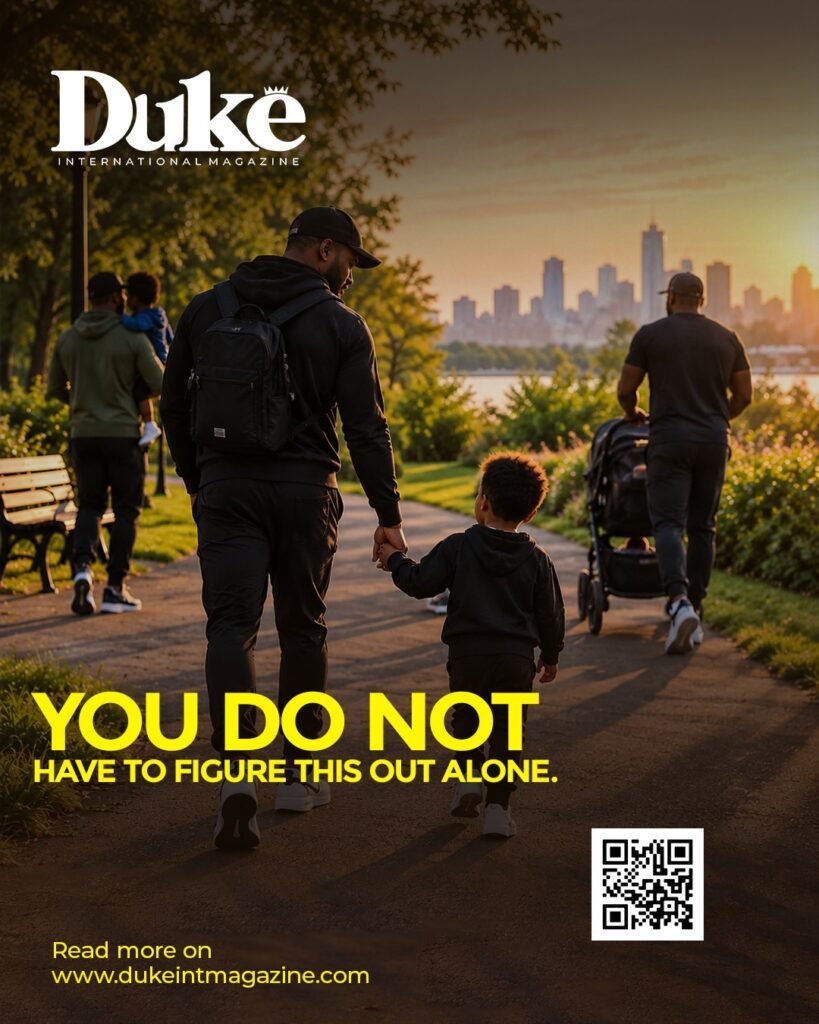
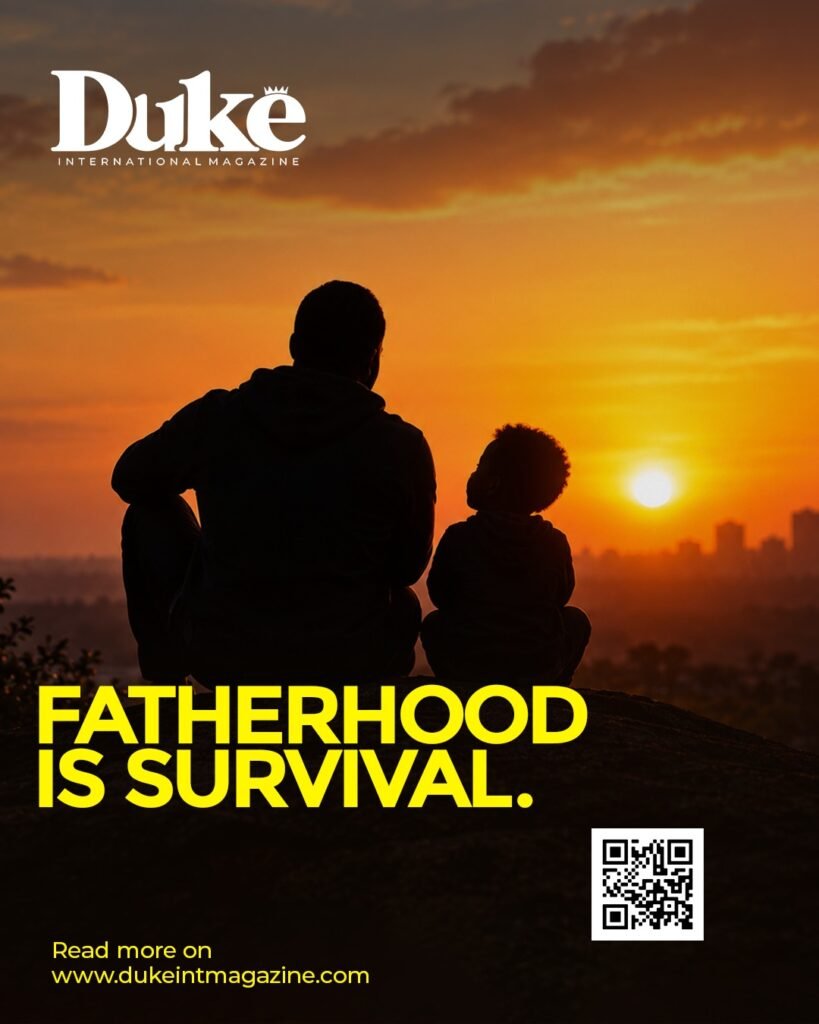
For Black men reading this, the message is clear: You do not have to figure this out alone. The community you need may already exist. Daddy Victory Club, Rolling With Dads, Active Dad, and the Black Fathers Alliance are all open doors.
If the group you need does not exist in your city, you have the power to build it. That is what Marshall, Johnson, Torrance, and others have done. Not because they had all the answers, but because they refused to accept the silence any longer.
But individual effort is not enough. Institutions have a role to play. Hospitals should include fathers throughout pregnancy, delivery, and postpartum. Employers should offer paid parental leave that fathers can actually take. Insurers should cover paternal mental health.
Funders should sustain these groups beyond the pilot phase. Policymakers should address the barriers that keep too many Black fathers from being present in their children’s lives.
The blueprint these fathers have created is simple: create the space, show up, and let Black men be vulnerable without judgment. The question now is whether the institutions that have long overlooked them will finally show up too.