

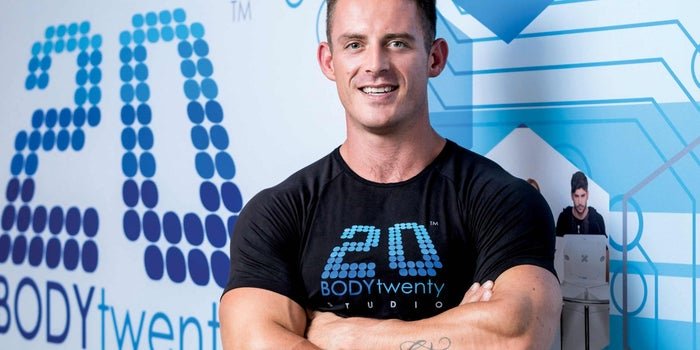
At 31, Bertus Albertse has built a R80-million franchising business that launched in the US in 2017. He has always apposition himself as an achiever since his school days, and his innovative approach to business is not any surprise. There has been a personal paradigm shift in Bertus’ life and mindset over the last 3 years. He was able to realize that his childhood was not something to be embarrassed about or buried. In fact, the adversity he’s lived through is a big driving force behind a need for control and success.
“It was a part of myself I’d never shared. I didn’t discuss it in school, and once I started training people and then building a business, I didn’t talk about it either,” says Bertus. “You’re focused on giving people the best customer experience possible, and that means putting your best foot forward, all the time. Admitting you aren’t always sure of what you’re doing, that you aren’t as confident as you look, or that you’ve struggled and needed to overcome real hardships, that’s just not part of the package.”
Bertus is self-driven, as he got good marks at school, was captain of any team he played in, and would train on Friday nights when everyone else was out having fun at the party. This same drive has led him to learn as much as possible about business, and the more he read, the more he realized that one of the things top entrepreneurs have in common is the fact that they’ve shared their stories; who they are and what they’ve been through are big contributing factors to their success.
“We’re made to believe that, to a large degree, our adversity is not part of what we project to the world. What do you tell a client that walks in, or a franchisee, or someone that has to be motivated on your team, do you tell them the worst part of your journey, or do you share something that will motivate them? This was always my approach. But the more I started accepting my story, the more I realized that the power of my story made me who I am today.
“Books like Simon Sinek’s, Start With Why, and A Storyteller’s Secret have had a massive impact on me. We shouldn’t ignore the fundamental things that have brought us to where we are today. Mindset, willpower, discipline, the ability to pick ourselves up when we fail, these are all critical success factors, and they’re all mental. If you want to build a strong business, you need to start with your mind. You need to know who you are, how you react to challenges, and why you are the way you are. Then you can harness your strengths, and hopefully work on your weaknesses, or at least be aware of them.
“Every time you solve a problem, it makes you realize there’s a bigger problem that you didn’t know you didn’t know. The things that you don’t know hurt you the most. This has been my biggest learning curve with franchising. You might know what it takes you to be successful, but what’s to say what it takes someone else to be successful? You’re now supporting other people who aren’t like you. The more honest you can be with yourself, and the more you can interrogate why you’ve been successful, and what lessons you can share with others, the higher everyone’s chances of success.”
It was within this context that Bertus realized the dangers of being placed on a pedestal. “When your success starts to grow, people naturally want to know more about you. What I found was that I’d been so busy putting my best foot forward, an assumption had grown that I knew everything; that I’d had everything in life, and that this had all been easy.
“The opposite was true. I knew that if I was going to inspire franchisees to believe in their own journeys, I had to let them into mine. Nothing comes easy. In fact, adversity can often be your greatest gift, provided you know how to harness it.”
Sequel to that understanding, Bertus started immersing into his personal psyche, motivations, habits, and the driving force behind his actions. It’s been an interesting journey, filled with pain and rewards.

Humble Childhood
Other than a good education, Bertus’s childhood years are characterised by having as little as you can possibly start with. His childhood is shaped by memories of the all-too familiar feeling of a car running out of petrol, or of his mother waking him and his sister up in the middle of the night, so that she could take them home for a few hours before returning them to their 24-hour créche before starting her next shift as a traffic cop. These were all factors that the future entrepreneur buried when he went to school, directing his energy into his studies and sports instead.
“There were so many things we couldn’t control growing up. My mother did the best she could do, but the reality was that we had very little. I realized that control was important to me, and that I could create my own success if I was disciplined, and so I focused on the things I could influence: My marks and how much I trained. I’d grown up watching a level of perseverance in my mom that influenced the way I viewed work as well.”
In fact, Bertus has a keen understanding of the various influences in his life and how they have shaped him. When he was nine years old, his mother married his step-father, and later, in his teenage years, he reconnected with his father. The men are vastly different in the way they view work and success, and yet Bertus learnt a lot from both of them, not necessarily to emulate either of them, but rather in what he wanted from life.
“Both the men in my life had started out without degrees. They worked and studied at night. They achieved success through sheer hard work, and they’d both been indoctrinated to work for someone else, because that gave you stability.”
For a kid who had known very little stability in his life outside of what he could personally control, working for someone else wasn’t very appealing, and his father agreed. “My father realized that if you truly want to be successful, you need to work for yourself. He really encouraged me to be an entrepreneur.
“One of the first things he taught me was ‘buy low, sell high, collect early, pay late’. That’s how you make money. It’s obviously not that simple, but it’s a good way for you to start thinking about business. I realized that if you’re good at something, don’t do it for free. That’s rule number one. Rule number two is understanding how you generate income and making sure that your income is higher than your expenses. But, I didn’t know about assets and balance sheets and how to generate wealth at that point. I was just starting to think about what a business would entail.”
While his father was pro-entrepreneurship, Bertus’ step-father was the opposite. “My step-father is a careful man. He’s got a good job, but he’s also frugal. He doesn’t take risks, and he has no debt. He’ll buy a smaller car, but he’ll pay cash.
“That’s how he operates. He instilled extreme positivity in us, and always put family first, but watching him made me realize that I’m not risk averse. If anything, I have a high impulse and risk appetite.
“The combination of these traits can lead you to taking good risks, or bad risks, it’s all about where your focus lies. I’ve always been aware of that and tried to channel my energy into the good risks — areas of my life that I could grow, build on, and hopefully also create an avenue of wealth for others.”
For Bertus, the secret is discovering what motivates you. “I believe in living life to the fullest. I live freely. One of the first decisions I made when I started earning my own money was buying a car I couldn’t afford. This was 150% against the advice of both of my dads, but it motivated me and made me run. I ran for my life. I could have it easier, with less stress, I create stress for myself, but it keeps me focused and driven. There are so many influences around us all the time. You need to find what matters to you. Mostly it’s trial and error. That’s okay. Just keep looking for it, you will find the answers you’re looking for.”
Self-Understanding
Key to Bertus’ journey has been understanding, and to a degree mastering, his own triggers. This isn’t always possible, but the more you understand why you do what you do, the more you can learn to harness that energy.
“I grew up in an OCD household. It was always fine, because I’m also OCD, I didn’t realize how much until I got to hostel and discovered it wasn’t normal to never want to sit on my perfectly made bed, or to shower for 45 minutes or brush my teeth for two hours. Sharing a room with other boys forced me to get rid of some of those habits, and I needed to channel that desire for control elsewhere, so I shifted it to sports and academics.
“This level of discipline is still massive for me, even today. I measure my day on zero to 100 every day. And each new day I’m back on zero, it doesn’t matter how productive I was the day before, or how big a deal we closed. I feel a sense of urgency to make extraordinary things happen today, each and every day.”
This sounds positive, but it has a dark side as well. “If I don’t wake up at 5am to start dealing with emails I feel like I’ve started on the wrong foot, which quickly makes me spiral and feel like a failure,” Bertus explains. “I’ve had to find ways to balance my OCD nature. I can be very disciplined, but if I start spiralling, I’m the most unproductive person on the planet. I need to keep myself in check.”
To find that balance, Bertus has learnt to choose his battles. “I can be very obsessive about one thing, and care nothing about something else. I can’t be obsessed about everything, so I have to choose where my obsessions will lie. I try and make these as positive as possible, focusing on training and supporting my clients and now franchisees.”
Bertus might be OCD, but self-discipline is a muscle just like any other, the more you work it, the stronger it becomes. “For me, it’s all about directing my energies to the right place. For other entrepreneurs, it’s choosing where they can make the greatest impact, and then being consistent in their efforts. Routine is everything.”
Bertus does have a caveat though: “Discipline alone, with no clear direction, can actually be a bad thing. You can easily become too focused on things that don’t drive success.”
Taking Risks For Rewards At 24
Bertus has never been employed. He started out self-employed while still at university. He chose to discontinue his studies and delve into entrepreneurship instead, opening a supplements store in Cape Town. “As an underweight kid I’d taken supplements to get my weight up. That, combined with training, was where my expertise lay.”
But Bertus knew it wasn’t enough. “I was just making ends meet. What I had wasn’t a wealth building mechanism at all. I wanted to make a bigger impact in my own life, and in the lives of my clients. I believed a more holistic approach focused on training was a way to do that.”
Bertus wasn’t alone. He was 24 years old, and had a young wife and three children, one of whom was from his wife’s previous relationship. Given the risks involved in trying something new, many people would have stuck with the business opportunity that wasn’t a significant success, but that was paying the bills.
Bertus had different plans. “You need to run for your life,” he says. “That stress, the risks involved — they’re what drive me. I always tell our young trainers that if they really want to be successful, they need to move out of their parents’ homes. The most basic necessities should be at risk. There’s nothing like fear to motivate you.”
With this in mind, Bertus launched Body20 from his living room in 2013. He had R85,000 in an Allan Gray investment fund that he’d started while he was still studying. He decided the time had come to draw that cash, but it still wasn’t enough.
A friend had introduced him to Electro Muscle Stimulation (EMS) technology, and the whole set-up was R220 000. Luckily, this friend believed in the concept, and agreed to invest in Bertus’ business idea. “I paid the loan back within a year, but he was really investing in the purpose, and he and his wife received free training. It was exactly what I needed to get me started.”
From the word go, Bertus understood a key element that would ultimately lead to Body20’s success: When it comes to EMS technology, the tech itself isn’t a differentiator. “There’s no exclusivity,” Bertus explains. “There are multiple tech providers available, and no one holds patents. There were also already competitors in the market, so I knew this wasn’t my competitive advantage.”
What Bertus also recognized was that the players in the market were focusing on their offerings as niche. He believed it could be a more mainstream addition to training programs, working in conjunction with conventional gym sessions, and to help pro and amateur athletes prepare for big events. He went in with a different differentiator in mind: Service.
“At the time, I just wanted to move out of my living room and into a studio. I had no plans to franchise. I believed that my passion and willingness to serve would set me apart.” And it did. “My clients saw how much I loved what I did, and they started asking me how I’d started out. They were intrigued by the lifestyle I lived, yes, success was growing, but I was also living my passion. That drew them.”
Slowly, Bertus’ clients started enquiring about franchising opportunities, and the idea started to take shape that not only was franchising an opportunity to scale the business, but it would help Bertus to share his passion with others, empower them and provide them a means to also build wealth.
Shift To Franchising
Franchising has been an incredible experience for Bertus and Body20 has gone from strength to strength, growing from one studio in 2013, to franchising in 2014 and encompassing 38 studios in early 2018, including three studios in the US. But there have also been a multitude of lessons for the young entrepreneur to learn.
“Franchising as a growth strategy has never been about the capital, if that was the case, we could be a corporate that raises funds through investors. But this is a service business, and that means you need someone in the studio who is passionate about the business and their clients, and franchising enables that. We want to create opportunities for other people. This means supporting franchisees, and in some cases, even investing in the right operators who don’t have the capital to set up their own stores.”
The shift from studio owner and personal trainer to franchisor has not been without its own significant growth hurdles.
“The most interesting lesson I’ve learnt is that franchising is a completely different business model to operating your own business,” says Bertus. “That’s the problem; there’s no one bridging the gap for you. You can go to a franchise attorney to draw up your franchise agreement, but that doesn’t tell you how to operate your franchise. How do you suddenly put up an operational infrastructure to support other people to be as successful as you, when you don’t yet know what they need? It’s difficult to know what someone else needs in their business, even if it’s the same business that you were in.
“Everyone comes at business from a different perspective. We’re all indoctrinated in different ways. I had momentum in this industry. How do you carry that through to someone else who is a mechanic, an attorney, a teacher, or a CA? What do they each need? How do different studios operate in different areas? There are so many variables to consider, and we didn’t always get them right.”
Bertus understood he knew nothing about franchising, but he had no idea of the lessons that lay in store for him until he took the plunge. “This is the biggest difference between corporate and entrepreneurship,” he says. “In a corporate environment, you get clarity first, before you take action. In entrepreneurship, you only get clarity through action. You only know where you’re going once you start moving, clarity comes from doing.
“When you start taking action, you’re already on the path to finding answers, you’re hitting the problems you’re going to encounter, which gives you the opportunity to find the solutions you need to keep moving forward. You won’t always get it right, the path to successful business is littered with failures, but you can’t overcome obstacles unless you’re encountering them.”
One of Bertus’ biggest learnings has been that effort alone isn’t enough to carry you through. “I used to believe that effort equals success in battle,” he says. “This was my guiding mantra, that if you worked hard enough, anything was possible. Franchising took me from being a sole operator to a business owner, and I now know that effort equals a lot of work and a lot of lessons learnt, but that you’ll still get nowhere if you don’t have a solid strategy in place.
“Success equals strategy plus effort. Busyness and success are not the same thing, nor are busyness and effectiveness. Effectiveness happens when you’re busy with the right strategy. This has been huge for me, finding the balance between strategy and effort.
“In 2014 I used to receive no less than 100 phone calls a day. I had to deal with clients, solve franchisee problems and be available for all the people looking for me hourly. I used to think ‘how do you upscale from this?’ I couldn’t take any more calls and I didn’t have a second of the day to think about anything other than getting back to people. I knew I needed to have those problems, if you don’t, you’re not on the right wicket, but how do you upscale from taking a hundred calls to five calls?
“I once had someone tell me that the day would come when I wouldn’t receive a single call. I just thought they didn’t understand my business. After all, my primary role is sales and marketing, how could I not get that many calls? I still believed that effort equalled income. The moment I started focusing on strategy though, this started shifting.
With a focus on strategy came systems, processes, well-documented operations. These all empowered people, and the ‘busyness’ started to fall away. I started to find the time to work on key areas that would drive the business forward. My phone didn’t ring as much, because there were systems and processes in place that meant the entire operation was starting to flow. I’ve learnt that the more successful you are, the less busy you’ll be.
This doesn’t mean you work less, just that you do less busy work. It’s replaced with focused, strategic work. When you’re busy, you’re just dealing with what’s in front of you. A strategic focus is looking at three, five and ten years down the line.”
Going Global Body20’s next big growth move has been into the United States. “Like any growth strategy, we’ve had highs and lows, and we’ve needed to learn a lot of lessons,” says Bertus.
“The interest and uptake has been incredible, not just within the US, but from local entrepreneurs looking to expand into international markets as well.” At the time of going to print, Body20 had already sold three franchises in Florida, with another four in the works. These have brought strong capital contributions into the business as a whole, but not everything has been smooth sailing.
“On the one hand, the first store broke even within four months, when our projected time frame was eight months,” says Bertus. “That’s incredible. But we’ve also learnt that no two markets are the same.
“South Africa is geared for business. We love it here. We sell a lease and the studio can be open within three weeks. There’s no permitting, no inspections, none of that exists here.
“The US on the other hand is an extremely regulated environment. For example, we signed a lease in February 2017, expecting to be open in June and excited about a great leasing deal that gave us four months’ beneficial occupation to set up the store. Except it took us nine months to get up and running.
“In South Africa, this would have taken us under a month. It was an expensive lesson. Not only were we burning through cash, but the franchisee needs to stay motivated while you wait. The project flow and milestones are inherently different.”
From a franchisor perspective, operating across two continents also has its challenges. “We’re essentially selling our time. This is a services business, and our clients are our franchisees. What we didn’t take properly into account when we started was the incredible travel times involved in doing business in the US. It took us 20 hours just to get to Miami, and a further six to California. You have to factor in all that time when you’re planning your schedules. It’s been a huge adjustment.” That said, it’s also clearly been a rewarding one, and Body20 is still only just getting started.