

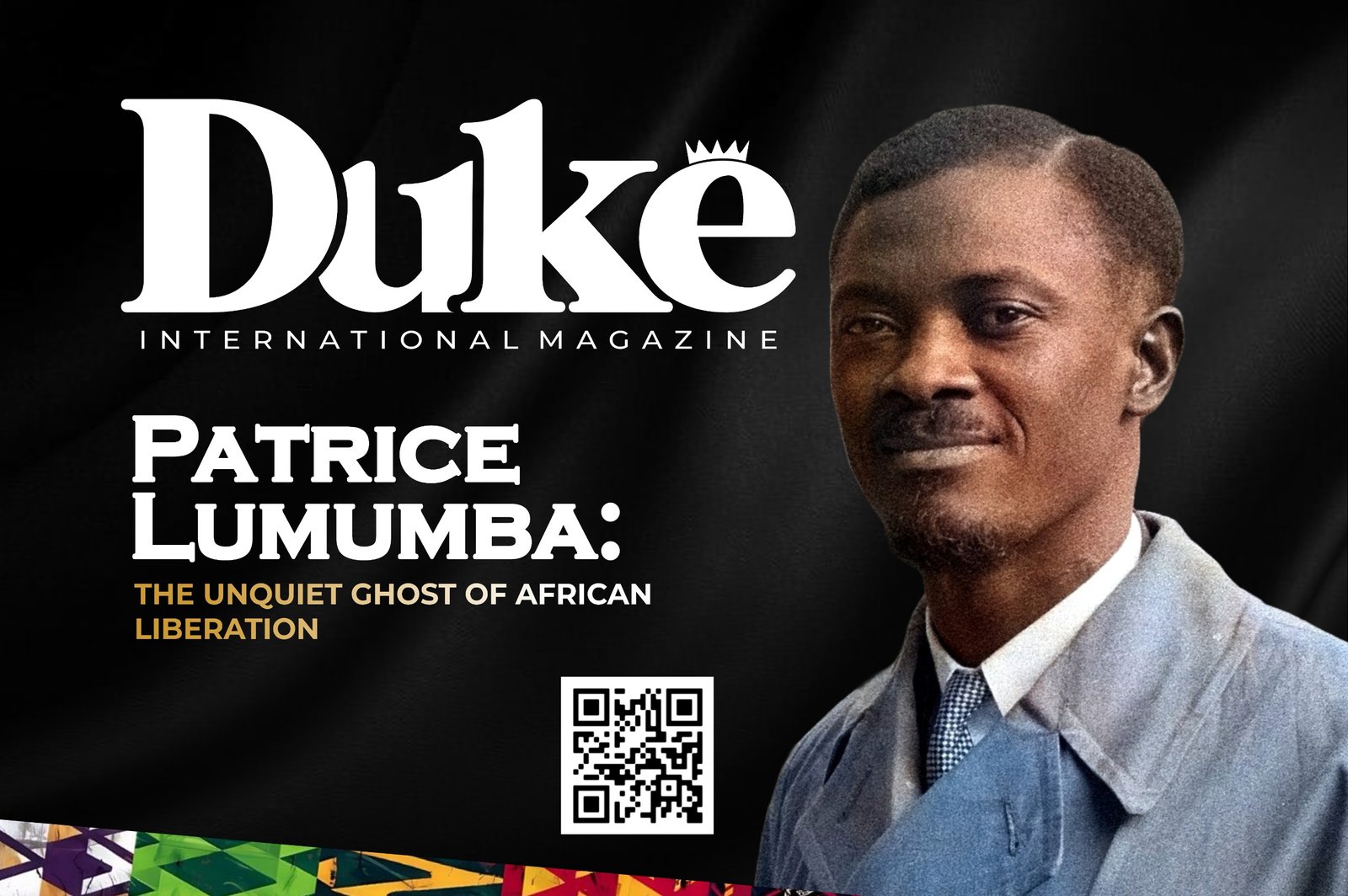
he bullet-riddled tree still stands in the Katangan forest, its bark grown thick over six decades, swallowing the lead that silenced Africa’s most incendiary voice. Yet no cambium layer can contain the ideas of Patrice Émery Lumumba—the first democratically elected Prime Minister of independent Congo, murdered at 35 but whose 90-day presidency haunts the continent like a recurring dream. In an era when many African leaders measure legacy in bridges built and GDP curves, Lumumba’s specter asks harder questions: What is freedom without economic sovereignty? Can a nation truly be born in the language of its colonizers?
Born in 1925 to illiterate farmers in Kasai province, Lumumba was that most dangerous of things—a colonial subject who mastered the master’s tools too well. Educated at missionary schools, he absorbed French philosophy and Flemish poetry while working as a postal clerk, spotting the contradictions in Belgium’s “civilizing mission.” His political awakening came in 1955 when, during a study tour of the metropole, he witnessed white miners’ children eating strawberries while Congolese laborers starved underground. “They told us Europe was light,” he later wrote. “But light cannot exist without shadow to define it.”
Lumumba’s meteoric rise coincided with Congo’s chaotic 1960 independence—a transition so rushed Belgium didn’t bother changing civil service personnel. His famous Independence Day speech, delivered before a seething King Baudouin, was an act of rhetorical regicide: “No Congolese worthy of the name can ever forget the ironies, insults, and blows we endured morning, noon, and night…” The gallery of Belgian dignitaries sat stunned as he tore up the script of grateful subjecthood.
What followed was less governance than high-wire statesmanship under siege:
- July 1960: Katanga secedes with Belgian mining support
- August: UN “peacekeepers” arrive but refuse to crush rebellion
- September: Lumumba appeals to Moscow, triggering Cold War panic
His fatal miscalculation was believing words could shield him from realpolitik. When Eisenhower reportedly authorized his elimination (“Lumumba should be eliminated from any possibility of governing”), the machinery of empire ground into motion. The CIA supplied poison; Belgian officers supervised executions; Katangan forces burned his body in acid—a necropolitical overkill betraying their terror of his afterlife as a martyr.
Yet Lumumba’s true legacy lies beyond martyrdom. His vision—articulated in prison letters and smuggled speeches—anticipated 21st century decolonial thought by half a century:
- Linguistic Liberation: Proposed replacing French with Lingala as national language
- Resource Radicalism: Demanded Congolese control of uranium deposits (used for Hiroshima bombs)
- Pan-African Pragmatism: Sought Ghana-Guinea-Congo federation years before OAU
Today, his face adorns everything from Congolese banknotes to London murals, but commodification hasn’t dulled his edges. The same questions that doomed him now plague Africa’s resource wars: Why does 75% of Congo’s cobalt wealth flow abroad while children dig it barehanded? How many coups disguise neocolonial resource grabs?
In Brussels’ Africa Museum, a single Lumumba tooth—all that remains of his body—was finally returned to his family in 2022. The relic now sits in a Kinshasa mausoleum, but his ideas refuse entombment. From Niger’s uranium fields to South Africa’s mines, the same refrain echoes: “We were not made poor by nature, but by men who came from far away.” Sixty-three years after his murder, Lumumba’s most dangerous thought endures—that Africa’s emancipation remains unfinished business.