

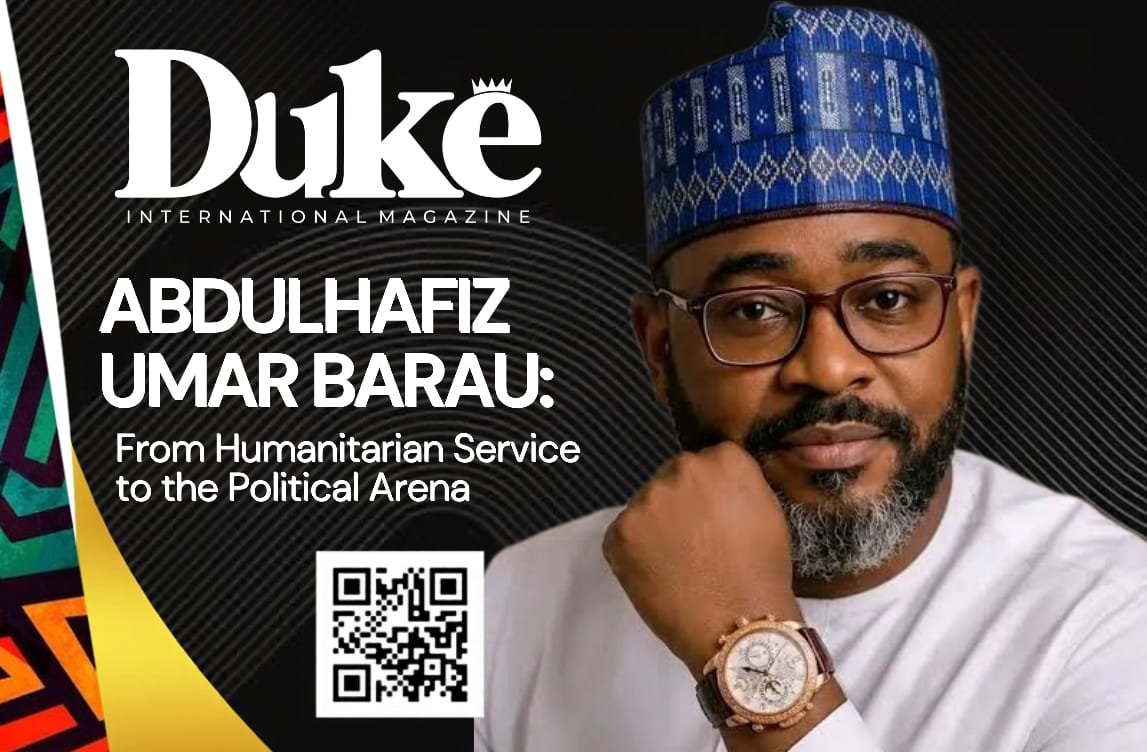
Abdulhafiz Umar Barau is a Nigerian philanthropist and politician whose profile has risen through humanitarian work and, more recently, his pursuit of elective office. Known by the traditional titles Dan Isan Gusau and Magayakin Tsafe, he is the founder of the Abdulhafiz Umar Gusau (AUG) Foundation, a vehicle for community development across Northern Nigeria.
Through the AUG Foundation, Barau has implemented food relief programmes, educational support, youth empowerment schemes and health-related interventions aimed at vulnerable communities.
The foundation places emphasis on transparency, dignity and community ownership in its humanitarian service. In February 2026, it sponsored JAMB registrations for 200 students in Zamfara State, targeting those seeking admission into tertiary institutions. A separate initiative partnered with the Mata Masu Dubara women’s group to empower women in Gusau.
His humanitarian record has attracted recognition. In December 2025, he received the Arewa Humanitarian Award at a ceremony in Abuja, honouring his contributions to grassroots empowerment and community-driven development across Northern Nigeria.
In October 2026, he was further honoured with the African Democracy Humanitarian Icon of the Year award at the Democracy Heroes Award Africa ceremony. Zamfara State Governor Dauda Lawal congratulated him on the award, encouraging him to sustain his support for vulnerable people.
Barau has also entered the political arena. In March 2026, he declared his intention to contest the Zamfara Central Senatorial District seat. His political journey has taken him across party lines.
He resigned from the Nigeria Democratic Congress on 1 August 2026 amid disagreements over the party’s nomination process, joining the National Rescue Movement the same day. On 20 August 2026, he emerged as the NRM candidate for Zamfara Central, following a substitution and affirmation process.
Speaking after his affirmation, Barau struck a measured tone. “The platform has changed, but the purpose has not. The people remain the reason,” he said. He described the party ticket as an opportunity to seek the people’s mandate rather than a guarantee of victory: “A political ticket is not a victory and it is not a crown. It simply gives you the opportunity to stand before the people and ask for their trust. The real decision belongs to the people.”
His campaign priorities include security, agriculture, education, economic opportunities, and youth and women empowerment. He has stressed the importance of ensuring farmers can safely access their farms and communities can pursue their livelihoods without fear.
He has also called for issue-based campaigns, reminding political actors that “those seeking the same mandate through other political parties are our political competitors, not our enemies.”
Beyond his humanitarian and political activities, Barau has professional interests spanning business development, operations, strategic partnerships and investment facilitation. His trajectory suggests a figure who has sought to build a public profile through service and community engagement, now testing whether that record can translate into electoral success.