

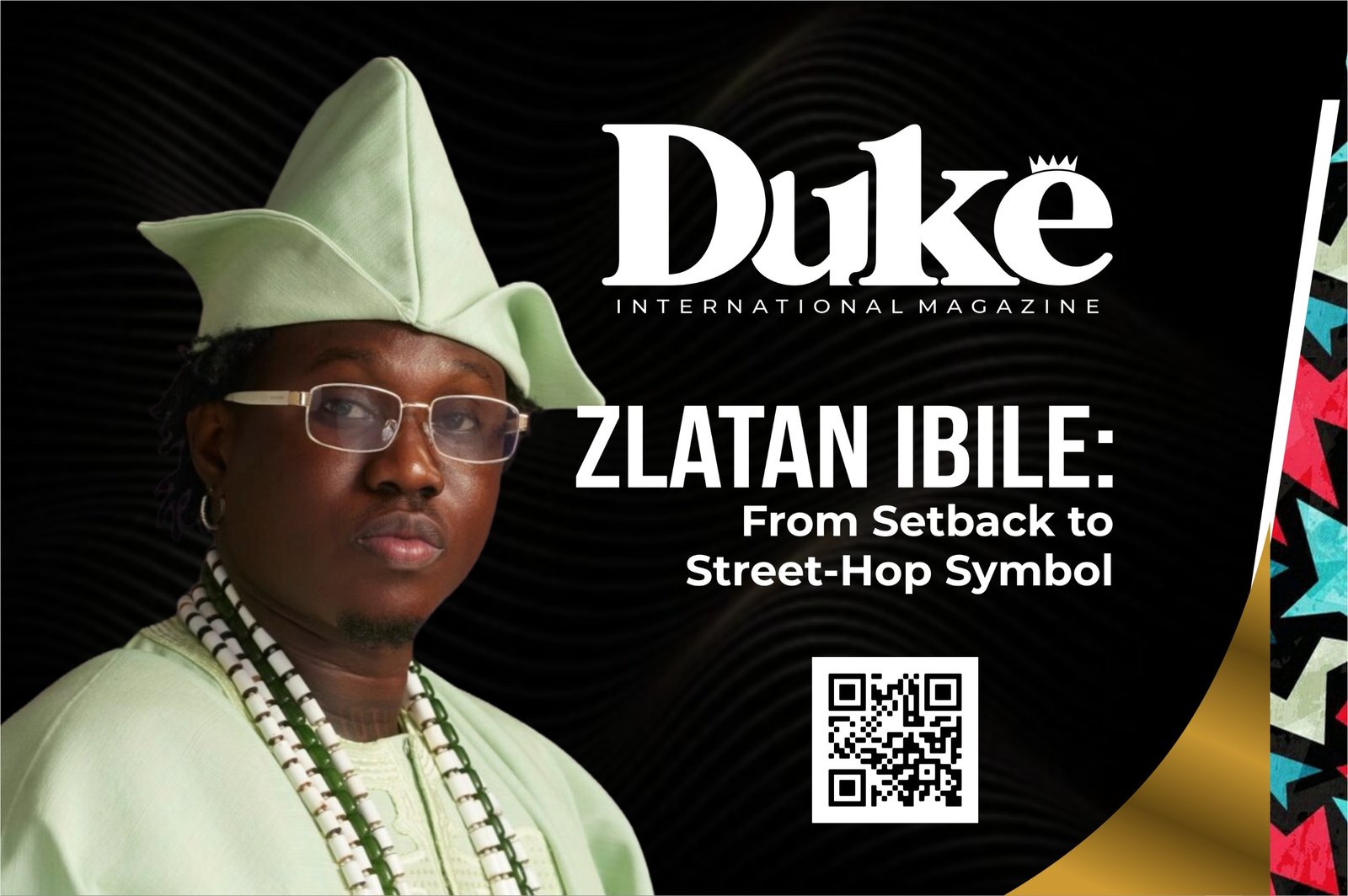
Omoniyi Temidayo Raphael, known to fans as Zlatan Ibile, has built a career on turning obstacles into momentum. The Nigerian artist’s early disappointment at failing university entrance exams in mathematics and accounting might have ended another dream. Instead, it pushed him towards music, and that decision has since reshaped his life and left a mark on Afrobeats and street-hop.
Born in Ikorodu, Lagos, Zlatan first caught public attention in 2014 when he won the Airtel One Mic talent show at the age of 19. The prize included a car, which he used to move between studios and performances, treating it less as a luxury than as a practical tool for building a career.
Singles followed, but it was the 2017 Olamide-assisted track “My Body” that strengthened his place in the industry and introduced his energetic style to a wider audience.
His contribution to Nigerian pop culture extends beyond records. Zlatan popularised the “Zanku” dance, an abbreviation of “Zlatan Abeg No Kill Us,” which spread across the continent and became a viral movement.
The dance captured the playful, communal energy that runs through his music, but his catalogue often carries a more serious message. His sound blends Afro-pop, street-hop and gospel-infused melodies, with lyrics that frequently emphasise hustle, resilience and faith rather than pure escapism.
That outlook is central to his 2025 album, Symbol of Hope, a personal project that reflects his grass-to-grace journey and his wish to motivate listeners who have been underestimated or written off. It is a theme that runs through much of his work: success is not simply about fame, but about proving that beginnings do not determine endings.
Zlatan’s influence also reaches into fashion through his label ZTTW, and his presence on stage and online has made him one of the more recognisable figures in contemporary Nigerian music. His personal life has drawn attention too. In October 2026, he married his longtime partner, Davita Lamai, in a traditional ceremony in Oniru, Lagos.
The celebration was a rich display of heritage, with the couple first appearing in Edo-inspired attire adorned with coral beads before changing into coordinated Yoruba outfits. Davido, one of Zlatan’s closest friends, stood among the groomsmen, while the event followed a private civil wedding held earlier in the year.
The couple, who share two sons, had kept much of their relationship away from the spotlight, making the public celebration a significant moment in a career that has often been defined by its openness.
Yet the most compelling part of his story remains its central lesson. A failed exam did not close the door. It redirected him to a studio, and from there he built a platform that speaks as much to the spirit as it does to the dance floor.

