

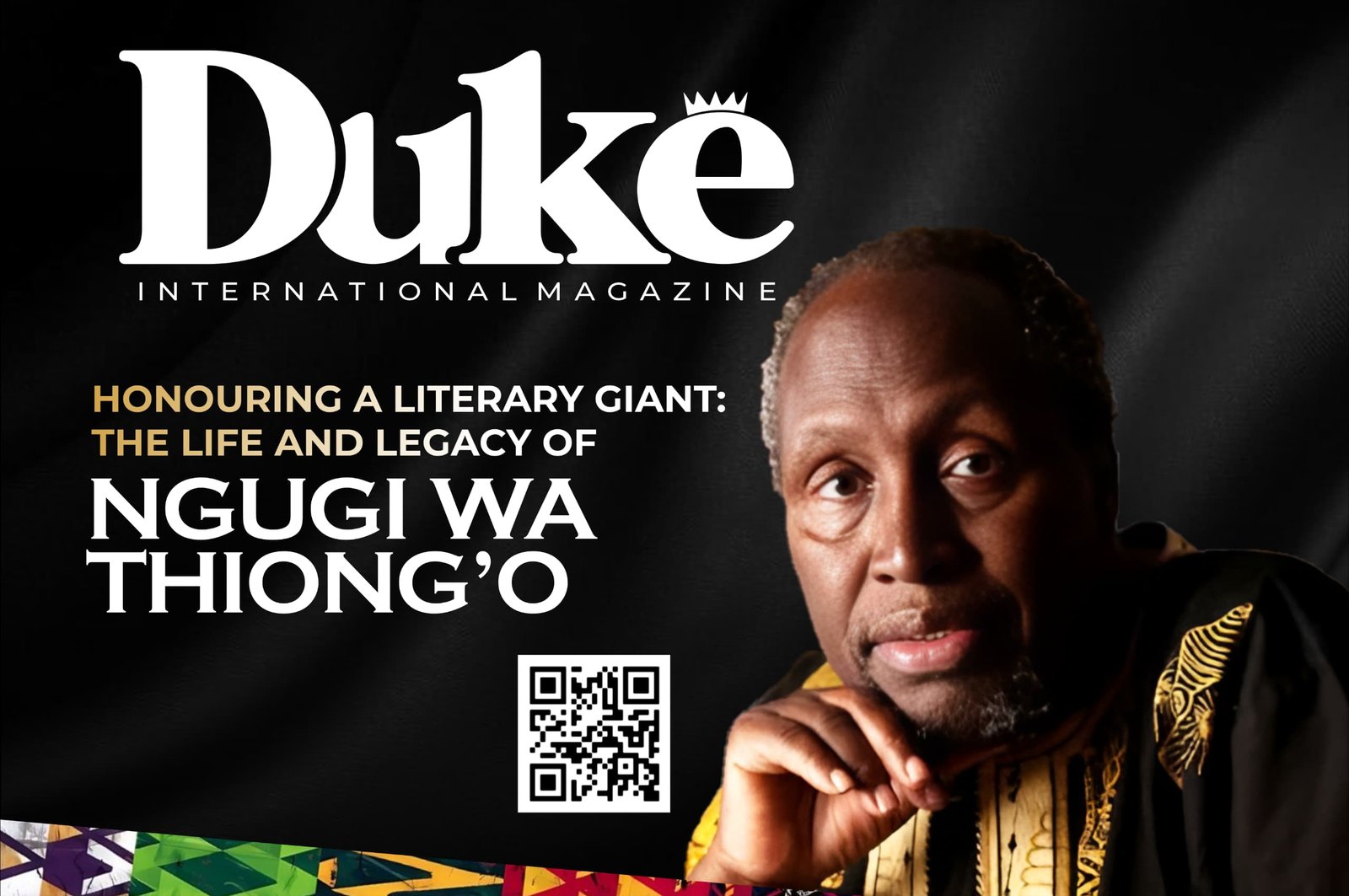
The world of literature has lost one of its most formidable voices. Ngũgĩ wa Thiong’o, the towering Kenyan writer and activist, has passed away at the age of 87. A titan of African literature, Ngũgĩ’s work spanned six decades, chronicling Kenya’s journey from colonial rule to independence—and beyond.
A Life Shaped by Colonial Struggle
Born James Thiong’o Ngũgĩ in 1938, he grew up in a Kenya still under British rule. His early years were marked by hardship—his family were low-income agricultural workers, yet they scraped together funds to send him to a missionary-run boarding school.
But colonialism’s brutality was inescapable. Returning home one term, he found his village razed by British forces, his family among thousands detained in camps during the Mau Mau uprising. His deaf brother, Gitogo, was shot dead by a soldier for failing to obey an order he couldn’t hear. These experiences would fuel his lifelong critique of oppression.
From English to Kikuyu: A Revolutionary Shift
Ngũgĩ first gained acclaim with his 1964 novel, Weep Not, Child, the first major English-language novel by an East African. But by the 1970s, he made a radical change—rejecting his colonial name (becoming Ngũgĩ wa Thiong’o) and abandoning English as his primary writing language.
His 1977 novel, Petals of Blood, sharply criticised Kenya’s post-independence leaders, leading to his arrest. Jailed without trial, he penned Devil on the Cross—on toilet paper—becoming a symbol of resistance.
Exile, Activism, and Legacy
After a death threat in 1982, Ngũgĩ spent 22 years in exile, teaching at top US universities. Even upon his return to Kenya in 2004, tragedy struck—his wife was raped, and he was brutally attacked in what he called a political assault.
A fierce advocate for African-language literature, he famously clashed with his mentor, Chinua Achebe, over writing in English. His essay collection, Decolonising the Mind, remains essential reading for challenging colonial legacies in literature.
A Complicated Personal Life
Ngũgĩ’s legacy isn’t without controversy. His son, Mukoma wa Ngũgĩ, accused him of domestic abuse—claims Ngũgĩ never publicly addressed. Yet his literary influence is undeniable, with many considering him Nobel-worthy.
Despite battling cancer, heart disease, and kidney failure, Ngũgĩ’s spirit never dimmed. As Chimamanda Ngozi Adichie once said, he was a “guiding light”—one whose words will continue to inspire.
Why Ngũgĩ’s Work Still Matters
In a world where African literature is still dominated by European languages, Ngũgĩ’s insistence on writing in Kikuyu was revolutionary. His life reminds us that storytelling isn’t just art—it’s resistance.
What do you think? Should more African writers embrace their native languages? Share your thoughts below.
Follow us for more culture and literature insights!