

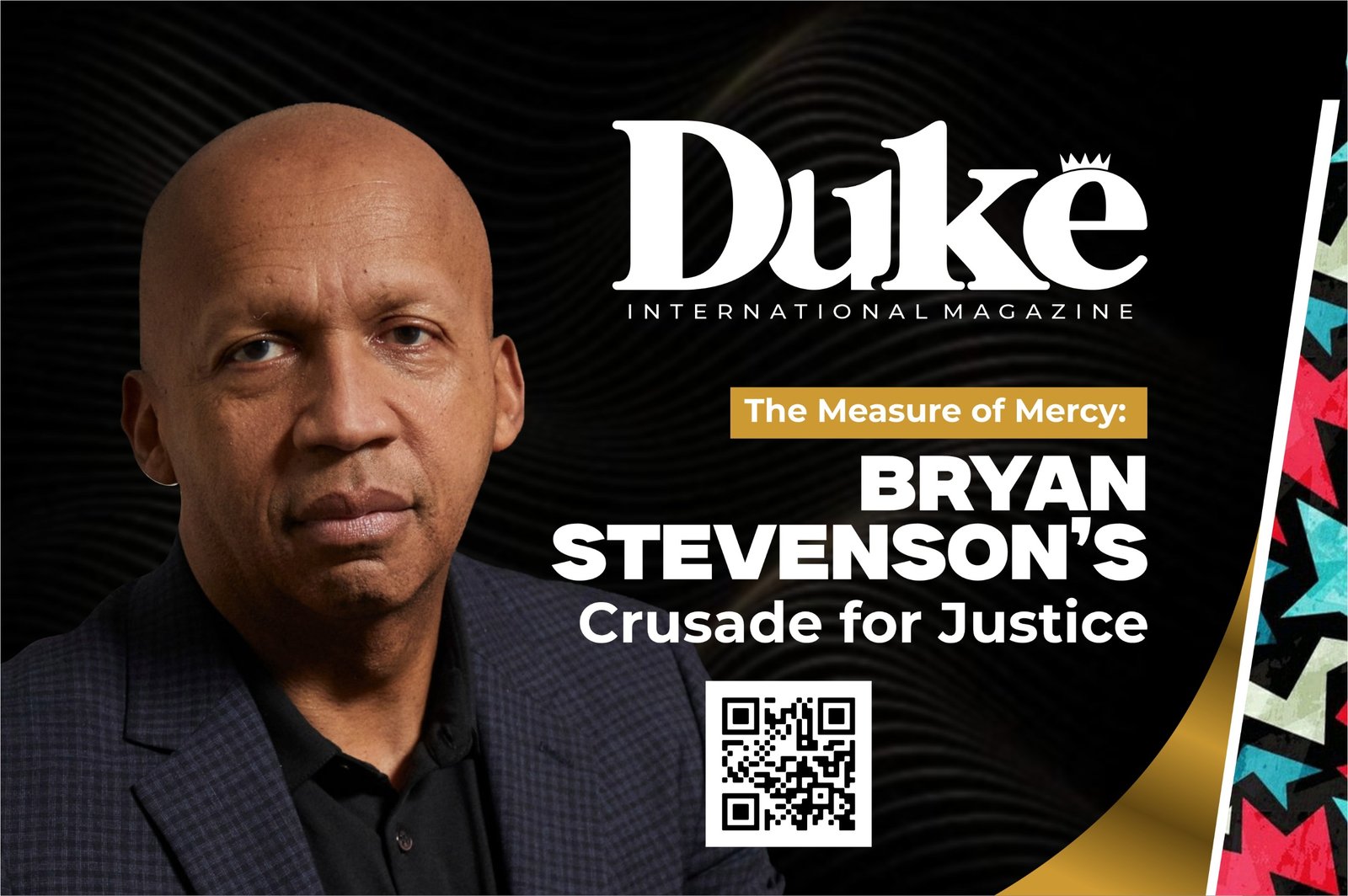
Bryan Stevenson is one of America’s most consequential civil rights lawyers, a man whose name has become synonymous with the fight against racial injustice and excessive punishment.
Born in 1959 in Milton, Delaware, to African American parents, Stevenson grew up in the segregated South. The grandson of an enslaved man, he attended a segregated primary school and was among the first students in his state to experience integration. He went on to Harvard Law School, where he earned a joint degree in law and public policy.
It was during an internship at the Southern Centre for Human Rights in Atlanta that Stevenson’s life’s purpose became clear. He witnessed firsthand a legal system that operated one way for the wealthy and another for the poor, with African Americans disproportionately receiving the death penalty for crimes similar to those committed by white defendants.
In 1989, he founded the Equal Justice Initiative (EJI), a nonprofit human rights organisation based in Montgomery, Alabama, dedicated to challenging bias against the poor and people of colour within the criminal justice system.
Over the decades, Stevenson has argued cases before the US Supreme Court, achieving landmark rulings that have reshaped American law.
He successfully banned mandatory life sentences without parole for prisoners under the age of 18 and, in 2019, secured a ruling that prisoners with dementia could not be executed. Under his leadership, the EJI has saved 130 death row inmates from execution.
In 2014, Stevenson published his bestselling memoir, Just Mercy: A Story of Justice and Redemption, which was adapted into a major motion picture in 2019. Yet his vision extends far beyond the courtroom. He has transformed Montgomery into a global destination for reckoning with America’s racial past through the creation of the Legacy Museum and the National Memorial for Peace and Justice.
The memorial features 805 steel monuments, each bearing the names of lynching victims from counties across the South, suspended overhead as a silent confrontation with terror.
In March 2024, he opened the Freedom Monument Sculpture Park, a site of 17 acres anchored by a wall of 43 feet inscribed with the 122,000 surnames adopted by formerly enslaved people listed in the 1870 census. These sites have drawn over two million visitors.
In recognition of his life’s work, Stevenson received the 2025 Stockholm Prize in Criminology for his applied research that has reduced cruel and unusual punishment. He continues to speak out fearlessly, urging cultural institutions to expand their efforts rather than retreat in the face of political pressure.
Through his advocacy, his writing, and his public history projects, Bryan Stevenson has reminded the world that the measure of a society’s justice lies in how it treats its most vulnerable.