

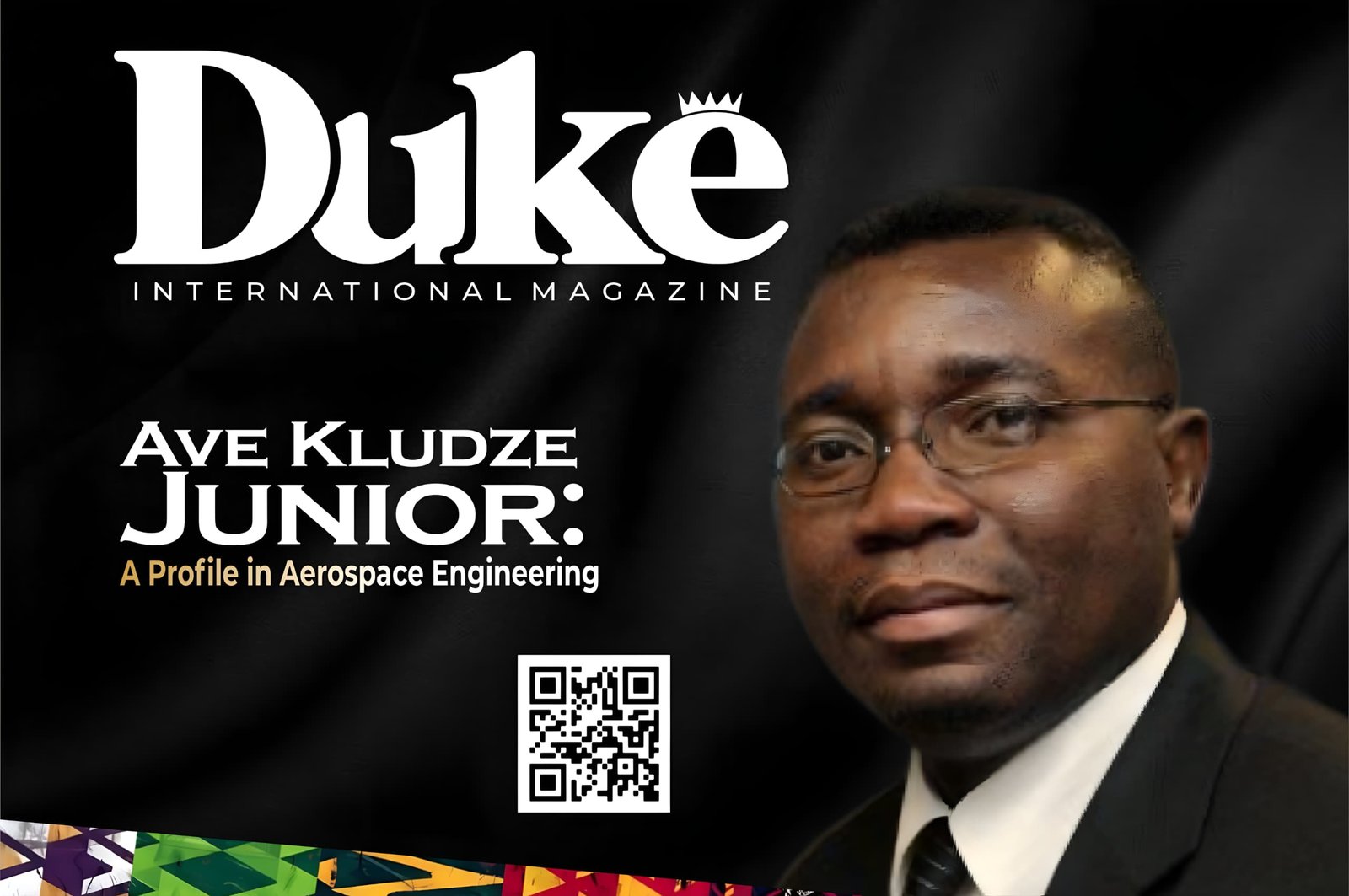
When Ave Kludze Junior was a child growing up in the Volta Region of Ghana, no one expected him to end up inside a United States control room, guiding multi-million-pound satellites through the void.
His father, a respected Supreme Court Justice, had laid out a clear path in law. Young Ave, however, preferred the smell of solder and the challenge of putting broken radios back together. This seemingly troublesome hobby was, in truth, the first spark of an extraordinary career.
His initial dream of becoming a pilot was grounded by poor eyesight, a setback that would have discouraged many. Instead of turning away from the sky, Kludze decided to conquer it from behind a computer screen.
He packed a single ambition and headed for the United States, armed only with his high school qualifications from Adisadel College. At Rutgers University, he buried himself in electrical engineering, initially planning to return to Ghana to work on solar power projects. Life, however, had plotted a different course.
In 1995, the National Aeronautics and Space Administration, better known as NASA, came calling. Kludze later admitted that he never daydreamed about working for the space agency; it seemed like a world completely out of reach for a boy from Hohoe. Yet, once he arrived at the Goddard Space Flight Center, he did not just fit in; he excelled.
He made history by becoming the first Ghanaian to take command of a live spacecraft from a mission control centre. Among the missions he handled were the Advanced Composition Explorer and the Compton Gamma Ray Observatory, machines that have helped humanity understand the violent, beautiful mechanics of the cosmos.
Kludze was not only a steady hand in the control room but also a restless inventor. While studying for his master’s degree at Johns Hopkins University, he designed a theoretical Human Locator System, a tiny device intended to be placed under the skin to help find missing children using satellite signals.
Years later, he helped design a special infrared camera for space-walking astronauts, a tool critical for detecting cracks in spacecraft heat shields.
Today, Kludze works as a senior technical advisor at NASA Headquarters, planning missions that will send humans back to the Moon and eventually to Mars. He has studied hypersonic vehicles that could shrink a journey from Accra to New York to under two hours. For a man who was once told he could not fly, Ave Kludze Junior has certainly proven that the sky is merely a starting point.