

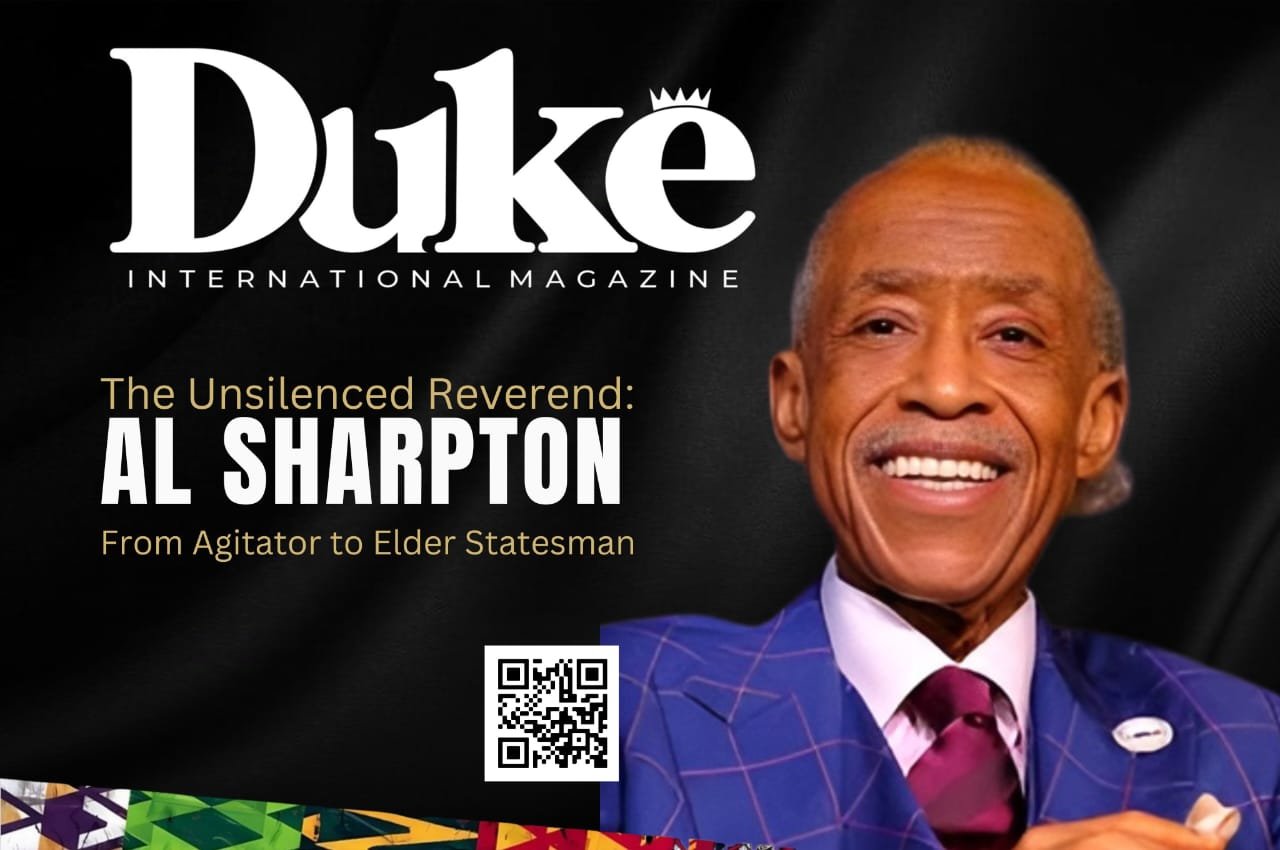
He is, by his own admission, a man who has long understood the theatre of protest. The Reverend Al Sharpton, with his impeccably tailored suits and carefully coiffured hair, cuts a figure who is instantly recognisable on the American landscape. For decades, his name has been synonymous with civil rights agitation, a lightning rod for both fervent admiration and severe criticism.
Sharpton’s journey began in the pulpits of Brooklyn, a boy preacher steeped in the tradition of social gospel. He emerged as a brash, confrontational voice in the nineteen eighties and nineties, a figure who could mobilise street demonstrations with a preacher’s cadence and a strategist’s timing.
His critics often dismissed him as a mere showman, a provocateur who thrived on controversy. Yet, to dismiss him thus is to misunderstand the sharp political intelligence that has always operated beneath the surface.
His true significance lies in his role as an amplifier for grievance, a man willing to stand, microphone in hand, in front of television cameras where others might hesitate. He forced a national conversation on issues many wished to ignore, from police brutality to economic disenfranchisement, often by embodying the raw, unfiltered anger of marginalised communities. He operated in the tradition of the agitator, the necessary discomfort to a body politic prone to complacency.
In later years, a perceptible evolution occurred. The firebrand gradually assumed the mantle of elder statesman. The same man who once led marches found himself advising presidents and hosting a nationally syndicated television talk show. This transition did not represent an abandonment of principle, but rather a strategic shift in method.
He began to wield influence in boardrooms and political corridors, understanding that lasting change requires both the pressure from the street and the leverage within the system.
Today, Al Sharpton exists as a complex institution in his own right. He remains a steadfast defender of voting rights and social justice, his National Action Network a fixture in organisational activism. He is a bridge between the old guard of the civil rights movement and a new generation of activists, a translator of past struggles for present battles.
Love him or loathe him, his presence is a testament to a single, relentless truth: that the long American struggle for equality requires voices that will not be silenced, and a man in a suit who is never afraid to make a scene.