

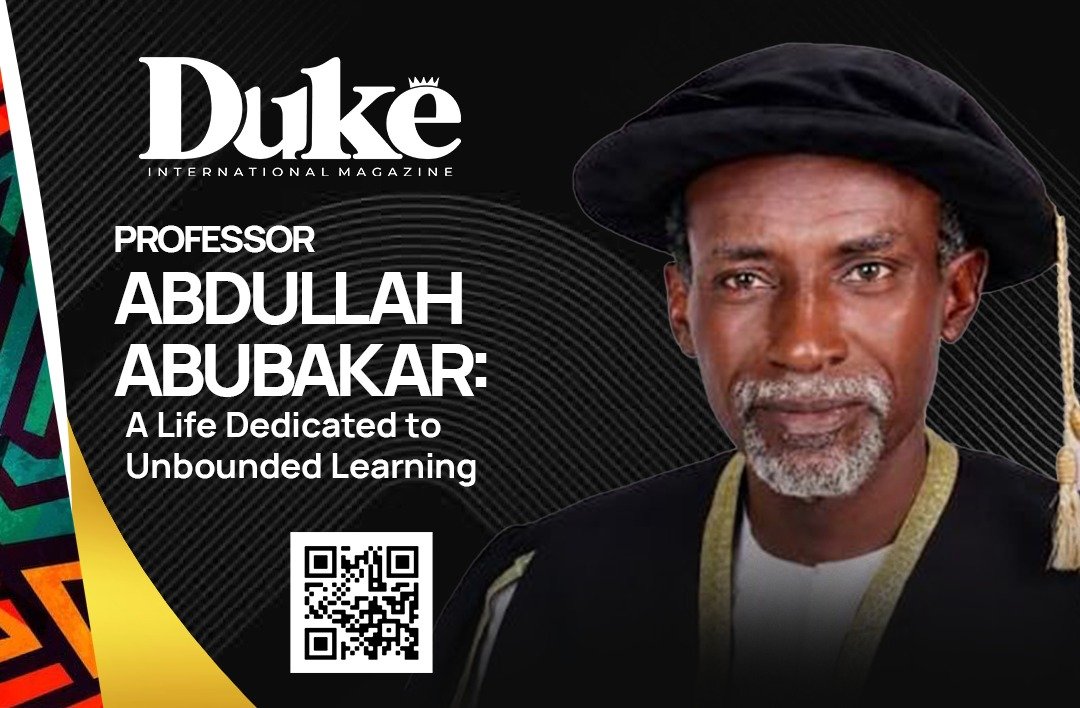
At Ahmadu Bello University in Zaria, one academic has become the subject of widespread fascination for a scholarly record that defies conventional expectations. Professor Abdullahi Abubakar, FNIA, currently serves as the Dean of the Faculty of Environmental Design, a position that underscores his standing within one of Nigeria’s premier institutions of higher learning.
What distinguishes Professor Abubakar is the extraordinary scope of his qualifications. His academic portfolio reportedly includes five doctoral degrees, five master’s degrees, seven bachelor’s degrees, eleven diplomas, and two Nigeria Certificate in Education awards.
These credentials span an unusually broad range of disciplines, encompassing Architecture, Engineering, Town Planning, Quantity Surveying, Research, Medicine, and Programming and Computer Studies.
His career at Ahmadu Bello University has been marked by substantial administrative responsibility. Beyond his current role as Dean, he has served as Head of the Department of Architecture and Director of Academic Planning.
His professional experience extends beyond the university; he has held the position of Director of Works at the Federal College of Education in Kano and has acted as Chairman of the Kano State Chapter of the Nigerian Institute of Architects. He is also the Managing Director of Casemate Ventures Ltd.
The professor’s remarkable curriculum vitae recently went viral on social media, prompting Ahmadu Bello University to launch a formal verification process.
The Director of Public Affairs, Awwal Umar, confirmed that the university was aware of the matter and would respond only after establishing the facts through due process. When approached for comment, Professor Abubakar acknowledged the inquiry but indicated that he was not yet prepared to respond.
Beyond the debate surrounding his credentials, Professor Abubakar’s story offers a compelling narrative about lifelong intellectual pursuit. In an era when many consider education complete after obtaining a first degree, his journey presents a different picture, one in which learning continues unabated throughout a professional career.
His trajectory from architecture to technology and other fields demonstrates what can emerge when curiosity and professional development are pursued relentlessly over many years.
Whatever the outcome of the university’s verification, Professor Abdullahi Abubakar has already sparked an important conversation about the value of continuous education and the remarkable possibilities that arise when knowledge becomes a lifelong endeavour.