

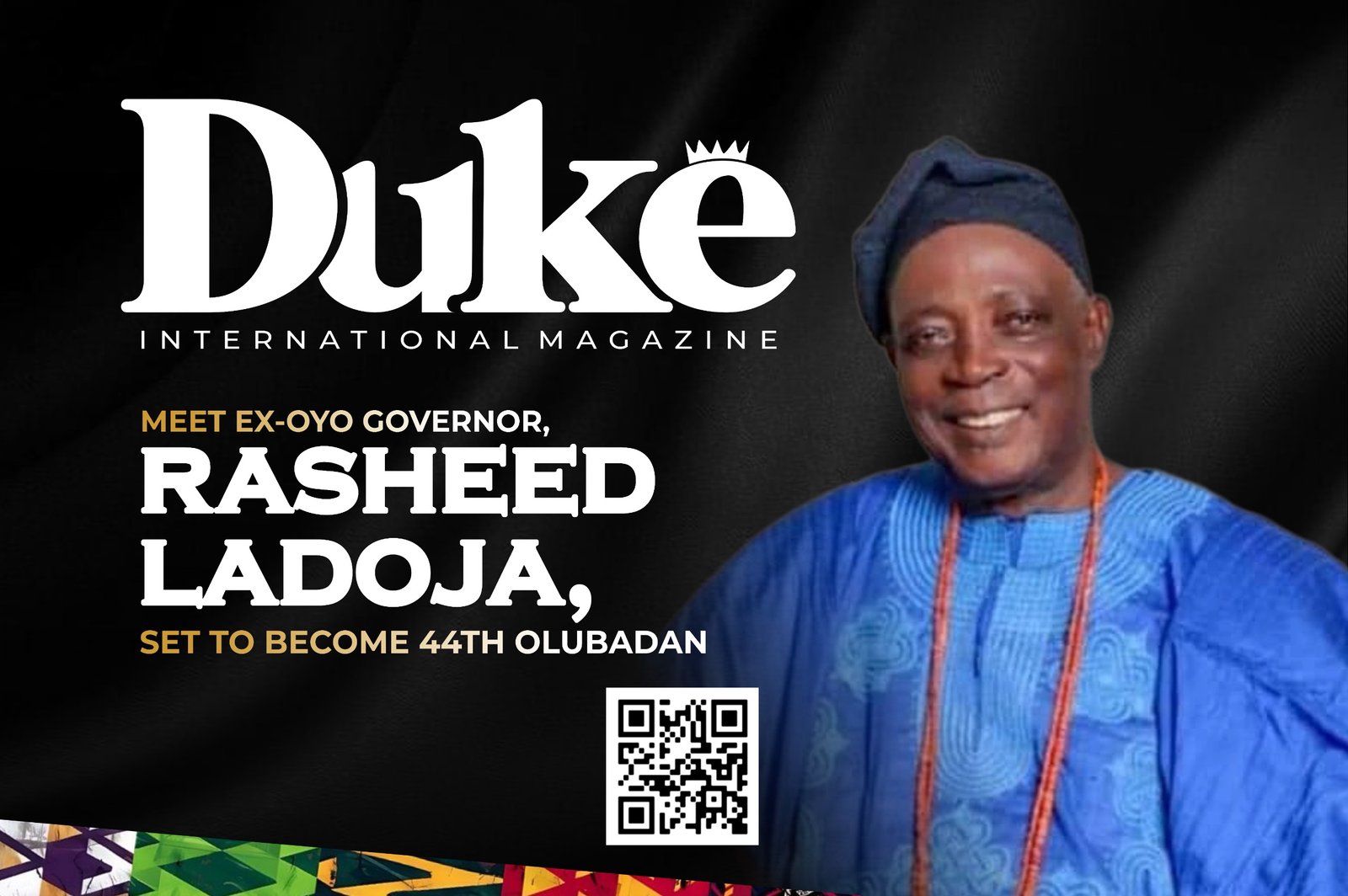
The ancient city of Ibadan has always been a land of warriors, kings, and political intrigue. Few men embody this spirit as completely as Senator Rasheed Ladoja—a former governor, a political survivor, and now, the next in line to the revered throne of the Olubadan of Ibadanland. His journey to kingship is not just a story of tradition, but one of resilience, power struggles, and an unexpected return to destiny.
A King in Waiting
For decades, the Olubadan succession has followed an unbroken order, alternating between the Balogun (military) and Otun (civil) chieftaincy lines. The late Oba Owolabi Olakulehin, who ascended the throne in July 2024 but passed away less than a year later, belonged to the Balogun line. Now, the throne shifts to the Otun line—and at its helm stands Rasheed Ladoja, the Otun Olubadan.
This was not a position Ladoja ever took for granted. In fact, he once rejected a ceremonial crown during former Governor Abiola Ajimobi’s controversial chieftaincy reforms, a move that many saw as defiance against the politicization of tradition. Yet, in August 2024, the late Oba Olakulehin himself presented Ladoja with the beaded crown, symbolizing his inevitable ascension. Fate, it seems, had always meant for him to wear it.
The Making of a King: Engineer, Banker, Governor
Long before he became a high chief, Ladoja was a man of many destinies. Born in 1944 in Gambari, Ibadan, he was educated at Ibadan Boys High School and later studied Chemical Engineering in Belgium. His early career took him into banking, where he rose to become a director at Standard Trust Bank. But politics was where his true battles would be fought.
In 2003, backed by the infamous political godfather Lamidi Adedibu, Ladoja became governor of Oyo State. His tenure, however, was anything but smooth. A bitter feud with Adedibu led to his impeachment in 2006, only for the courts to later overturn it and restore him to office. It was a dramatic saga that cemented his reputation as a man who refused to stay down.
Exile, Arrests, and a Political Comeback
After losing reelection, Ladoja faced even greater trials. In 2008, the EFCC arrested him over allegations of financial misconduct, briefly remanding him in prison before he was granted bail. Yet, like a true Ibadan warrior, he fought back—running again for governor in 2011 and 2015 under the Accord Party. Though he lost both times, his influence never waned.
By 2018, he shifted focus to his chieftaincy role, steadily climbing the Otun line. Now, at 80 years old, he stands on the brink of becoming the Olubadan—a position that once seemed improbable for a man who had been impeached, arrested, and politically sidelined.
What Kind of King Will Ladoja Be?
If history is any indication, Ladoja will rule with the same shrewdness and tenacity that defined his political career. Unlike traditional monarchs who remain above the fray, he is a man who has battled in the courts, in government, and on the streets. His deep understanding of power dynamics could make him one of the most politically influential Olubadans in modern history.
Yet, his greatest challenge may be balancing tradition with the expectations of a changing Ibadan. The city now boasts a modern palace, a symbol of progress under Governor Seyi Makinde. Will Ladoja embrace this new era, or will he rule as a guardian of the old ways?
A Full-Circle Destiny
There is something poetic about Ladoja’s journey—from the halls of power to political exile, and now, to the throne. His life mirrors the resilience of Ibadan itself: a city that has weathered wars, political storms, and still stands tall.
As the drums prepare to announce a new Olubadan, one thing is certain: Rasheed Ladoja’s reign will be anything but ordinary. For a man who has fought every battle life threw at him, kingship is not just an honor—it is the final triumph.
And Ibadan, the city of warriors, will be watching.