

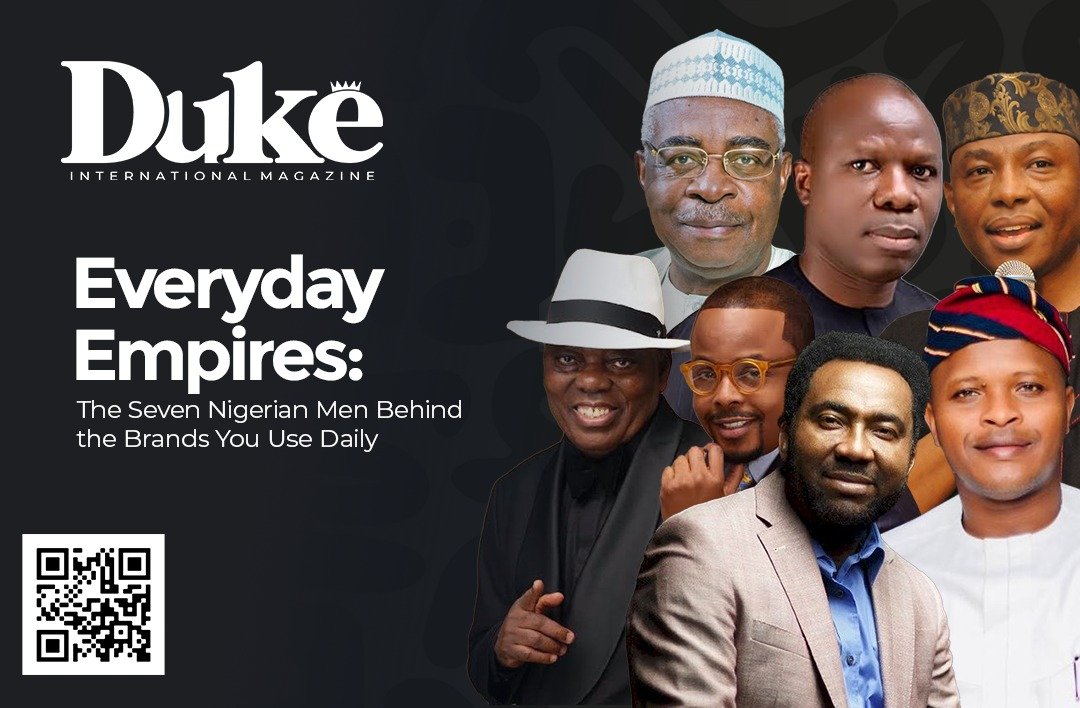
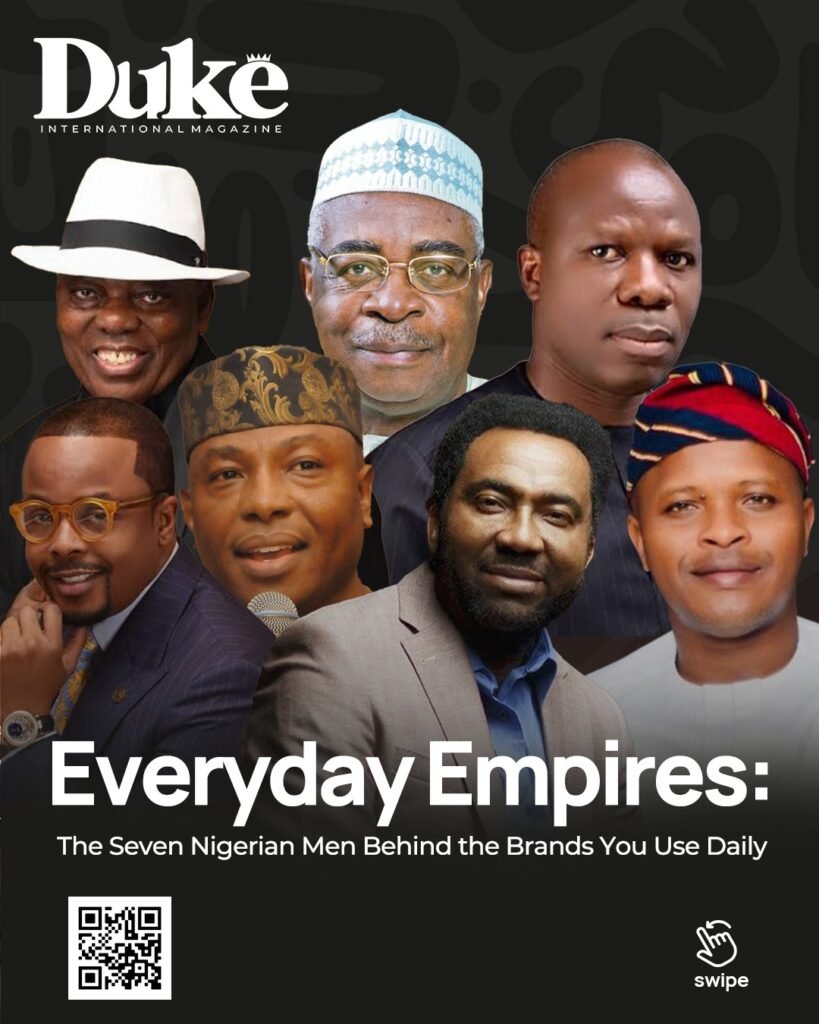
You recognise the logos. You might even have a favourite. But the faces behind them? Those remain largely unknown. In Nigeria, a quiet class of businessmen have built formidable empires that touch nearly every part of your routine, from the phone in your pocket to the medicine in your cabinet and the generator powering your lights. Here are seven of them, and the brands they own.
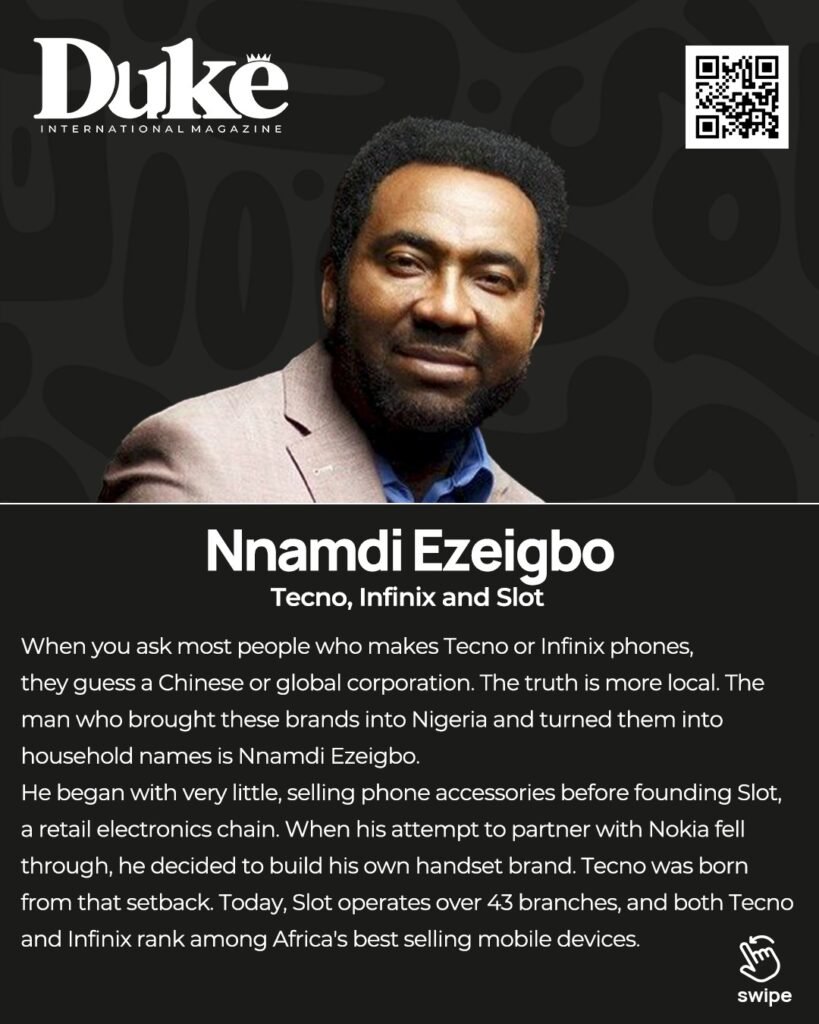
- Nnamdi Ezeigbo – Tecno, Infinix and Slot
When you ask most people who makes Tecno or Infinix phones, they guess a Chinese or global corporation. The truth is more local. The man who brought these brands into Nigeria and turned them into household names is Nnamdi Ezeigbo.
He began with very little, selling phone accessories before founding Slot, a retail electronics chain. When his attempt to partner with Nokia fell through, he decided to build his own handset brand. Tecno was born from that setback. Today, Slot operates over 43 branches, and both Tecno and Infinix rank among Africa’s best selling mobile devices.
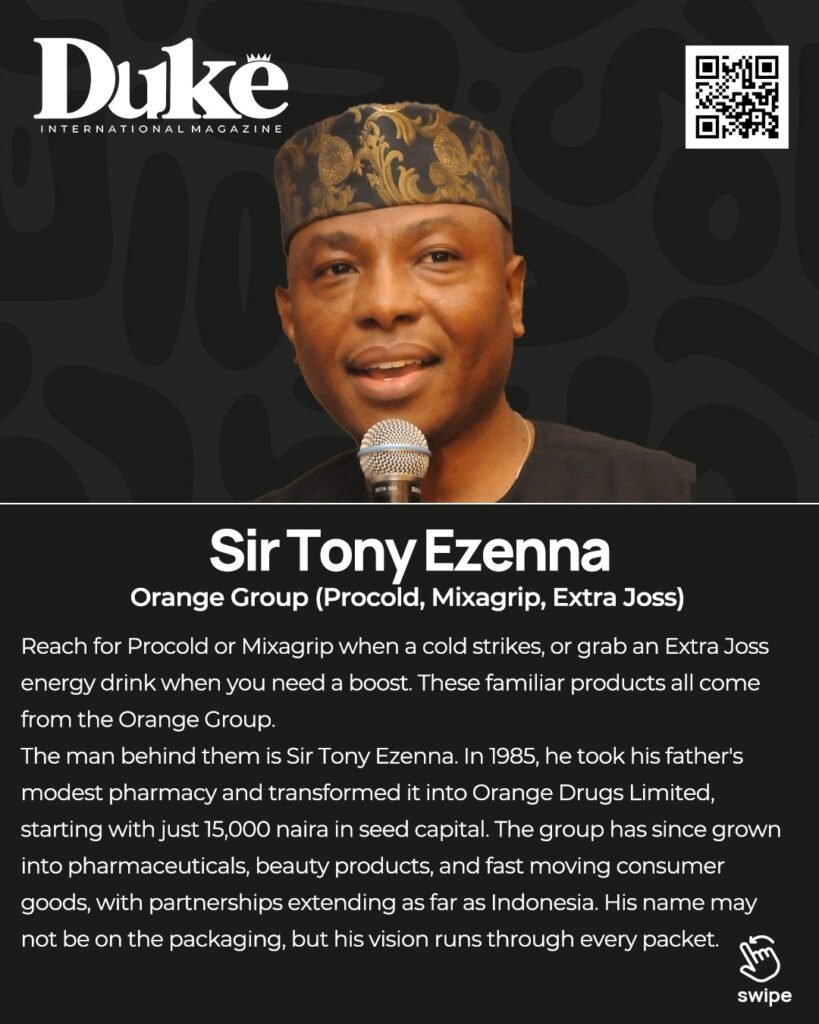
- Sir Tony Ezenna – Orange Group (Procold, Mixagrip, Extra Joss)
Reach for Procold or Mixagrip when a cold strikes, or grab an Extra Joss energy drink when you need a boost. These familiar products all come from the Orange Group.
The man behind them is Sir Tony Ezenna. In 1985, he took his father’s modest pharmacy and transformed it into Orange Drugs Limited, starting with just 15,000 naira in seed capital. The group has since grown into pharmaceuticals, beauty products, and fast moving consumer goods, with partnerships extending as far as Indonesia. His name may not be on the packaging, but his vision runs through every packet.
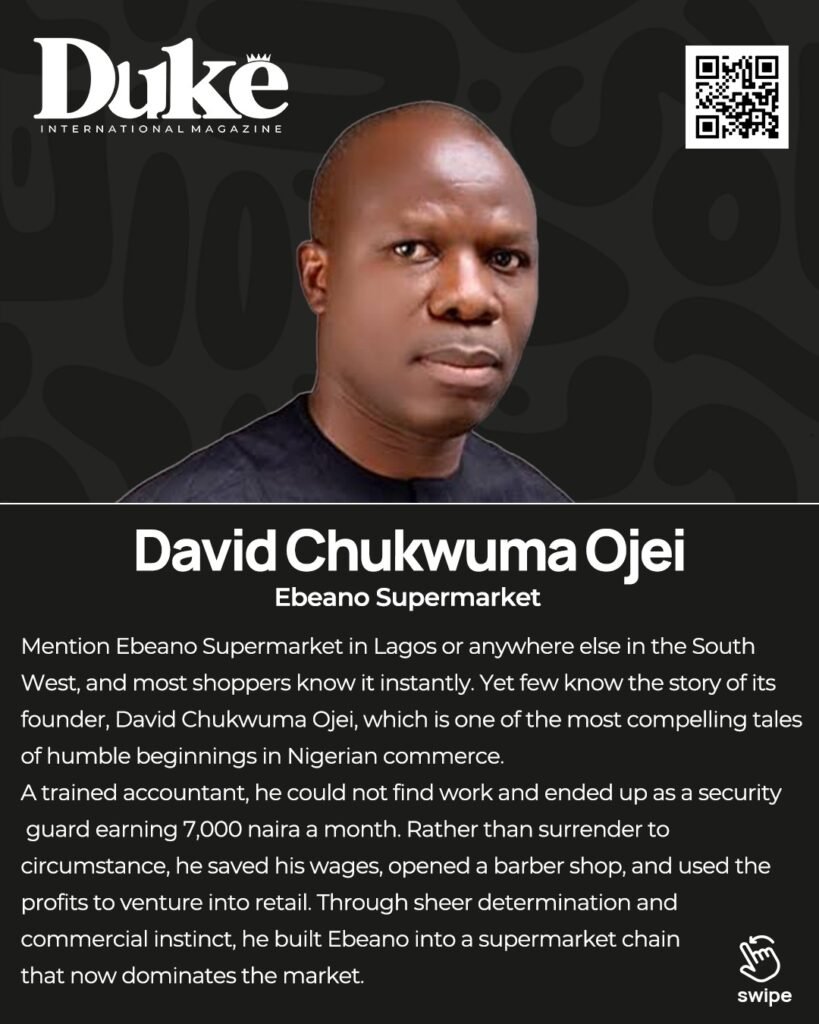
- David Chukwuma Ojei – Ebeano Supermarket
Mention Ebeano Supermarket in Lagos or anywhere else in the South West, and most shoppers know it instantly. Yet few know the story of its founder, David Chukwuma Ojei, which is one of the most compelling tales of humble beginnings in Nigerian commerce.
A trained accountant, he could not find work and ended up as a security guard earning 7,000 naira a month. Rather than surrender to circumstance, he saved his wages, opened a barber shop, and used the profits to venture into retail. Through sheer determination and commercial instinct, he built Ebeano into a supermarket chain that now dominates the market.
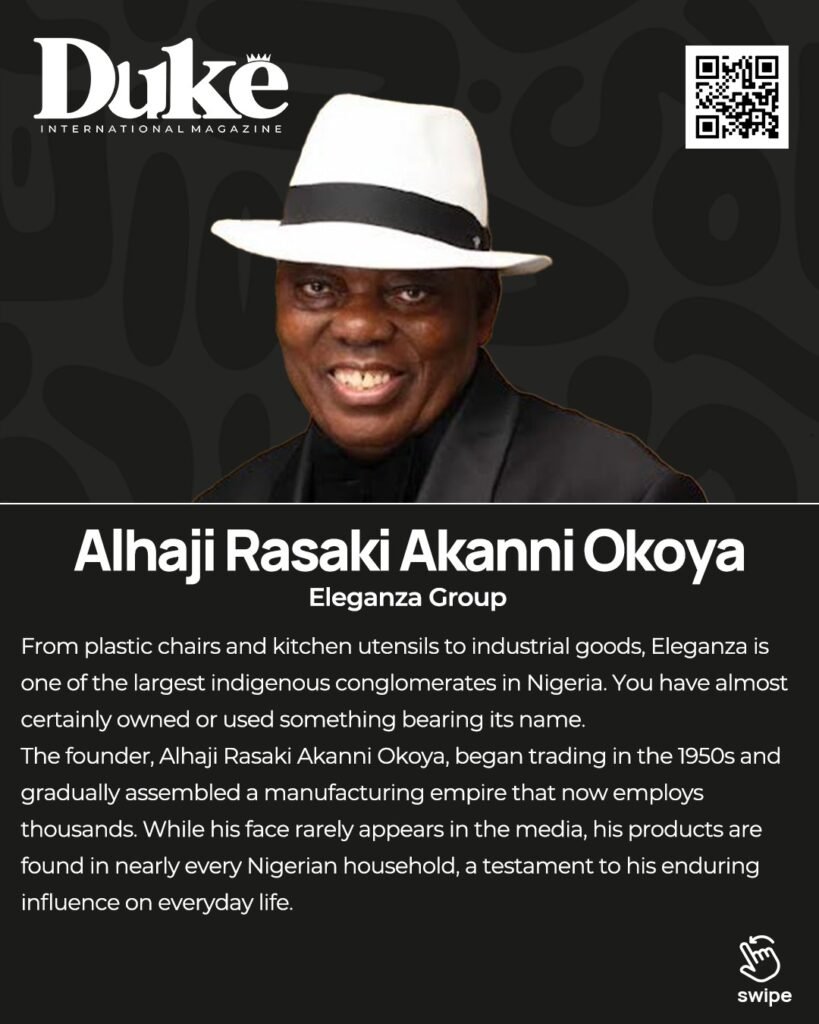
- Alhaji Rasaki Akanni Okoya – Eleganza Group
From plastic chairs and kitchen utensils to industrial goods, Eleganza is one of the largest indigenous conglomerates in Nigeria. You have almost certainly owned or used something bearing its name.
The founder, Alhaji Rasaki Akanni Okoya, began trading in the 1950s and gradually assembled a manufacturing empire that now employs thousands. While his face rarely appears in the media, his products are found in nearly every Nigerian household, a testament to his enduring influence on everyday life.
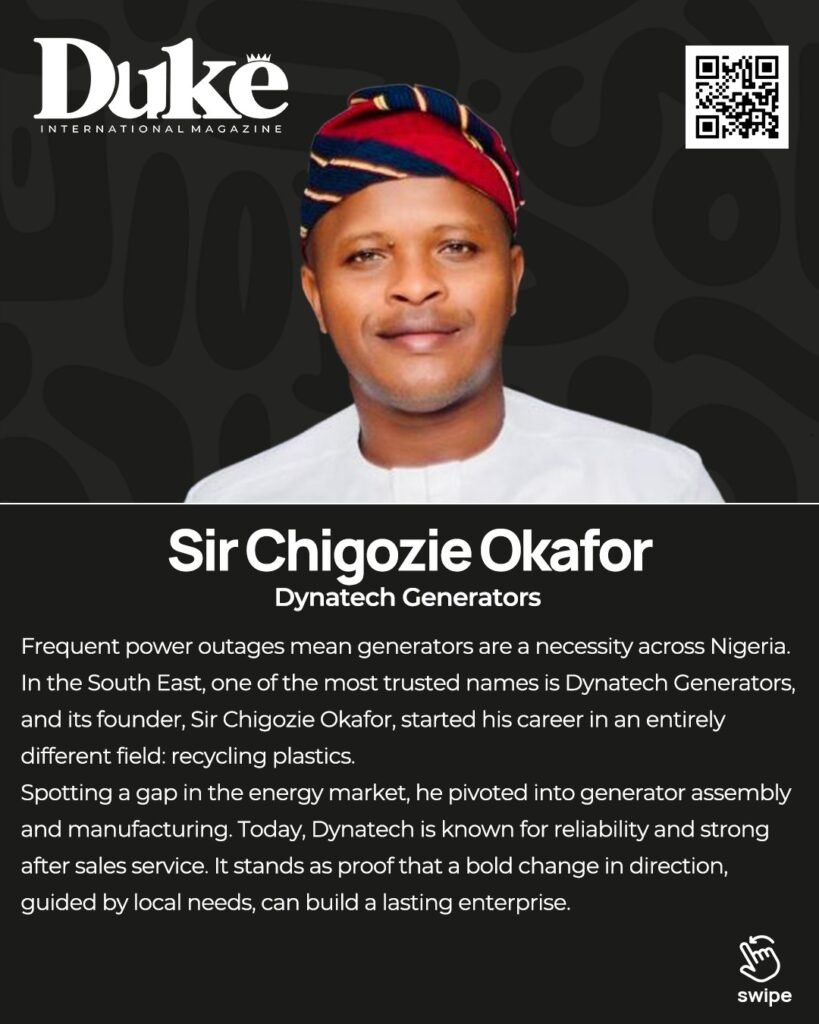
- Sir Chigozie Okafor – Dynatech Generators
Frequent power outages mean generators are a necessity across Nigeria. In the South East, one of the most trusted names is Dynatech Generators, and its founder, Sir Chigozie Okafor, started his career in an entirely different field: recycling plastics.
Spotting a gap in the energy market, he pivoted into generator assembly and manufacturing. Today, Dynatech is known for reliability and strong after sales service. It stands as proof that a bold change in direction, guided by local needs, can build a lasting enterprise.
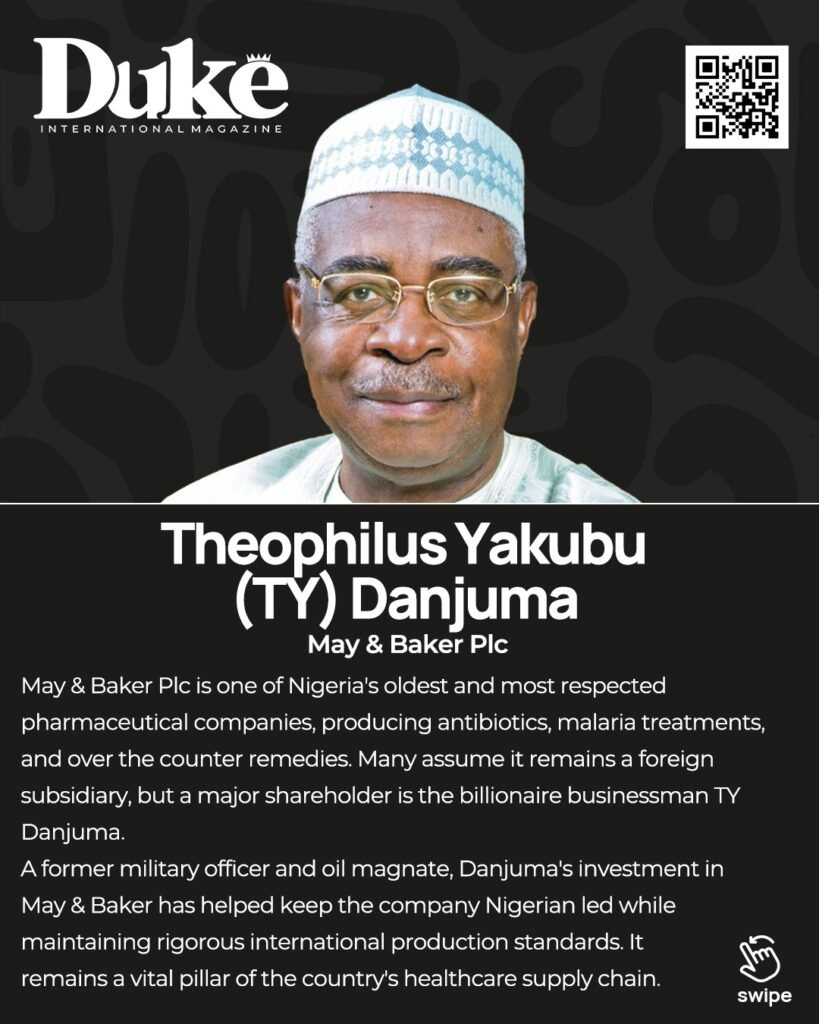
- Theophilus Yakubu (TY) Danjuma – May & Baker Plc
May & Baker Plc is one of Nigeria’s oldest and most respected pharmaceutical companies, producing antibiotics, malaria treatments, and over the counter remedies. Many assume it remains a foreign subsidiary, but a major shareholder is the billionaire businessman TY Danjuma.
A former military officer and oil magnate, Danjuma’s investment in May & Baker has helped keep the company Nigerian led while maintaining rigorous international production standards. It remains a vital pillar of the country’s healthcare supply chain.
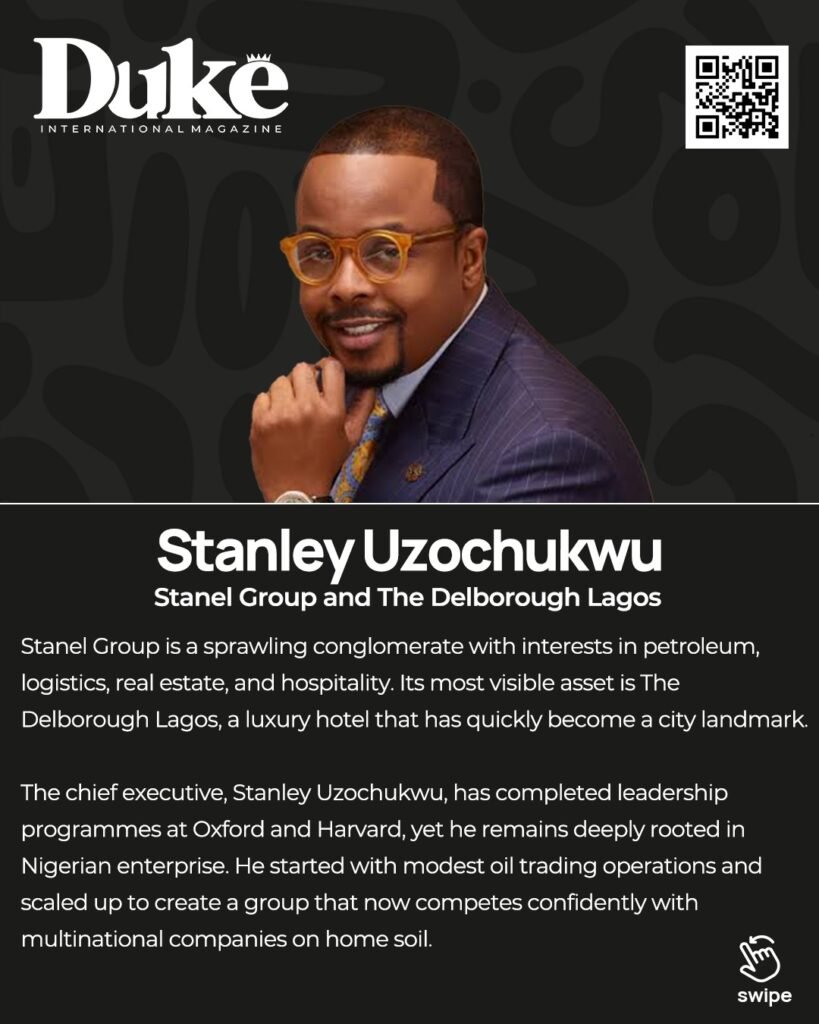
- Stanley Uzochukwu – Stanel Group and The Delborough Lagos
Stanel Group is a sprawling conglomerate with interests in petroleum, logistics, real estate, and hospitality. Its most visible asset is The Delborough Lagos, a luxury hotel that has quickly become a city landmark.
The chief executive, Stanley Uzochukwu, has completed leadership programmes at Oxford and Harvard, yet he remains deeply rooted in Nigerian enterprise. He started with modest oil trading operations and scaled up to create a group that now competes confidently with multinational companies on home soil.
These seven men represent only a fraction of Nigeria’s hidden business power. Beyond the well known figures like Dangote, Adenuga and Rabiu, it is these quieter, more understated entrepreneurs who shape the brands we interact with every day.
With local insight, resilience, and a sharp eye for opportunity, they keep the economy moving, one product, one store, and one generator at a time.