

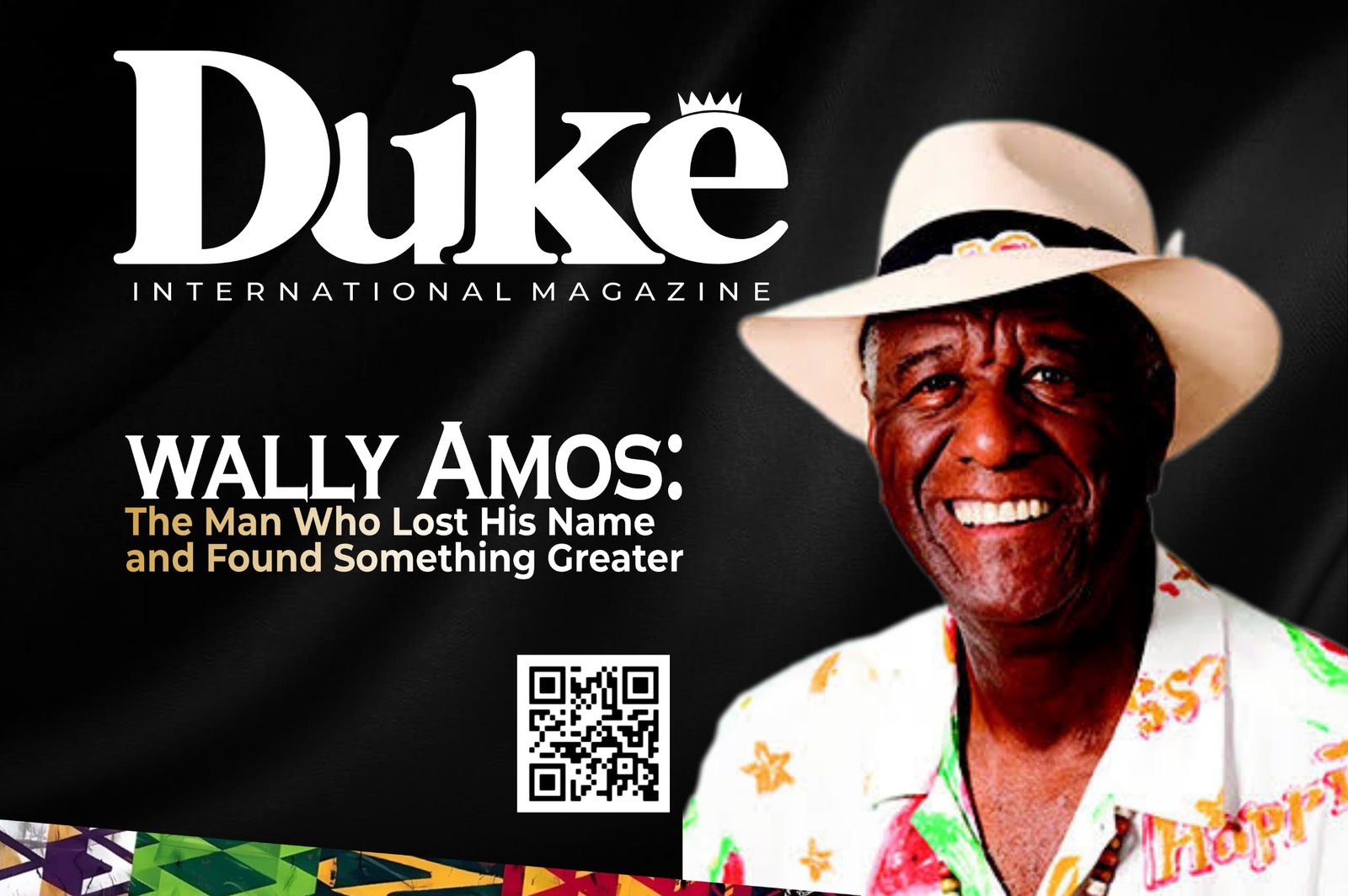
Wally Amos, who passed away in August 2024 at the age of eighty-eight, was a man of many acts. He was a talent agent, a cookie entrepreneur, a literacy advocate and, perhaps most remarkably, a man who became famous for no longer being Famous.
Born in Tallahassee, Florida in 1936, young Wally moved to Harlem to live with his Aunt Della, whose chocolate chip pecan cookies would later inspire his life’s work. After a stint in the Air Force, he landed in the mailroom of the William Morris Agency in New York City. Through sheer determination, he worked his way up to become the agency’s first Black talent agent, representing the likes of Simon and Garfunkel and the Supremes.
Yet baking remained his therapy. In 1975, armed with a twenty-five-thousand-dollar loan from clients Marvin Gaye and Helen Reddy, Amos opened the first Famous Amos cookie shop on a somewhat seedy corner of Sunset Boulevard in Los Angeles.
He marketed the cookie as if it were a new Hollywood star, complete with headshots and a dressing room. The venture was a sensation. In its first year, the shop made three hundred thousand dollars in revenue, and by 1981, the company was worth twelve million dollars.
However, Amos was a far better showman than businessman. By 1988, struggling to keep pace with his company’s rapid growth, he sold his ownership and, crucially, the rights to his own name. He spent much of the rest of his life chasing that lost success, launching subsequent ventures such as Uncle Noname and the Cookie Kahuna, even appearing on Shark Tank in search of investors.
But what could have been a ghost story of capitalist failure became something else entirely. Losing his company gave Amos a powerful platform as a motivational speaker and author. He wrote ten books and became the national spokesman for Literacy Volunteers of America, championing a cause that President George H.W. Bush formally recognised with a Literacy Award in 1991.
His children described their father as a source of Black pride and a perennial optimist. In 2011, the city of Los Angeles erected a sign at his original shop location, dubbing it Famous Amos Square. Though he never again replicated the success of his first empire, Amos demonstrated that a name, once lost, could be reclaimed as a force for good.