

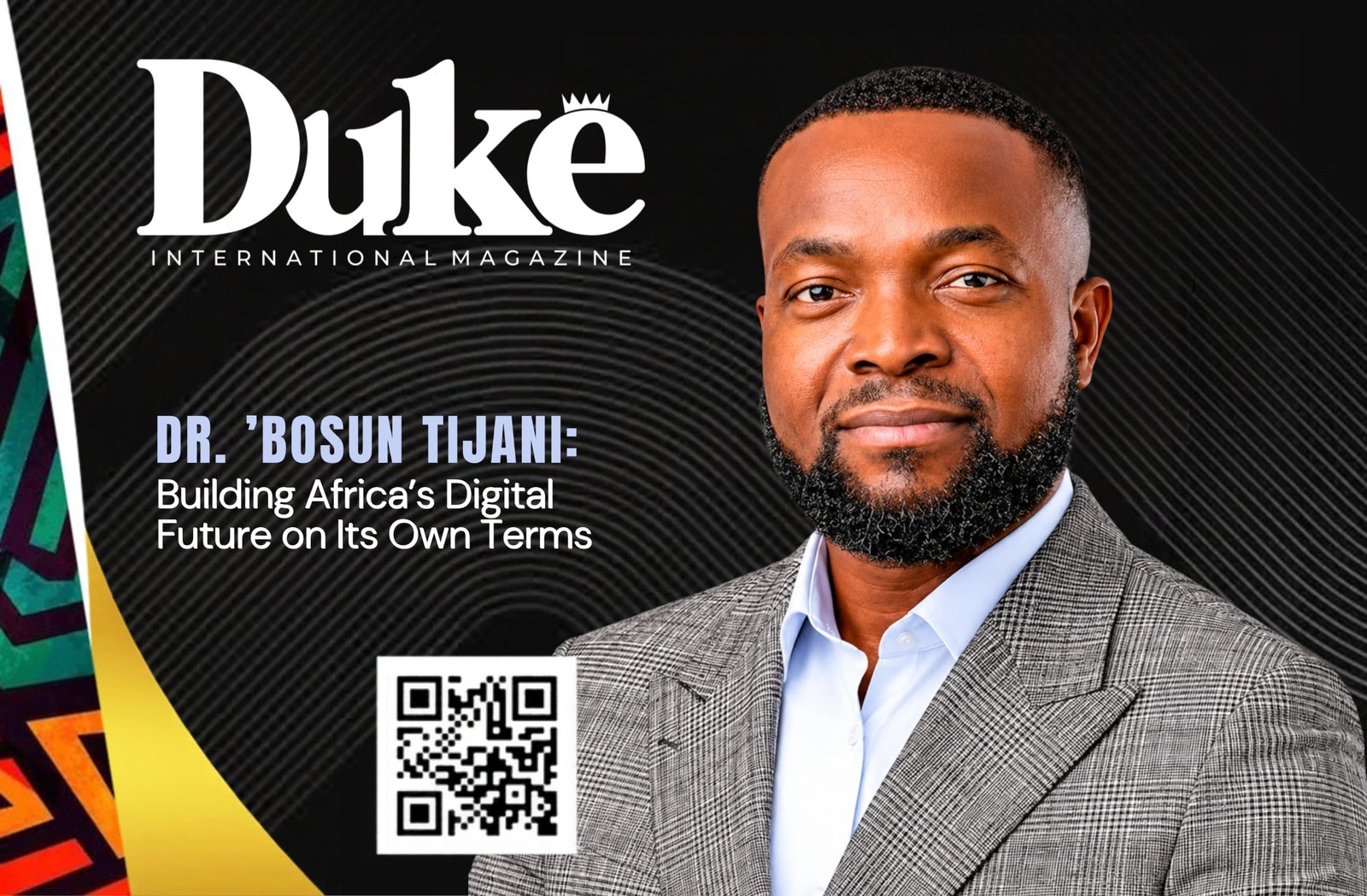
Before he became Nigeria’s Minister of Communications, Innovation and Digital Economy, Dr. ’Bosun Tijani was already a central figure in the continent’s technology story.
He co-founded Co-Creation Hub (CcHUB) in 2010, which grew into the leading pan-African innovation centre with a presence in Nigeria, Kenya, Rwanda and Namibia. That background as a builder of ecosystems, rather than a theorist of them, has defined his approach in government.
In 2026, the Gates Foundation named Tijani a Goalkeepers Champion, recognising his leadership in advancing an inclusive artificial intelligence ecosystem across Africa. The Foundation specifically highlighted his insistence that Africa must build domestic AI capabilities rather than relying solely on technologies designed elsewhere.
Under his direction, the Ministry developed the National Artificial Intelligence Strategy (NAIS), established an AI Research Fund for home-grown innovation, and supported N-ATLAS, an indigenous Large Language Model built to reflect Nigerian languages and local contexts. A National AI Trust was also created to guide the safe and ethical deployment of the technology.
These are not abstract policy gestures. Tijani’s ministry has simultaneously pursued the unglamorous infrastructure work that determines whether digital economies include or exclude the poor. The Nigeria Universal Communication Access Project (NUCAP) is deploying 3,700 telecommunications towers to connect nearly 20 million Nigerians who currently lack reliable telephone and internet access.
The first tower was commissioned in Bende, Abia State, in October 2026, with the minister framing the project in bluntly practical terms: connectivity should allow farmers to reach buyers and families to access essential services, regardless of where they live.
His recognition has extended beyond Africa. Tijani was named among the TIME 100 Most Influential People in AI in 2025, and Nigeria’s position on the Oxford Insights Government AI Readiness Index improved markedly under his stewardship.
But the more consequential achievement may be the shift in posture he represents: an African government not merely regulating technologies invented elsewhere, but funding research, building language models, and arguing, with increasing credibility, that the continent should shape the tools that will define its next century.

