

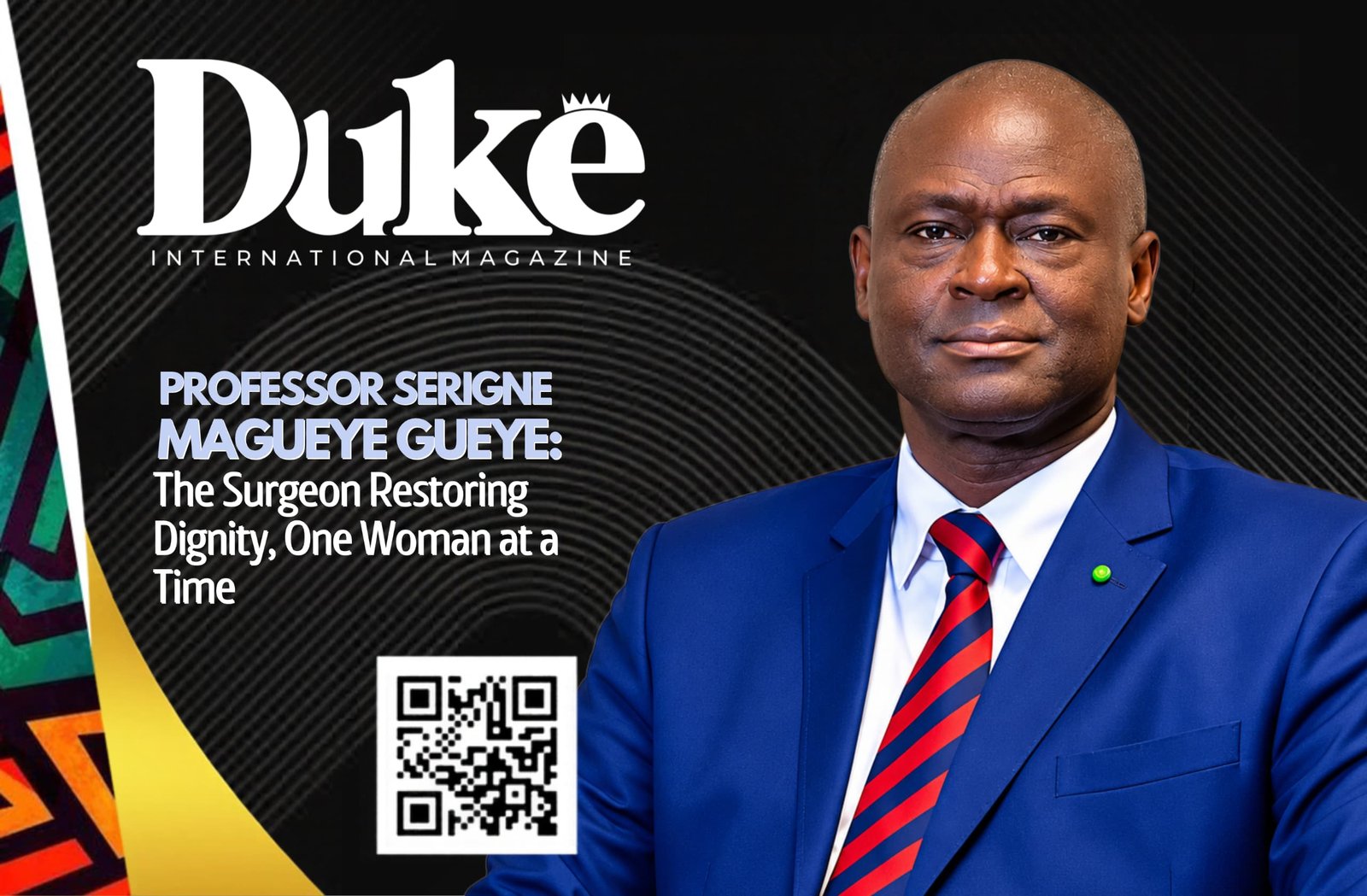
For decades, obstetric fistula remained one of Africa’s most hidden catastrophes, a childbirth injury that leaves women incontinent, isolated and often shunned by their own communities.
Professor Serigne Magueye Gueye, an obstetric and urologic surgeon from Senegal, has devoted his career to dragging that suffering into the light. In July 2026, his lifelong work was recognised with the United Nations Population Award, the UN’s highest honour for contributions to reproductive health.
Gueye is not merely a skilled clinician. As Head of Urology at the Grand Yoff General Hospital in Dakar, he has trained surgeons from more than 45 countries across sub-Saharan Africa, deliberately multiplying his impact across the region rather than confining it to a single operating theatre.
He has served as a master trainer, bringing fistula repair techniques to a global standard and equipping future generations of health professionals.
What sets Gueye apart, however, is his refusal to accept the distance between his consulting room and the communities that need him most. He converted his own home into a health centre, founding the Aristide Mensah Health Center in Yeumbeul, a suburb of Dakar, so that women who would otherwise go without care could find it on his doorstep.
He was among the first clinicians to champion fistula treatment across West Africa, insisting that a condition which is almost entirely preventable and treatable should not be allowed to destroy lives simply because of geography or poverty.
The UN award citation described his work as helping to restore the health and dignity of countless women. In a field where progress is often measured in surgical outcomes, Gueye’s legacy is broader.
He has built a network of trained surgeons, a community-based model of care, and a public argument that African women’s childbirth injuries are not inevitable. They are a failure of access, and he has spent a career closing that gap.

