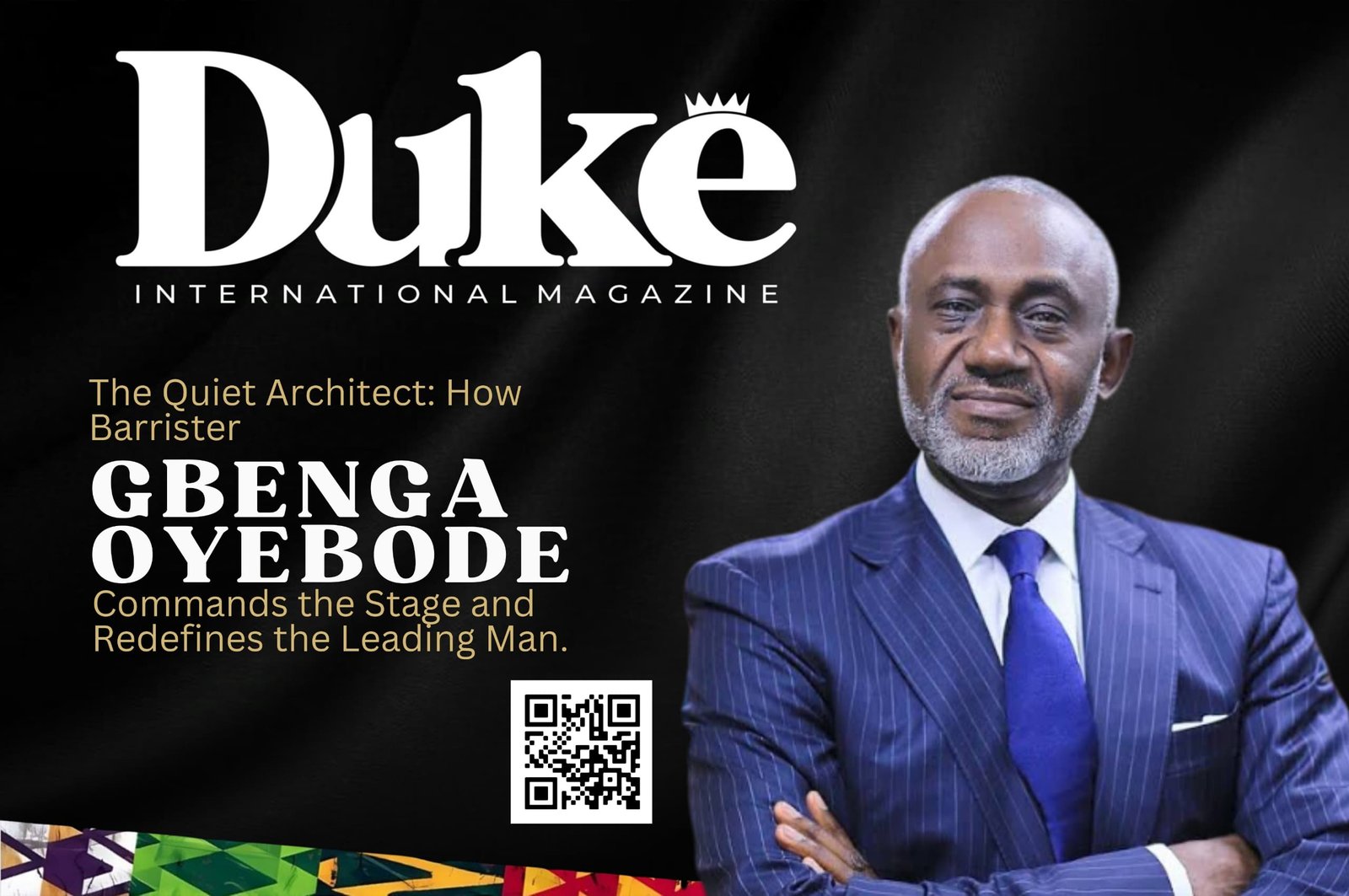
Beyond the boardrooms and the high-profile deals, one of Africa’s most influential legal minds continues to shape the continent’s economic destiny with a philosophy of integrity, precision, and nation-building.
In the often tumultuous theatre of Nigerian business and politics, where flamboyance frequently overshadows substance, Barrister Gbenga Oyebode, Member of the Order of the Federal Republic, operates with a different currency. His is the currency of quiet competence, immense preparation, and a foundational integrity that has, for over three decades, made him not merely a participant but a principal architect of modern Nigerian corporate law.
While his name may not dominate tabloid headlines, his influence is woven into the very fabric of the nation’s economic infrastructure. As the founding partner of Aluko & Oyebode, one of Nigeria’s most prestigious and formidable law firms, Oyebode has been the trusted advisor behind some of the most significant transactions in the country’s history.
From multi-billion-dollar energy projects and complex mergers and acquisitions to groundbreaking telecommunications licences and sovereign debt issuances, his counsel has been sought by both global giants and the Nigerian government itself.His practice is a masterclass in the art of structuring complexity, ensuring that international investment flows securely into Nigerian soil.
“The role of law in nation-building is not adversarial by default; it is fundamentally constructive,” Oyebode remarked during a recent conversation at his office in Lagos. “Our work has always been to build bridges—between capital and enterprise, between global standards and local context, between ambition and executable reality. When these bridges are built with legal precision and ethical clarity, the entire economy moves forward.”
His influence, however, extends far beyond the courtroom or the negotiation table. Oyebode is perhaps one of Nigeria’s most accomplished corporate stewards, serving as Chairman of the Board of Access Bank Plc, a pillar of the Nigerian financial system. His directorship roles read like an index of corporate Nigeria: He is Chairman of CFAO Nigeria Plc, and serves on the boards of Okomu Oil Palm Company Plc and Nigerian Breweries Plc.
In each role, he brings a governance philosophy that is both rigorous and forward-looking, championing sustainability, corporate social responsibility, and the development of executive talent.
This commitment to cultivation defines his other passion: education and the arts. A Chancellor of the University of Lagos, he is deeply engaged in the urgent project of revitalising Nigerian higher education. Simultaneously, as the Chairman of the Board of the Lagos State Council for Arts and Culture and a profound art collector, he advocates for the creative sector as a critical component of national identity and soft power.
Colleagues and observers describe him not as a charismatic orator, but as a listener of immense focus, whose questions cut to the heart of any matter. “He possesses a preternatural calm and a clarity of thought that disarms complexity,” noted a senior partner at a rival firm. “In a meeting, he is often the quietest person, until he speaks. Then, everyone listens. He doesn’t raise his voice; he raises the standard.”
In an era where the term ‘nation-builder’ is often used loosely, Barrister Gbenga Oyebode embodies its truest meaning. He has not sought political office or popular acclaim. Instead, he has dedicated his career to constructing the legal and corporate frameworks that enable a nation to function, grow, and attract confidence. He builds in the bedrock, not on the rooftops, ensuring that the foundations of commerce and governance are sound.
As Nigeria continues to navigate its economic future amid global headwinds, the value of such quiet architects becomes ever more apparent. Their legacy is not inscribed in fleeting news cycles, but in the enduring institutions, the precedent-setting deals, and the generations of lawyers and executives they have mentored. Barrister Oyebode’s story is a powerful testament to the idea that the most profound influence is often exercised not with a shout, but with a meticulously drafted clause, a principled decision in a boardroom, and an unwavering belief in the possibility of a well-ordered prosperity.