

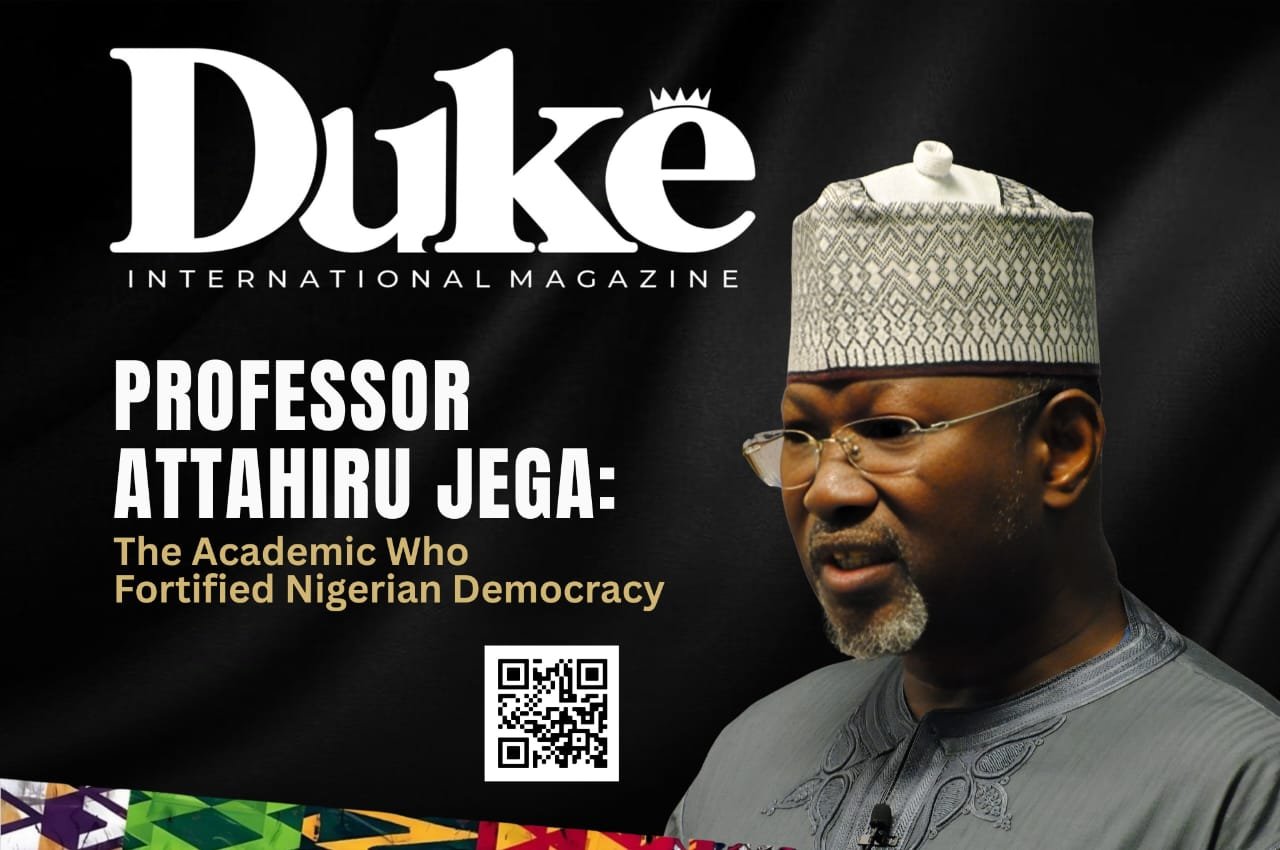
In the chronicle of modern Nigerian democracy, few figures command as much respect across the political spectrum as Professor Attahiru Muhammadu Jega.
An intellectual and labour activist propelled into the nation’s most politically sensitive role, his tenure as chairman of the Independent National Electoral Commission from 2010 to 2015 is widely regarded as a watershed moment, demonstrating that credible elections were possible in Nigeria.
Born in January 1957 in what is now Kebbi State, Jega’s career was rooted in scholarship from the outset. Educated at Bayero University and Northwestern University in the United States, where he earned his doctorate, he returned to Nigeria to teach political science.
His principles were forged not just in the lecture hall but in the fires of advocacy. As president of the Academic Staff Union of Universities in the 1990s, he was a determined opponent of military rule, fiercely campaigning for university autonomy and better funding for education. This period established his reputation as an intellectual of strong ethics and moral courage, unafraid to confront power.
His appointment to lead the Independent National Electoral Commission in 2010 came at a critical juncture, with public trust in elections deeply eroded. Professor Jega approached the task with an academic’s rigour and a reformer’s zeal. His most celebrated innovation was the introduction of permanent voter cards coupled with biometric electronic card readers.
This technology disrupted established patterns of electoral malpractice by verifying the identity of voters, making the process a more serious contest. Despite facing fierce criticism and intense pressure from all political sides, he presided over the 2011 and, most notably, the 2015 general elections.
The 2015 election was historic, resulting in Nigeria’s first democratic transfer of power from a ruling party to an opposition candidate, an event that earned him and the commission widespread acclaim. For this achievement, he was honoured with the Charles T. Manatt Democracy Award in 2015.
Enduring Service and a New Challenge
After his tenure at the commission concluded, Professor Jega returned to Bayero University as a professor of political science but continued to contribute to public life.
He serves on prestigious international bodies such as the Kofi Annan Foundation’s Electoral Integrity Initiative and was elected an International Honorary Member of the American Academy of Arts and Sciences in 2017.
In a testament to the enduring trust in his capabilities, President Bola Tinubu appointed him in March 2025 as a Special Adviser and Coordinator of the Presidential Livestock Reform Initiative, a role focused on resolving the longstanding farmers-herders crisis and developing the livestock sector.
This appointment, though different from his previous work, underscores a continued commitment to tackling complex national challenges.
From the campus to the commission and now to the cabinet, Professor Attahiru Jega’s journey reflects a consistent application of principle and intellectual integrity.
He demonstrated that independent institutions, led by steadfast individuals, could serve as a bedrock for democracy, leaving a legacy that continues to shape expectations for electoral and governance integrity in Nigeria.