

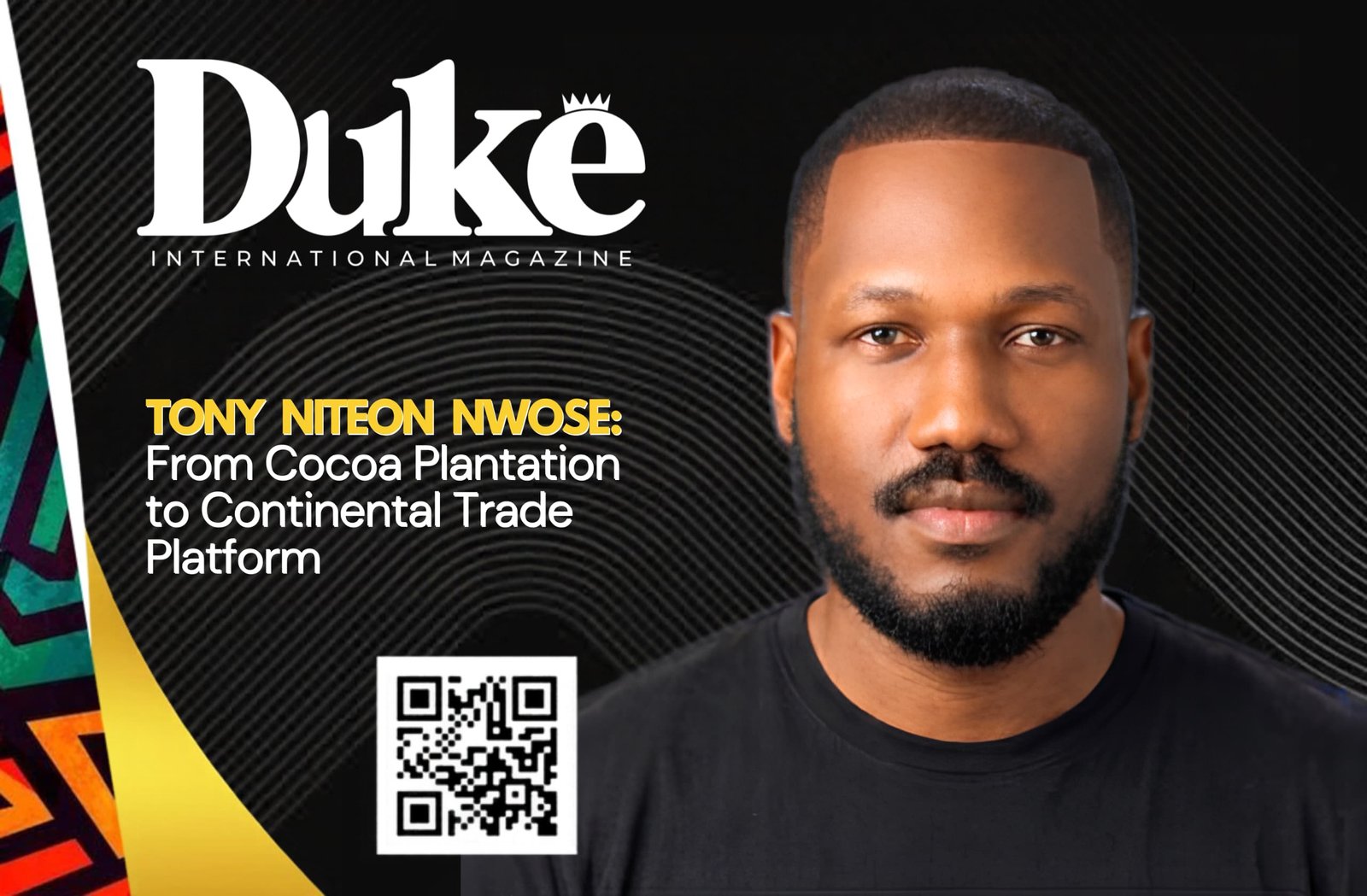
The seeds of Niteon were planted long before Tony Niteon Nwose founded the company. They were sown on his grandfather’s cocoa plantation, where he watched farmers and producers do the hardest work and earn the least, their margins eaten away by a lack of credit and ineffective logistics.
That early observation stayed with him through a career that has taken in modelling, military service, a spell at Google, and the unglamorous reality of driving Uber to fund a comeback.
Born Tony Ifeanyi Ebube Nwose, he first studied Banking at Enugu State University of Science and Technology, then added a mini-MBA at Lagos Business School and an MBA in Entrepreneurship from Oxford. He later earned a PhD in Leadership and Business Management.
His first attempt at building a trade business, Niteon Capital in Ghana, launched in 2019 but struggled to secure international market access. When it folded, he sold his assets and drove Uber for three months while developing a prototype with two trusted collaborators.
In 2023, with $16,000 pooled from friends and family, NiteonHQ was launched as a commodity marketplace connecting African suppliers with global buyers and handling the financing, logistics and settlement in between.
The platform now operates a manufacturers bank that provides trade finance so suppliers can focus on production rather than chasing capital. Revenue grew from about $85,000 in 2023 to more than $700,000 in 2025, with transaction volumes rising 300 per cent year on year, and Niteon has become Nigeria’s third-largest digital export platform.
In November 2026, Nwose took the N60 million grand prize at Wema Bank’s Hackaholics 7.0 for an agricultural technology platform connecting farmers with processors, financial services and market opportunities. He has said the award will support efforts to expand the platform’s reach to international buyers.
His ambition is not modest. “The vision is much broader,” he has said, “expanding across Africa and into key global trade corridors, building infrastructure that allows African commodities to move more efficiently into global markets”.

