

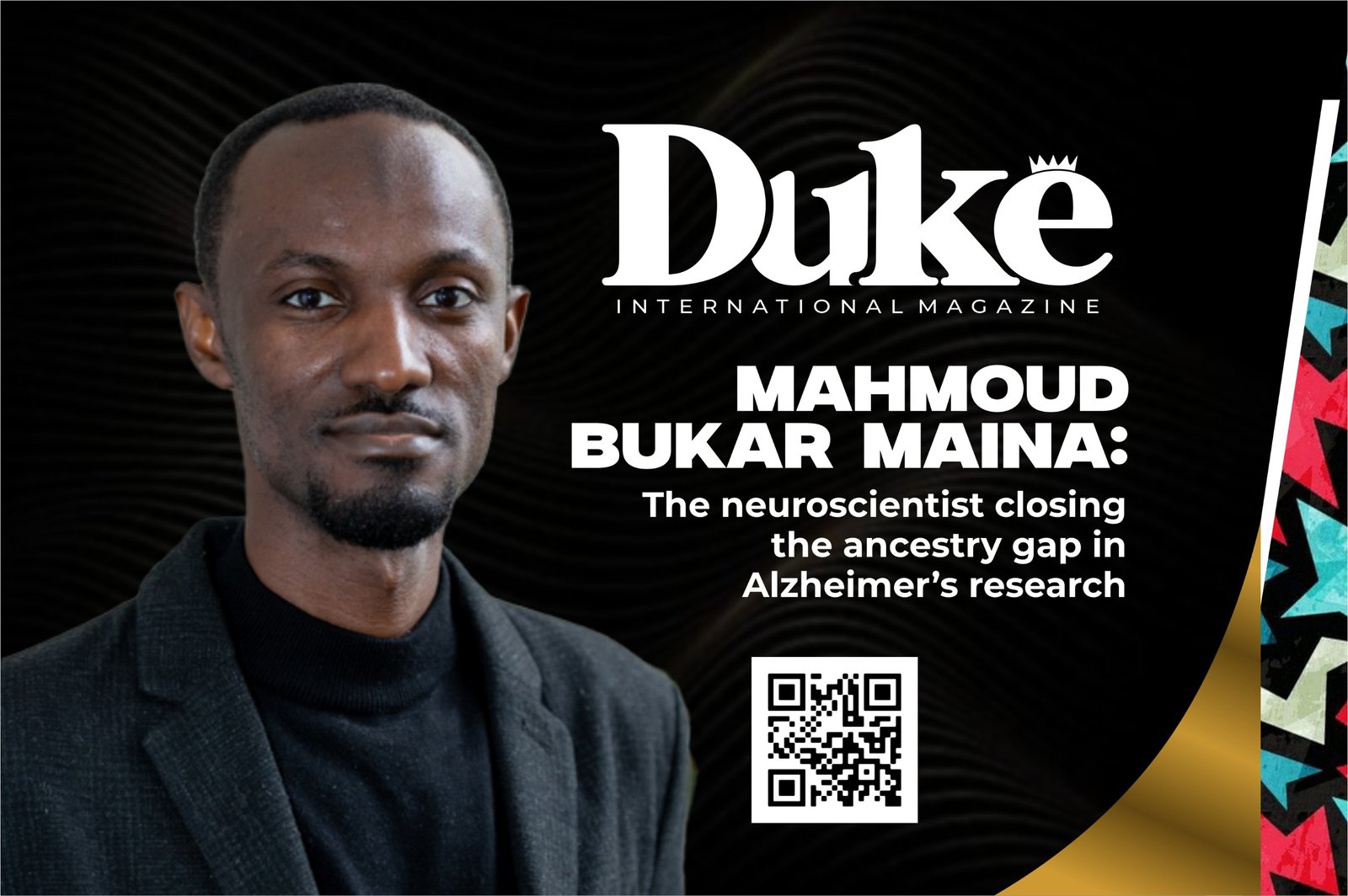
Dr Mahmoud Bukar Maina occupies a rare position in global science. From Damaturu in Yobe State, Nigeria, he directs the Biomedical Science Research and Training Centre at Yobe State University while maintaining an active research programme at Sussex Neuroscience in the United Kingdom.
His work spans two continents and addresses one of the most stubborn blind spots in Alzheimer’s research: the almost total reliance on data from people of European ancestry.
Maina’s path to neuroscience began in Nguru, where he witnessed the stigma attached to mental illness. That early curiosity about brain disease took him to the University of Maiduguri, where he studied Human Anatomy, and then to the University of Sussex for a master’s degree and a PhD in Neuroscience.
At Sussex, he began investigating the molecular mechanisms of Alzheimer’s disease, focusing on the proteins amyloid beta and tau. His research identified a previously underappreciated role for tau in the nucleolus, a cellular compartment involved in producing the raw materials cells need to function.
But Maina’s contribution extends well beyond the laboratory bench. As founder and director of the Biomedical Science Research and Training Centre, he has built a hub for biomedical research in northern Nigeria, a region long associated with insecurity rather than scientific innovation.
The centre has trained more than a thousand researchers and supports work in neuroscience, dementia, infectious disease, kidney disease and artificial intelligence. Through mentorship and international partnerships, he has helped young Nigerian scientists secure scholarships, placements and postgraduate opportunities abroad, many of them from Yobe State.
His research now carries a distinct equity dimension. Maina is generating induced pluripotent stem cells from indigenous African donors to study how genetic ancestry shapes Alzheimer’s disease mechanisms, work that could widen the relevance of dementia research for populations historically absent from global studies.
Recognition has followed: a Wellcome Trust Career Development Award, the ALBA FKNE Diversity Prize, and the 2026 Vivensa Academy Rising Star Excellence Award. He also serves as a science adviser to the Yobe State Government, linking research to policy and public engagement.
Maina’s career demonstrates that scientific excellence need not be exported from the places that need it most. By building infrastructure, training people and asking questions that global neuroscience has largely ignored, he is reshaping what African research can contribute and who gets to benefit from it.

