

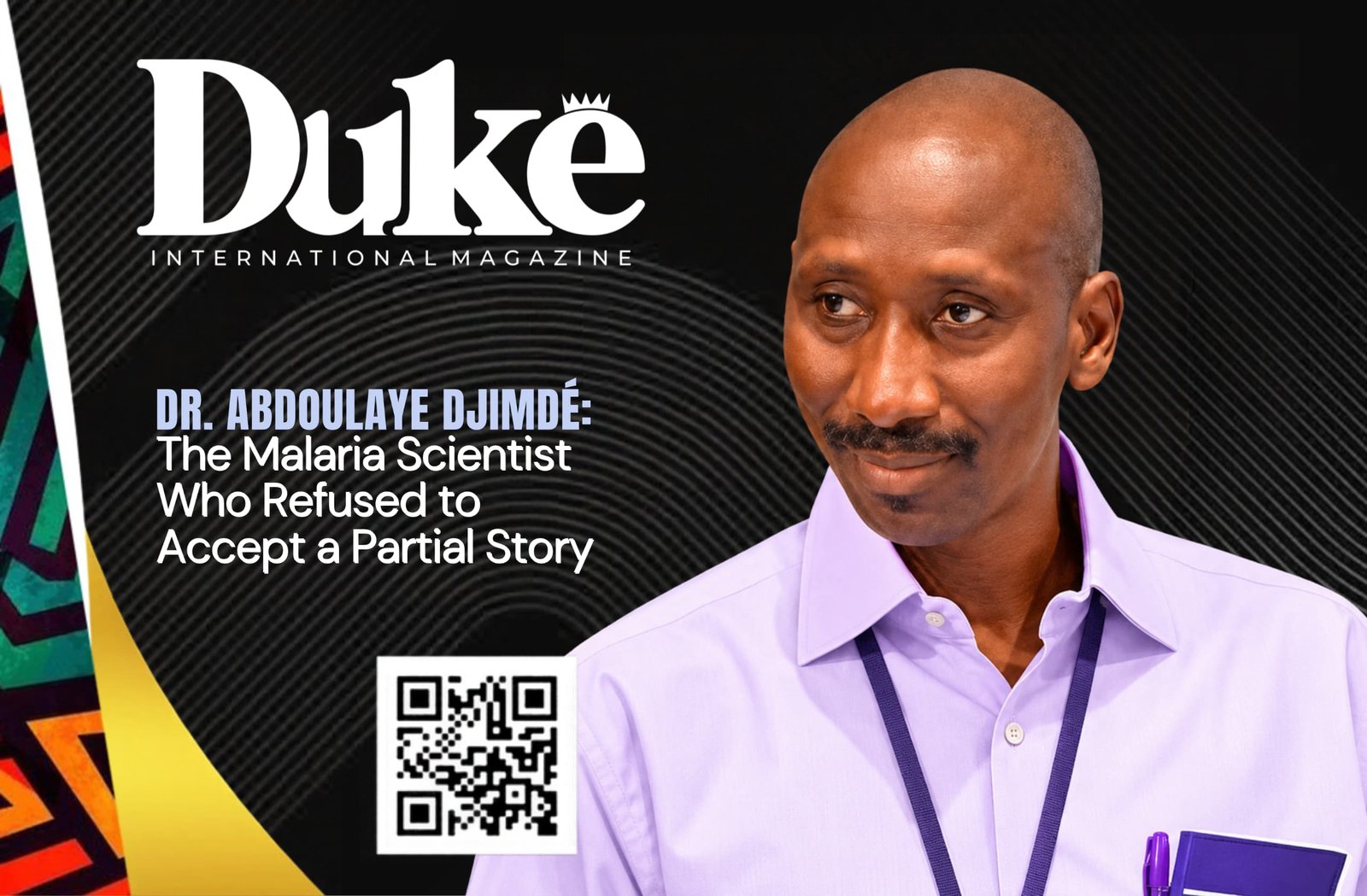
Abdoulaye Djimdé was eleven years old when his baby brother died of cerebral malaria in rural Mali. That loss set the direction of a life.
More than five decades later, he is one of Africa’s most influential malaria scientists, a professor of parasitology and mycology at the University of Sciences, Techniques and Technologies of Bamako, and since March 2026 a member of the United Nations Secretary-General’s Scientific Advisory Board.
Djimdé’s science has always been rooted in the field rather than the comfort of laboratory convention. His early work helped identify the genetic mutation responsible for chloroquine resistance in the malaria parasite, and his team then validated that mutation in Mali by testing patients directly.
The assay they developed required only a dried blood spot on filter paper, with no cold chain or specialist equipment needed, and it could be sent by ordinary post. It became the most widely used molecular tool for tracking chloroquine resistance globally. The lesson was unmistakable: a scientific finding matters only if it can reach the people who need it.
That conviction later led him to challenge a consensus in global genomics. International consortia had concluded that African malaria parasites showed low genetic diversity and were therefore scientifically uninteresting. Djimdé and colleagues knew otherwise.
In 2013, they launched what became the Pathogen Genomic Diversity Network Africa, assembling field-collected parasite genes from 15 African countries. The results overturned the prevailing view: parasites from southern, central, eastern and western Africa were genetically distinct from one another. “It completely changed the way the field thought about and studied African parasites,” Djimdé has said.
His laboratory continues to test drug candidates against parasites collected directly from patients rather than laboratory-adapted strains, producing findings that diverge sharply from those generated in the Global North.
He has also been involved in efforts to demonstrate that drugs restricted elsewhere for safety reasons can be safe and effective for repeated use in African populations, work that helped a key antimalarial combination become registered in more than 20 countries across sub-Saharan Africa.
During the COVID-19 pandemic, he established the Pathogens Genomics Institute in Mali to strengthen local capacity and train young scientists from across the continent.
Djimdé describes his role on the UN board as that of a scientific ambassador for Africa, bringing an African perspective on infectious diseases, genomic surveillance and research capacity to global policy discussions. His argument is consistent with everything he has built: scientific governance, like genomics, has suffered from frameworks constructed without African input, and the blind spots follow.
In Pongonon, the village where he grew up, his Rotary-supported projects have brought running water, a mill and medical supplies. A mother there once told him that there were now fewer small tombstones in the local graveyard. It is a measure of impact he values more than most citations, and a reminder that for Djimdé, the point of science has never been the paper, but the survival it makes possible.

