

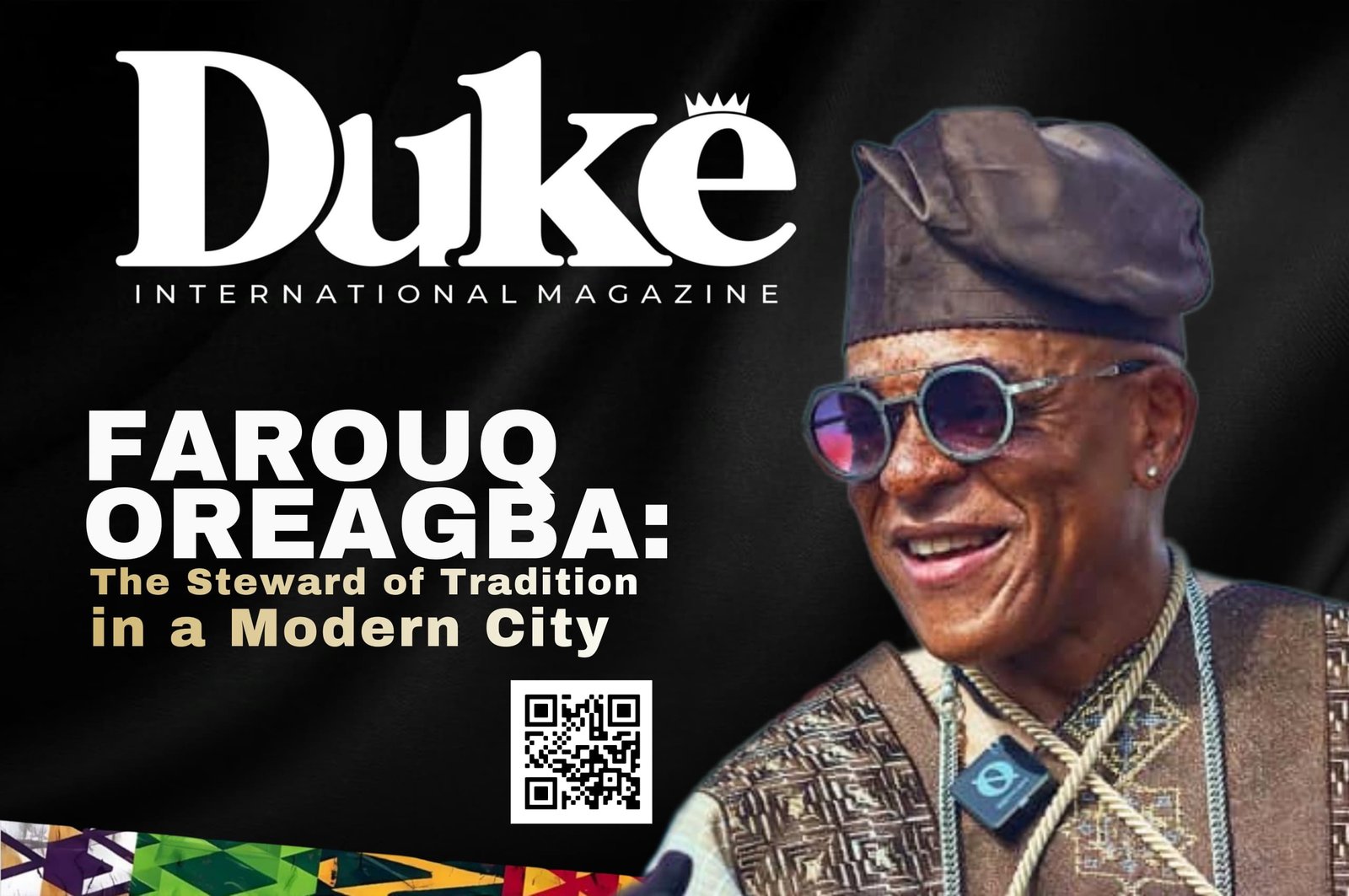
In the bustling heart of Lagos, where the relentless hum of generators and the blare of street-side vendors create a symphony of contemporary chaos, one man moves with the deliberate grace of another era. Farouq Oreagba is not a politician nor a celebrity, yet his presence commands the attention of millions.
As the lead figure behind the annual Eyọ festival, he is the living bridge between the sprawling metropolis and the ancient spirit of the land. Yet his cultural stewardship extends far beyond the boundaries of Lagos. Each year, he also makes the journey to Ijebu Ode for the Ojude Oba festival, where his horseback entrance has become one of the most anticipated moments of the celebration.
Known to his peers as the ‘Father of the Renaissance’ and to a younger generation as the ‘King of Steeze’, Oreagba carries the weight of Yoruba heritage on his broad shoulders. His defining moment in Lagos arrives each year with the Eyọ, a sacred procession of masked figures known as the Adamu Orisha.
Clad in flowing white robes and a wide, veiled hat that obscures his identity, he walks for up to twenty-four hours in bare feet. The heat of the asphalt does not move him; the blare of modern traffic does not distract him. He is the silence within the storm.
But Oreagba’s cultural presence is felt just as powerfully at the Ojude Oba festival in Ijebu Ode, a celebration with roots stretching back over a century. There, he does not walk barefoot in white robes. Instead, he rides a decorated horse in resplendent agbada, often accompanied by his son, continuing a family tradition that began with his grandfather, who led the Oreagba clan’s horse parade until his death in 1967.
For fifteen years, Oreagba has taken part in this festival, and in recent years, his appearances have propelled the centuries-old celebration into global social media and fashion conversations. His choice of fabric, his accessories, his cigar, his tattoos, and his quiet composure have earned him the title of Honorary Cultural Ambassador from the National Council for Arts and Culture.
To watch Farouq Oreagba work is to witness a masterclass in cultural stewardship. He does not simply stage a festival; he enforces a moral code. During the Eyọ, he holds the power to bring the entire economic capital of Nigeria to a halt. A single gesture from his gloved hand can clear a market or silence a blaring speaker. ‘The masquerade is the law,’ he often explains. ‘We are here to cleanse the city of evil and to remind people that some rules are older than the constitution.’
At Ojude Oba, his authority is of a different kind. It is not the power to halt a city but the power to inspire a generation. His dramatic horseback entrances, captured in photographs and videos that go viral each year, have encouraged younger Nigerians to reclaim their cultural identity with pride and intention.
He has become a figure that major brands such as Airtel and FCMB now align themselves with, not through manufactured campaigns but through genuine cultural resonance. As one observer noted, he is not a prop for brands; he is a story worth telling.
Critics argue that the disruption caused by the Eyọ festival costs the city millions in lost trade, yet Oreagba remains unfazed. For him, the purpose of culture is not convenience but continuity. In an age where globalisation threatens to flatten local identity, he offers Lagos a mirror in which to see its own ancient reflection.
And in Ijebu Ode, he offers the same mirror to a global audience, reminding them that a man in agbada on horseback can be just as powerful as any masked spirit. His work is quiet, authoritative and deeply spiritual. He does not ask for applause; he asks for respect.
As the sun sets on another festival and the last Adamu retreats into the sacred grove in Lagos, Farouq Oreagba removes his veil. Beneath it is not a mystical deity but the tired, determined face of a man who understands that a people without their rituals are ghosts.
When the Eyọ is done, he will rest, and then he will prepare for Ojude Oba once more. In a world rushing towards the future, he stands firm, barefoot in Lagos and booted in the stirrups of Ijebu Ode, and reminds everyone that the past is not a place of departure but a permanent residence.