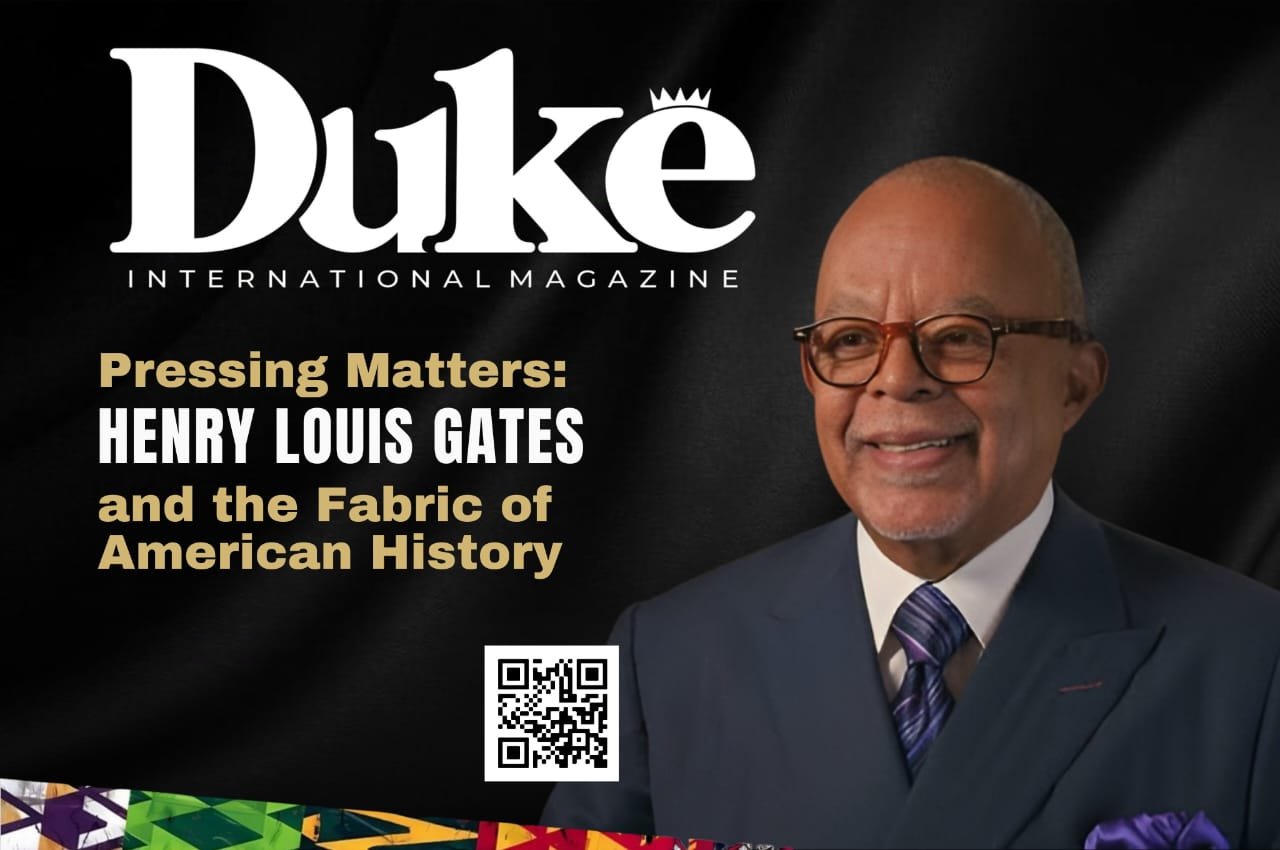
There is a particular crispness to the manner in which Henry Louis Gates presents himself. Whether he is standing before a camera for another series of his celebrated genealogical programmes or lecturing students in the rarefied air of Harvard Yard, his shirts are invariably impeccable: starched cotton, monogrammed cuffs, and collars that sit in perfect opposition to the unruly narratives he spends his life untangling.
It is an apt metaphor for a man whose career has been defined by the pressing of chaos into order. For more than four decades, Gates has laboured to smooth the creases from a historical record that was deliberately crumpled, to piece together the torn fragments of African American lineage and to present them, with elegance and authority, to a public that has responded with an enthusiasm rare in academic circles.
Born in Piedmont, West Virginia, in 1950, Gates grew up in a community where the legacy of segregation was not a distant memory but a lived reality. His father worked at a paper mill during the day and cleaned a local telephone company at night; his mother cleaned houses. That Gates would ascend to become one of the most influential humanities scholars of his generation is a testament not only to his intellect but to the stubborn insistence on dignity that he inherited from his parents.
After an education at Yale and Cambridge, he returned to the United States with a determination to reshape the canon of American literature, rescuing forgotten works by African American authors from the archives and arguing, with formidable erudition, that the Black literary tradition was not a footnote to the American story but its essential companion.
His influence, however, has long since transcended the university seminar room. As the host of the PBS series Finding Your Roots, Gates has become a kind of secular confessor to the famous and the unknown alike. In each episode, he sits across from guests who have come to learn the identities of ancestors whose names were swallowed by slavery, migration and the sheer entropy of time. With a gentle persistence, he guides them through census records, ship manifests and DNA evidence, revealing connections that often provoke tears of astonishment.
It is a peculiar intimacy, conducted beneath studio lights with a film crew present, yet Gates manages to make it feel like a private conversation. His own ancestry, he has discovered, includes a West African woman sold into slavery and a white Irishman who fought in the American Revolution; he wears these dual inheritances as lightly as his bespoke suits, though he never lets his audience forget the violence that made them.
What distinguishes Gates from many public intellectuals is his refusal to condescend. He does not simplify history so much as he invites his viewers to lean in closer, to appreciate the complexity of lives that were never documented by their possessors. In his written work, which ranges from literary theory to memoir, he employs a voice that is simultaneously scholarly and conversational, peppered with the cadences of his West Virginia upbringing and the cosmopolitan fluency of his later years.
He is equally at home discussing the symbolism of the crossroads in Black folklore and the provenance of an eighteenth-century land deed; he moves between the symbolic and the material with the ease of a man who understands that the past is not a foreign country but a neighbourhood in which he has always lived.
Critics have occasionally questioned the ethical boundaries of his genealogical work, particularly when his discoveries reveal uncomfortable truths about living subjects. Gates has responded with characteristic equanimity, arguing that the obligation of the historian is to truth, not to comfort.
It is a position that requires considerable fortitude, yet he does not adopt the posture of the detached scholar. His empathy is evident in every frame of his programmes and every page of his books. He does not merely document the dead; he resurrects them, insisting that their struggles and aspirations deserve a place in the national memory.
At seventy-four, Gates remains an indefatigable presence, his production schedule enough to exhaust a person half his age. One imagines him at his desk before dawn, the cuffs of another immaculate shirt rolled back, annotating a manuscript or reviewing the genetic profile of a jazz musician. The man who spent his early career proving that Black literature was worthy of serious academic study has spent the latter half of that career proving that the lives of ordinary Black Americans are worthy of the same reverence we afford to presidents and poets.
In doing so, he has not only illuminated the past but performed a subtle reclamation of the present. For when Henry Louis Gates fastens his collar and faces the camera, he is not merely telling stories. He is demonstrating, with every polished sentence and every recovered name, that the threads of history, however frayed, can still be woven into something whole.