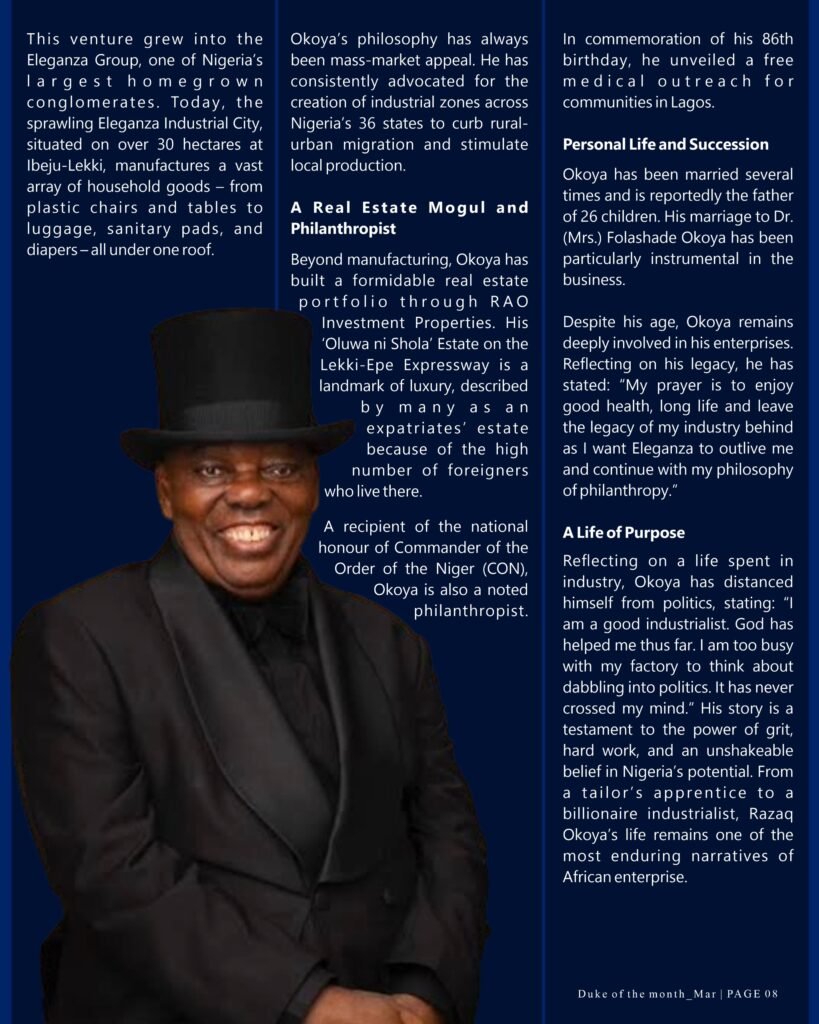

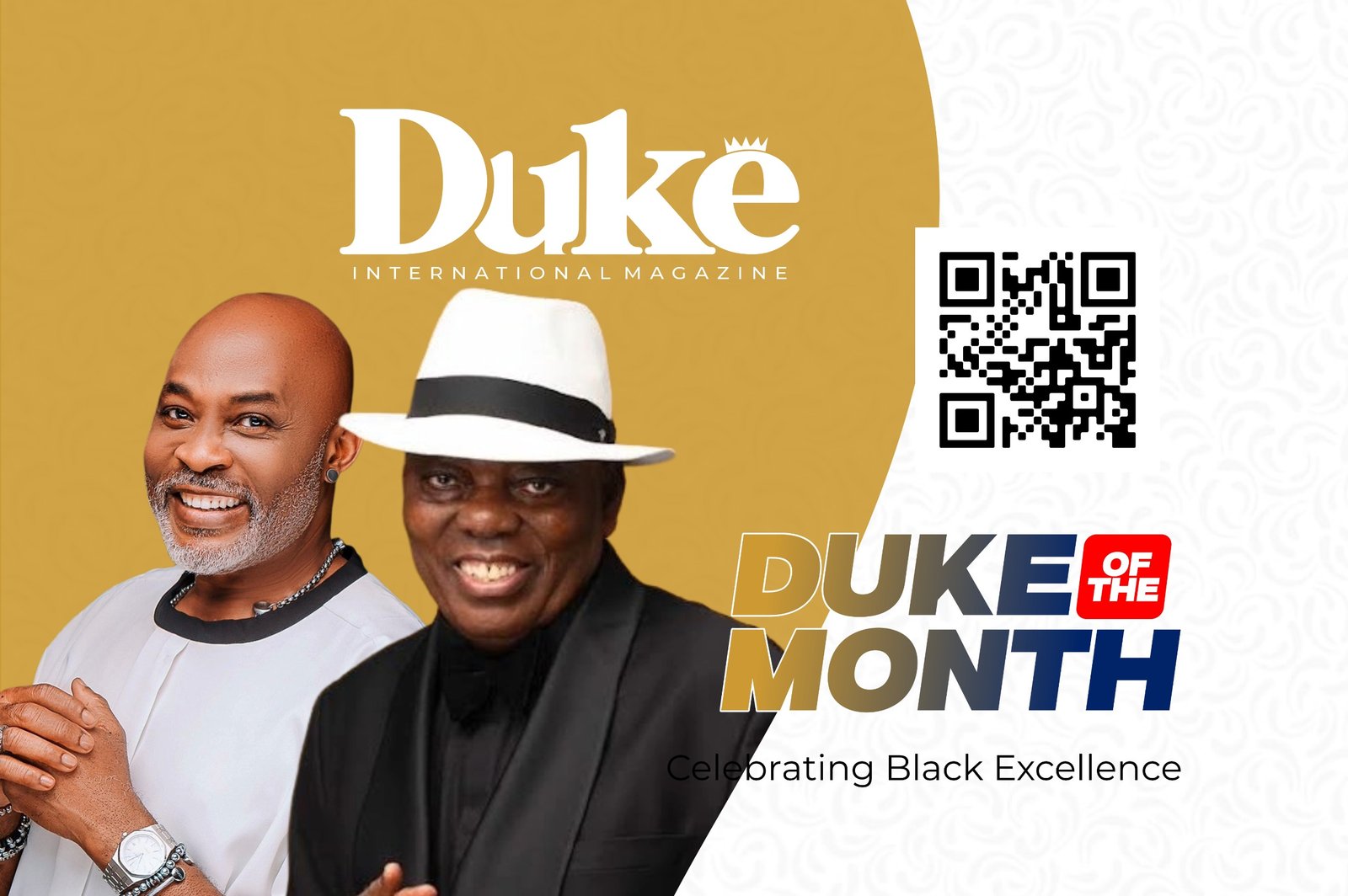
This month, Duke International Magazine celebrates two towering figures who have shaped modern Nigeria in profoundly different ways: Razaq Okoya, the self-made industrialist who built a manufacturing empire from a tailor’s apprentice savings, and Richard Mofe Damijo, the acting legend whose four-decade career mirrors Nollywood’s rise to global prominence.
One forged wealth in factories, the other in film; both embody the resilience, vision, and excellence that define the Nigerian spirit.
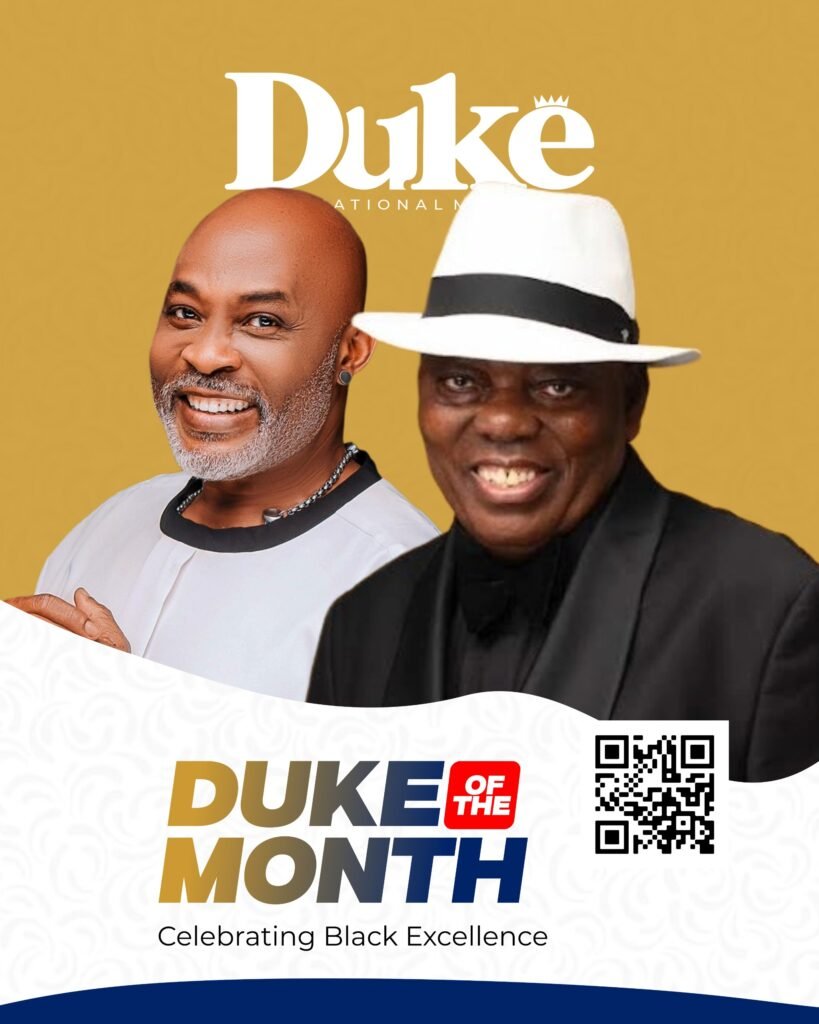
Richard Mofe Damijo: The Enduring Icon of Nollywood
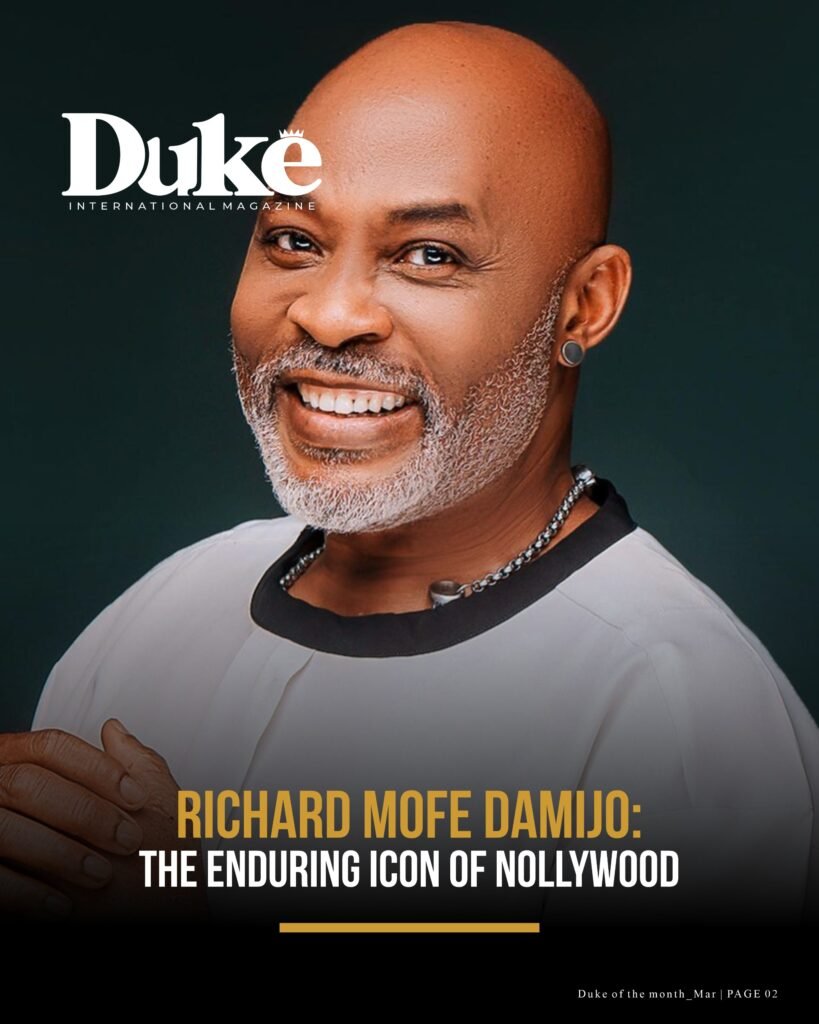
For more than four decades, one name has stood as a beacon of excellence, versatility and sophistication in the Nigerian film industry: Richard Mofe Damijo. Fondly known by his initials, RMD, he is not merely an actor but a cultural archetype, a man whose career has mirrored the evolution of Nollywood itself, from its nascent days of television soap operas to its current status as a global cinematic powerhouse.
Born Chief Richard Evans Mofe Damijo on 6 July 1961, in the Aladja community of Udu Kingdom, Delta State, his journey to stardom was anything but conventional. He attended Midwest College in Warri and Anglican Grammar School, where his passion for performance first ignited as a member of the drama club.
This early creative spark led him to study Theatre Arts at the University of Benin. However, RMD’s intellectual curiosity was boundless; in a move that would later distinguish him from his peers, he returned to academia in 1997 to study law at the University of Lagos, graduating in 2004.
His entry into the public eye began not in front of the camera, but behind a typewriter. Before he became a household name, RMD honed his craft as a writer for Concord newspaper, as well as Metro and Quality magazines. This journalistic background imbued him with a sharp understanding of narrative and character, which he seamlessly translated to the screen.
His breakthrough came with a role as a police inspector in the soap opera Ripples, but it was his portrayal of the villainous Segun Kadiri in the rival soap Checkmate that cemented his status as a star. Overnight, he became the man audiences loved to hate, a testament to his commanding screen presence.
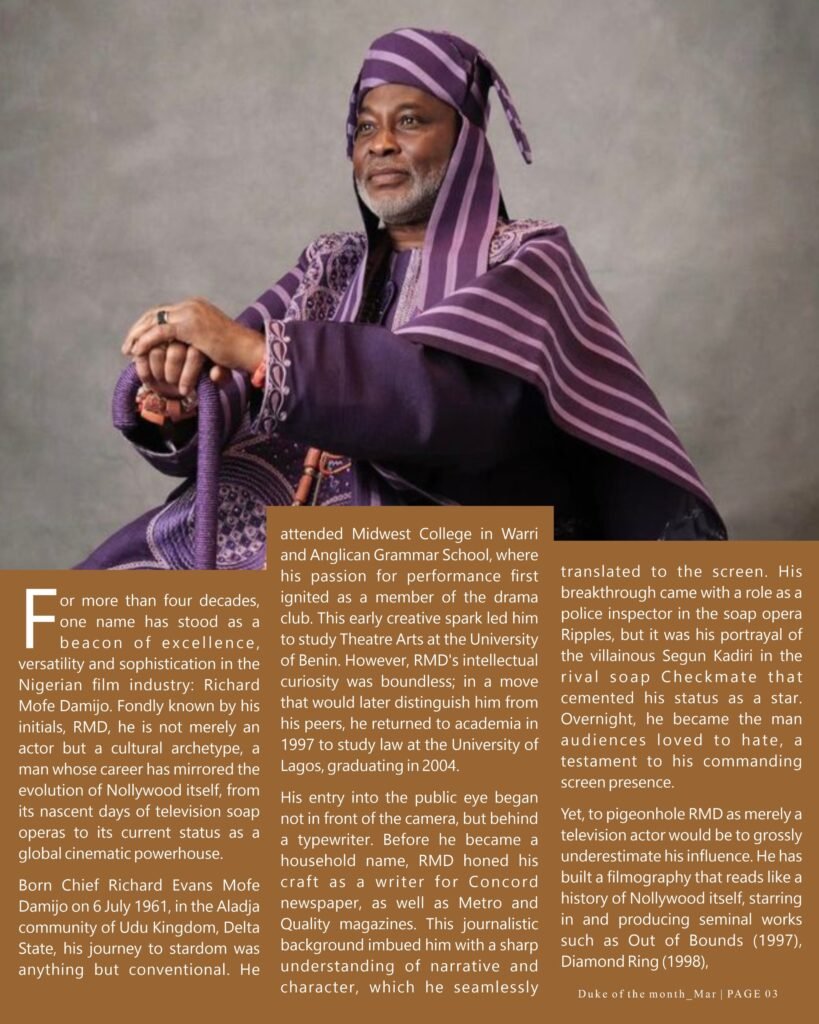
Yet, to pigeonhole RMD as merely a television actor would be to grossly underestimate his influence. He has built a filmography that reads like a history of Nollywood itself, starring in and producing seminal works such as Out of Bounds (1997), Diamond Ring (1998), Keeping Faith (2002), The Wedding Party (2016), Castle & Castle (2018, 2021), and the recent blockbuster The Black Book.
His performances are characterised by a rare elegance and a depth that transcends genre, navigating drama, romance and thriller with equal dexterity.
This commitment to his craft has been recognised with a mantelpiece full of laurels. In 2005, he won the Africa Movie Academy Award for Best Actor in a Leading Role for his performance in The Mayors (2004). A decade later, in 2016, he received a Lifetime Achievement Award at the 12th Africa Movie Academy Awards.
Most recently, in 2024, he was honoured with the Industry Merit Award at the Africa Magic Viewers’ Choice Awards (AMVCA), alongside veteran actress Iya Rainbow, a fitting tribute to a man who has helped define the industry.
His influence, however, extends far beyond the silver screen. Demonstrating a profound sense of civic duty, RMD served first as Special Adviser and later as Commissioner for Culture and Tourism in Delta State from 2009 to 2015. In this role, he channelled his passion for the arts into policy, advocating for the preservation and promotion of Nigerian heritage on a governmental level.
Now, at the age of 65, RMD shows no signs of slowing down. Reflecting on his life, he recently remarked during an episode of The Morayo Show that he feels like he is “living an extra time”, a sentiment born from gratitude, as both his parents did not live to see 60.
He maintains his youthful vigour through a disciplined regimen of eating right and exercising, coupled with a defiant philosophy: “the only way for an old person to stay young, is to never let the old person in”. He also revealed that he remains committed to his personal style and outlook on life, despite his age.
He remains a vocal advocate for social change. In July 2026, he was appointed as an ambassador of the Male Feminists Network (MFN) by the African Centre for Leadership, Strategy and Development (Centre LSD) to champion the prevention of gender-based violence in Nigeria.
Speaking after his decoration in Abuja, he delivered a powerful call to action for Nigerian men to reject violence against women and treat them with dignity and respect. “Just give respect to women and treat them like human beings,” he urged, adding: “It is easier to talk to people these days than to just use your fist”. He also called for greater inclusion of women in governance, arguing that they have consistently demonstrated competence and efficiency in public service.
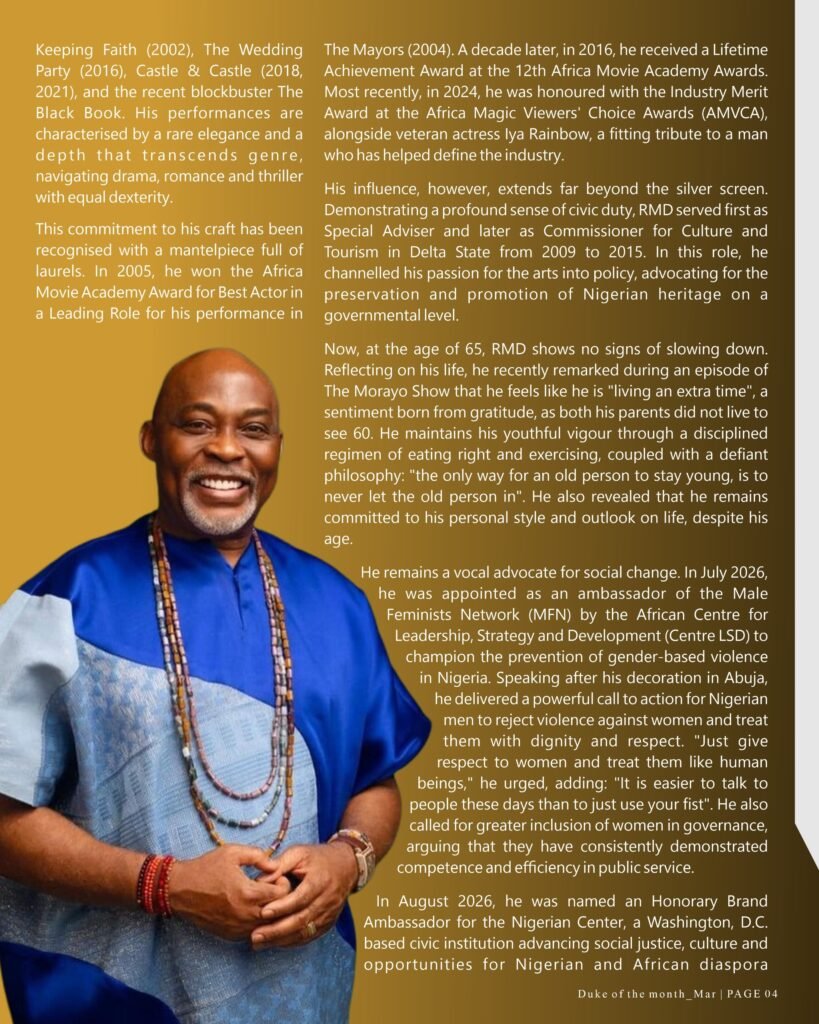
In August 2026, he was named an Honorary Brand Ambassador for the Nigerian Center, a Washington, D.C. based civic institution advancing social justice, culture and opportunities for Nigerian and African diaspora communities in the United States.
The appointment recognises his contributions to the arts, public service and his longstanding commitment to promoting the image and interests of Nigerians globally. As part of the role, he also received the organisation’s 2026 Honorary Recognition Award. Responding to the appointment, he described the recognition as a privilege and pledged to support the organisation’s vision.
He also continues to mentor the next generation of creatives. In June 2026, he urged artists to move beyond being just artistes and begin to think like entrepreneurs, a reflection of his own multifaceted career as actor, lawyer, journalist and former commissioner.
Richard Mofe Damijo is more than an actor; he is a national treasure. He is a lawyer, a journalist, a former commissioner, a feminist ally and a style icon. In an industry often defined by its fleeting moments of fame, RMD has built a legacy of enduring substance. As he continues to shape the narrative of African cinema on the world stage, one thing remains clear: the legend of RMD is far from its final act.
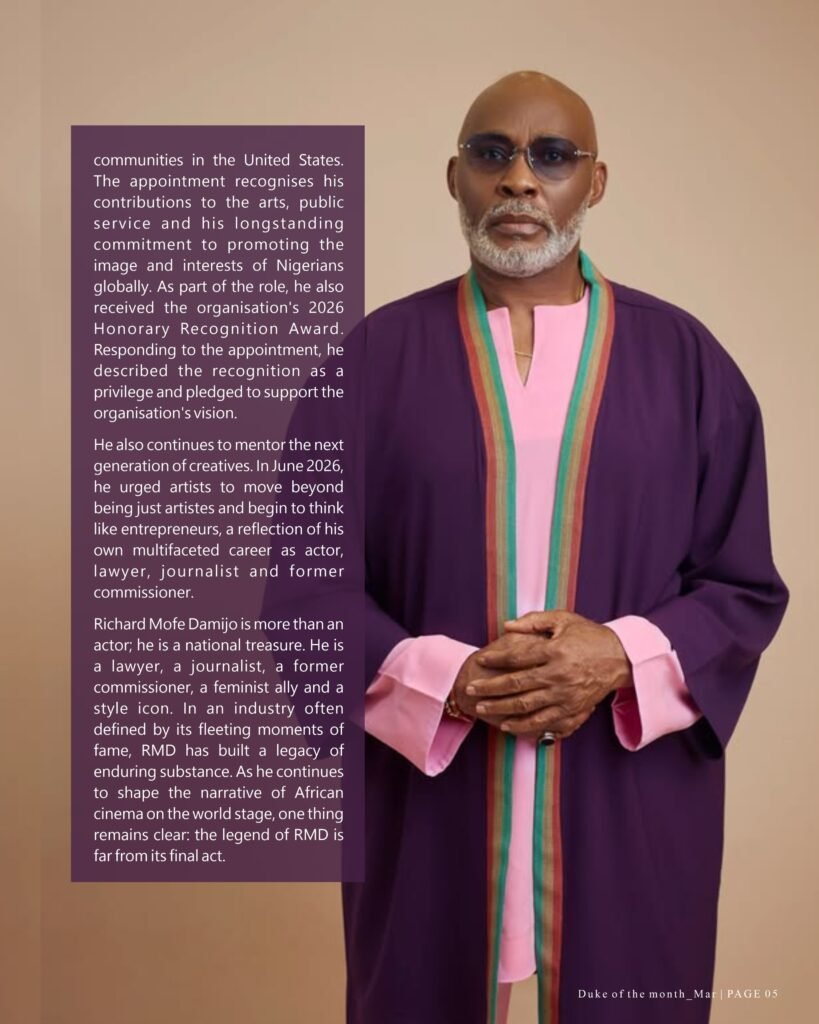
From Tailor’s Apprentice to Industrial Titan: The Razaq Okoya Story
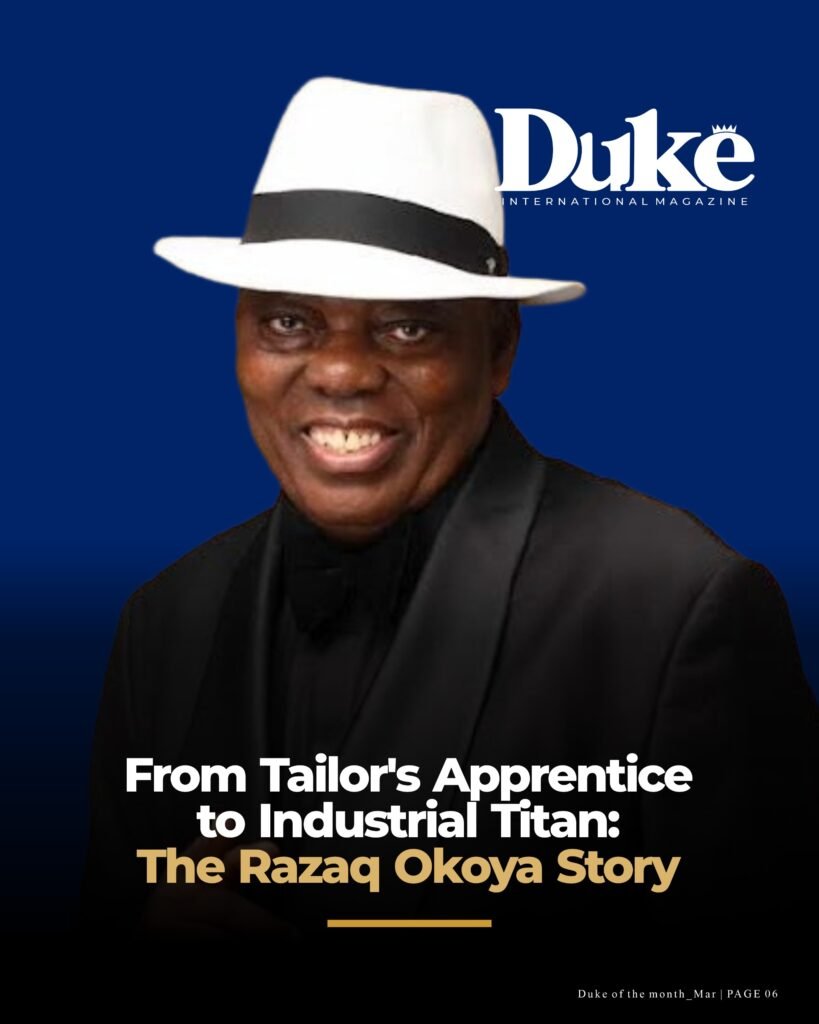
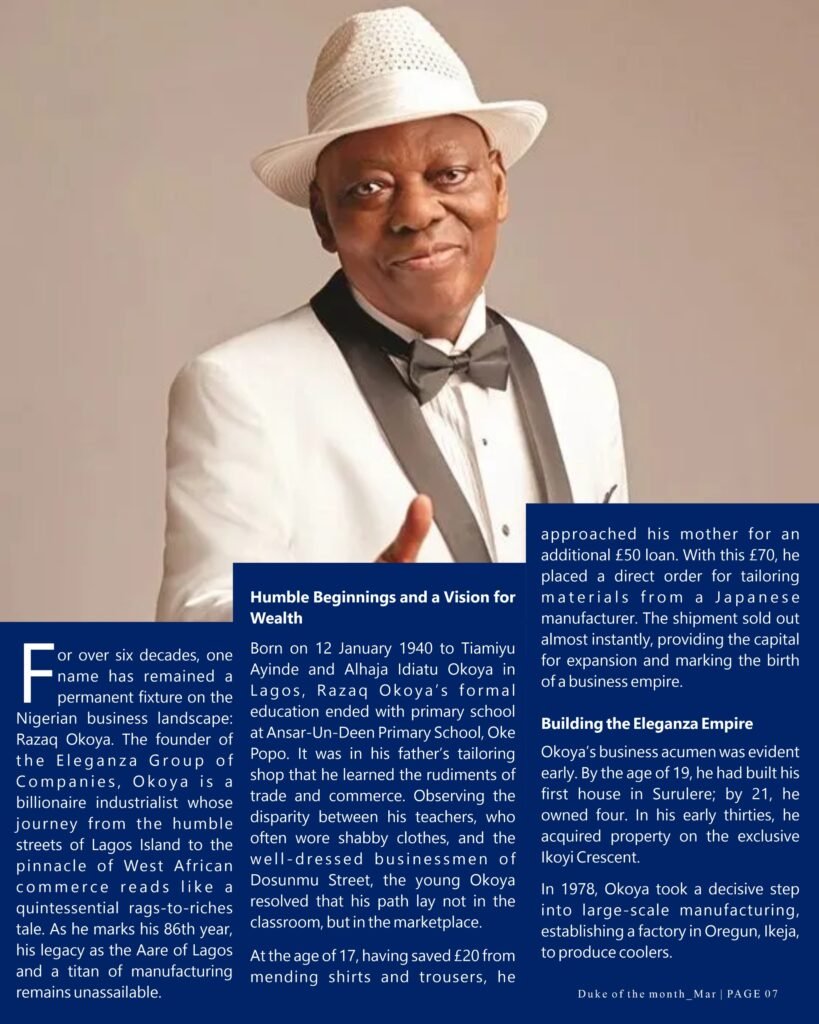
For over six decades, one name has remained a permanent fixture on the Nigerian business landscape: Razaq Okoya. The founder of the Eleganza Group of Companies, Okoya is a billionaire industrialist whose journey from the humble streets of Lagos Island to the pinnacle of West African commerce reads like a quintessential rags-to-riches tale. As he marks his 86th year, his legacy as the Aare of Lagos and a titan of manufacturing remains unassailable.
Humble Beginnings and a Vision for Wealth
Born on 12 January 1940 to Tiamiyu Ayinde and Alhaja Idiatu Okoya in Lagos, Razaq Okoya’s formal education ended with primary school at Ansar-Un-Deen Primary School, Oke Popo. It was in his father’s tailoring shop that he learned the rudiments of trade and commerce.
Observing the disparity between his teachers, who often wore shabby clothes, and the well-dressed businessmen of Dosunmu Street, the young Okoya resolved that his path lay not in the classroom, but in the marketplace.
At the age of 17, having saved £20 from mending shirts and trousers, he approached his mother for an additional £50 loan. With this £70, he placed a direct order for tailoring materials from a Japanese manufacturer. The shipment sold out almost instantly, providing the capital for expansion and marking the birth of a business empire.
Building the Eleganza Empire
Okoya’s business acumen was evident early. By the age of 19, he had built his first house in Surulere; by 21, he owned four. In his early thirties, he acquired property on the exclusive Ikoyi Crescent.
In 1978, Okoya took a decisive step into large-scale manufacturing, establishing a factory in Oregun, Ikeja, to produce coolers. This venture grew into the Eleganza Group, one of Nigeria’s largest homegrown conglomerates.
Today, the sprawling Eleganza Industrial City, situated on over 30 hectares at Ibeju-Lekki, manufactures a vast array of household goods – from plastic chairs and tables to luggage, sanitary pads, and diapers, all under one roof.
Okoya’s philosophy has always been mass-market appeal. He has consistently advocated for the creation of industrial zones across Nigeria’s 36 states to curb rural-urban migration and stimulate local production.
A Real Estate Mogul and Philanthropist
Beyond manufacturing, Okoya has built a formidable real estate portfolio through RAO Investment Properties. His ‘Oluwa ni Shola’ Estate on the Lekki-Epe Expressway is a landmark of luxury, described by many as an expatriates’ estate because of the high number of foreigners who live there.
A recipient of the national honour of Commander of the Order of the Niger (CON), Okoya is also a noted philanthropist. In commemoration of his 86th birthday, he unveiled a free medical outreach for communities in Lagos.
Personal Life and Succession
Okoya has been married several times and is reportedly the father of 26 children. His marriage to Dr. (Mrs.) Folashade Okoya has been particularly instrumental in the business.
Despite his age, Okoya remains deeply involved in his enterprises. Reflecting on his legacy, he has stated: “My prayer is to enjoy good health, long life and leave the legacy of my industry behind as I want Eleganza to outlive me and continue with my philosophy of philanthropy.”
A Life of Purpose
Reflecting on a life spent in industry, Okoya has distanced himself from politics, stating: “I am a good industrialist. God has helped me thus far. I am too busy with my factory to think about dabbling into politics. It has never crossed my mind.”
His story is a testament to the power of grit, hard work, and an unshakeable belief in Nigeria’s potential. From a tailor’s apprentice to a billionaire industrialist, Razaq Okoya’s life remains one of the most enduring narratives of African enterprise.