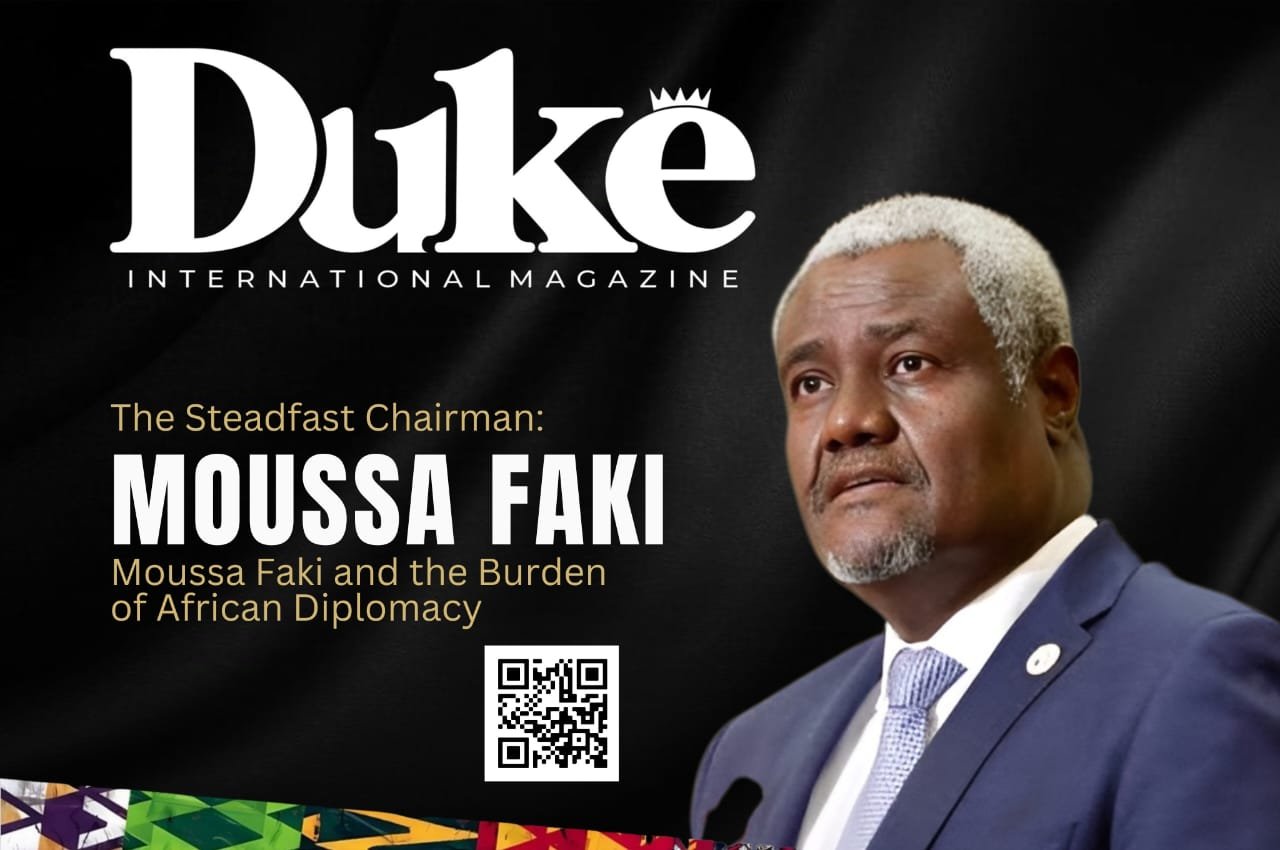
In the bustling halls of the African Union headquarters in Addis Ababa, one figure has presided over the continent’s most profound crises and ambitions with a quiet, unwavering determination. Moussa Faki Mahamat, the Chairperson of the African Union Commission, is a statesman defined not by flamboyance, but by the immense weight of the office he holds.
His tenure, beginning in 2017, has been a masterclass in navigating the turbulent waters of continental politics, global pressures, and the relentless pursuit of a unified African voice.
A former Prime Minister and Foreign Minister of Chad, Faki arrived at the helm with a deep understanding of the Sahel’s fragility and the complex machinery of government, this experience proved immediately crucial.
His chairmanship has been punctuated by a succession of formidable challenges: a devastating pandemic, a wave of military coups reversing democratic gains, and brutal conflicts from northern Ethiopia to the eastern Democratic Republic of Congo.
Through each, his approach has been characteristically consistent—a diplomat’s preference for closed-door negotiation over public confrontation, emphasising the African Union’s foundational principle of “African solutions to African problems.”
This calibrated style was perhaps most tested during the Tigray war in Ethiopia, host nation to the Union itself. Faki walked a diplomatic tightrope, balancing calls for peace with a necessary deference to a member state’s sovereignty.
While critics argued for a more forceful intervention, his method involved persistent, behind-the-scenes engagement, ultimately supporting regional mediation efforts. This incident exemplified the core tension of his role: the challenge of translating the Union’s normative power into concrete action against the realities of national interests.
Beyond crisis management, Faki has been a steady advocate for institutional ambition. He has been a custodian of the African Continental Free Trade Area, arguing for its potential to transform economies, and a vocal proponent of reforming the United Nations Security Council to grant Africa meaningful representation.
His rhetoric often returns to themes of self-reliance, strategic autonomy, and the need for the continent to shape its own destiny, particularly in the face of renewed great power competition on African soil.
Moussa Faki’s legacy is still being written, as he continues his second term. He may not be a charismatic orator rallying the masses, but he embodies the patient, often thankless, work of continental governance.
In an era of fragmentation, he remains a symbol of the persistent, if difficult, pursuit of African unity—a chairman carrying the burden of a continent’s hopes and complexities with a resolute and steady hand.