

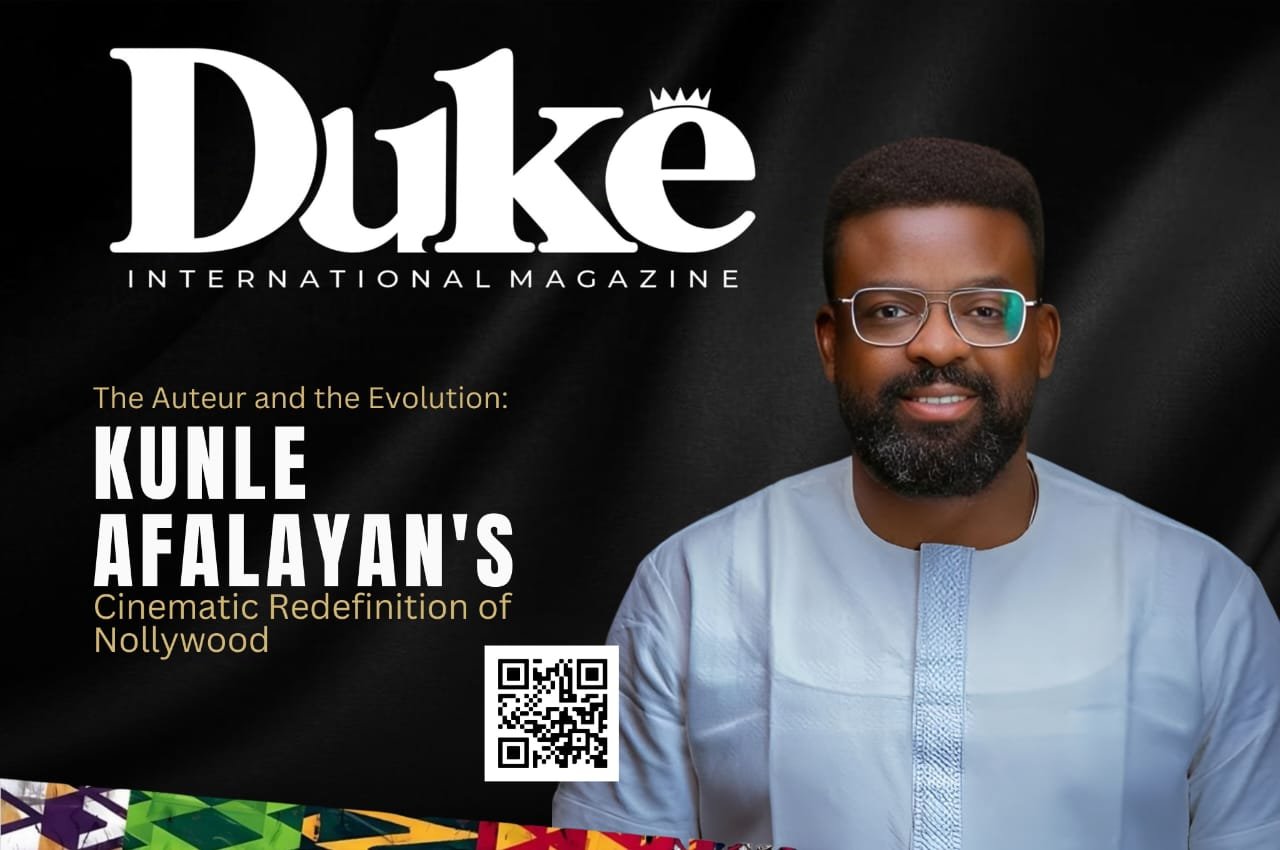
In the dynamic landscape of Nigerian cinema, few figures command as much respect or have catalysed as much change as Kunle Afolayan.
More than just a filmmaker, Afolayan has positioned himself as a cinematic auteur and a strategic industrial force, deliberately steering Nollywood away from its straight-to-video origins toward a future of global prestige and artistic integrity.
His journey, from banking to becoming the so-called “Kubrick of Lagos”, encapsulates a conscious mission to elevate an entire industry.
Afolayan’s artistic destiny seemed almost preordained. Born in 1975 into a pioneering film family, he is the son of Adeyemi “Ade Love” Afolayan, a legendary figure in Yoruba travelling theatre and film.
Despite this heritage, his father initially discouraged him from filmmaking due to its financial instability at the time. Afolayan instead pursued economics at university and worked in corporate banking, yet the pull of storytelling proved irresistible. His entry point was acting, notably in Tunde Kelani’s seminal political drama Saworoide (1999), before a decisive pivot in 2005.
He resigned from banking, acquired formal training at the New York Film Academy, and founded his production company, Golden Effects Pictures, signalling his commitment to a new professional paradigm.
From his directorial debut, Irapada (2006), Afolayan distinguished himself by rejecting prevailing norms. He championed higher production values, shooting on 35mm film, and crafting complex narratives designed for cinematic release.
This approach, later termed “New Nigerian Cinema,” reached its first major crescendo with The Figurine (2009). The film was a critical and commercial triumph, winning five Africa Movie Academy Awards, including Best Picture, and demonstrated that Nigerian films could achieve both artistic depth and box-office success.
He further proved his versatility with genre-hopping successes: the sophisticated comedy Phone Swap (2012) and the historical thriller October 1 (2014), the latter becoming one of Nigeria’s highest-grossing films at the time.
Afolayan’s most significant modern manoeuvre has been his strategic alliance with Netflix, a partnership that has amplified Nigerian stories on the world stage.
Following the streaming service’s acquisition of titles like October 1 and The CEO, their collaboration deepened into a multi-film deal. The fruits of this partnership showcase his range and ambition:
· Citation (2020): A social drama tackling sexual harassment on Nigerian university campuses.
· Swallow (2021): A gritty adaptation of Sefi Atta’s novel, set in 1980s Lagos and exploring economic desperation.
· Aníkúlápó (2022): A cultural phenomenon. This Yoruba-language epic fantasy became a global Netflix hit, topping non-English charts and earning a record 16 nominations at the 2023 Africa Magic Viewers’ Choice Awards. Its success spawned the series Anikulapo: Rise of the Spectre (2024).
Despite this global digital reach, Afolayan remains a nuanced advocate for the industry’s ecosystem. In 2025, he notably re-released early films like The Figurine on his YouTube channel after their Netflix licenses expired, arguing for the importance of preserving and making cinematic heritage accessible to local audiences.
This act underscores a core principle: while international partnerships are vital, the domestic cultural foundation must not be neglected.
Afolayan’s filmography is united by a meticulous attention to craft—production design, costume, and cinematography, that frames profound social commentary. Whether exploring postpartum traditions in Omugwo, tribal prejudices in The Bridge, or spiritual mysteries in The Figurine, his work is deeply rooted in Nigerian, particularly Yoruba, socio-cultural contexts.
He is, as he has stated, dedicated to presenting “real Nigerian stories” and showcasing “African stories and culture in their true form”.
From inheriting a legacy to building an empire, Kunle Afolayan’s career constitutes a masterclass in creative evolution and industrial leadership. He has not merely made films; he has systematically worked to transform the infrastructure, expectations, and international perception of Nigerian cinema.
By marrying cultural authenticity with production excellence and strategic distribution, Afolayan continues to script the future of Nollywood, one groundbreaking frame at a time.


1 comment
thanks for your informtive Margazine.Though thinking of how to be a member of the Commonwealth development