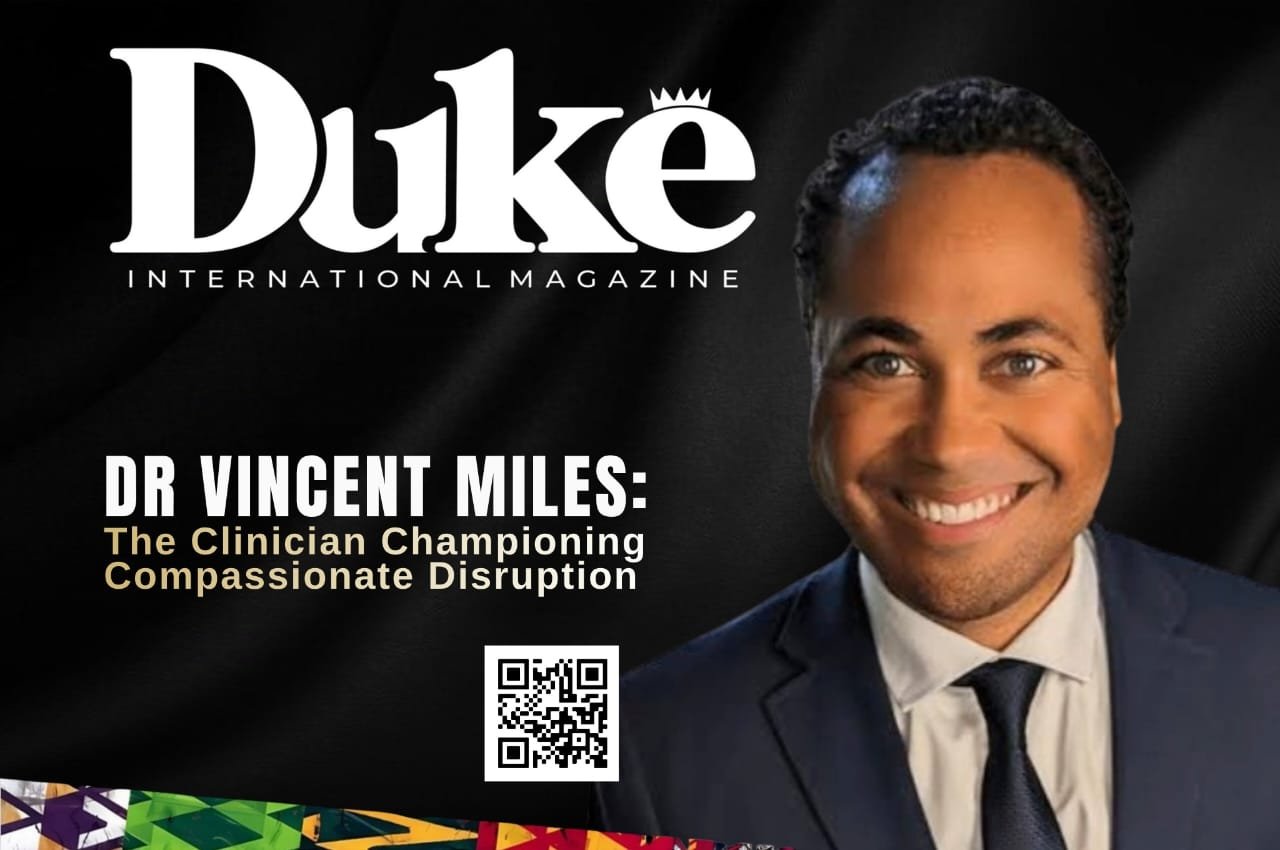
In a profession often governed by waiting lists and standardised diagnostic tools, Dr Vincent Miles, a Doctor of Psychology practising in central Bristol, stands apart. He does not merely listen; he excavates.
Dr Miles, who trained at the University of Surrey, specialises in what he terms ‘compassionate disruption’—a method that challenges a patient’s deeply ingrained narratives without confrontation.
Rather than accepting a client’s first statement of helplessness, he gently dismantles the language of permanence. ‘A patient says “I am broken”,’ he explains, leaning forward in his leather chair. ‘I ask, “When did you learn to call yourself broken?” The shift is from identity to event. You cannot repair an identity, but you can revisit an event.’
His consulting room, lined with dog-eared copies of Oliver Sacks and a single ceramic skull, reflects this philosophy. There are no clipboards. He prefers a fountain pen and a blank page, sketching what he calls ‘emotional timelines’ during the session.
Controversial among traditionalists for his refusal to use standardised diagnostic manuals as the sole arbiter of care, Dr Miles argues that a checklist cannot measure the nuance of a childhood. ‘The question is not “what disorder do you have?”’ he states. ‘The question is “what happened to you?”’
Despite his maverick reputation, his success with treatment-resistant anxiety and complex trauma has earned a devoted following. Colleagues describe him as exhausting but brilliant. Patients describe him as the first person who ever truly argued with their despair.
At fifty-two, Dr Miles has no interest in retiring to academia. He is currently piloting a community scheme in South Bristol that places trainee psychologists into barbershops and nail salons, meeting people where they are rather than where the National Health Service waiting list leaves them. ‘Therapy,’ he says with a wry smile, ‘is not a room. It is a relationship. And relationships do not respect the forty-five minute hour.’