

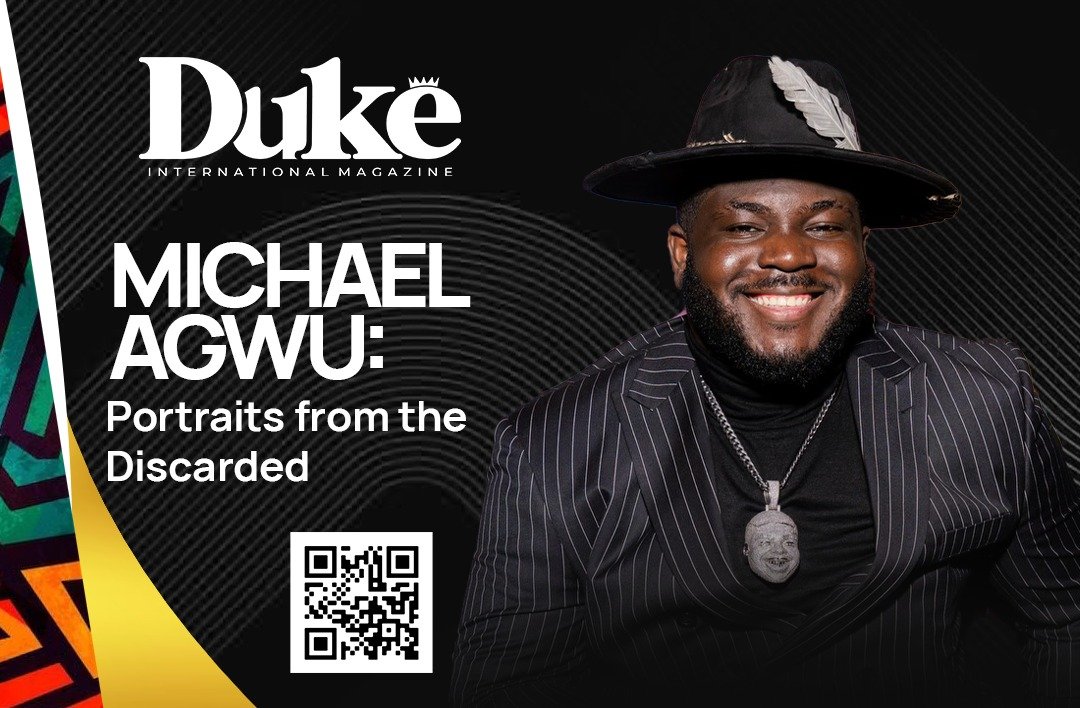
Michael Agwu is a Nigerian-born, Philadelphia-based contemporary artist who transforms electronic waste into large-scale portrait mosaics. His work sits at the intersection of sustainability, portraiture and cultural memory, using discarded keyboards, circuit boards, wires and phone parts as the raw material for images that celebrate Black identity and African heritage.
Largely self-taught, Agwu began as a pencil artist, spending years studying portraiture and the principles of structure, expression and light. That foundation in drawing remains central to his mosaic practice, which relies on the same concerns with composition, contrast and form.
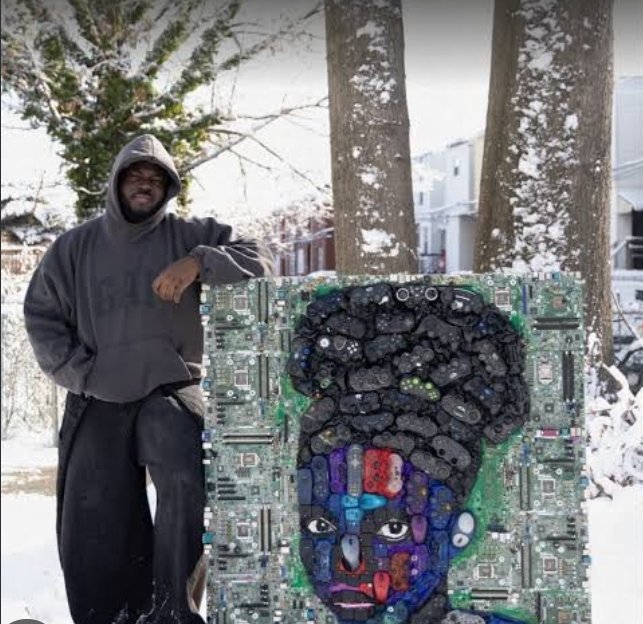
The shift toward electronic waste began after a class in earth science, where he learned that e-waste is one of the fastest-growing waste streams in the world. Rather than simply contributing to the problem, he started experimenting with discarded technology as a medium.
His mosaics use electronic components much as traditional mosaics use stone, tile or glass. Thousands of individual pieces are assembled into portraits that read clearly from a distance while revealing intricate detail up close.
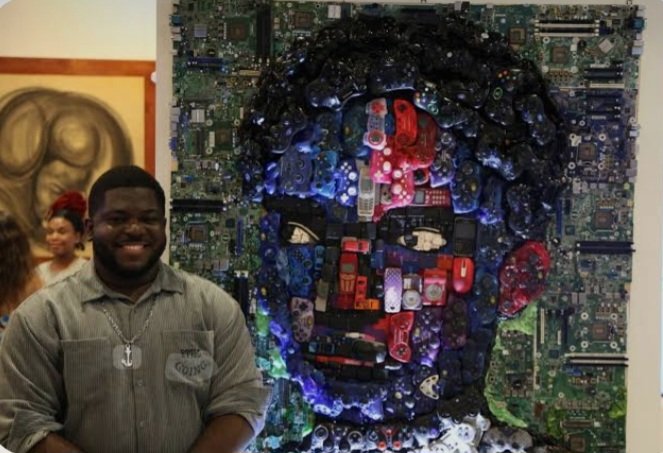
Many of his subjects draw on pre-colonial African hairstyles and visual traditions, connecting contemporary materials with histories that he believes deserve greater visibility. The result is a body of work that speaks to both the present moment and longer cultural narratives.
Agwu has said that developing a visual language with such unconventional materials required patience and constant problem-solving, as there is no guidebook for turning electronics into portraits.
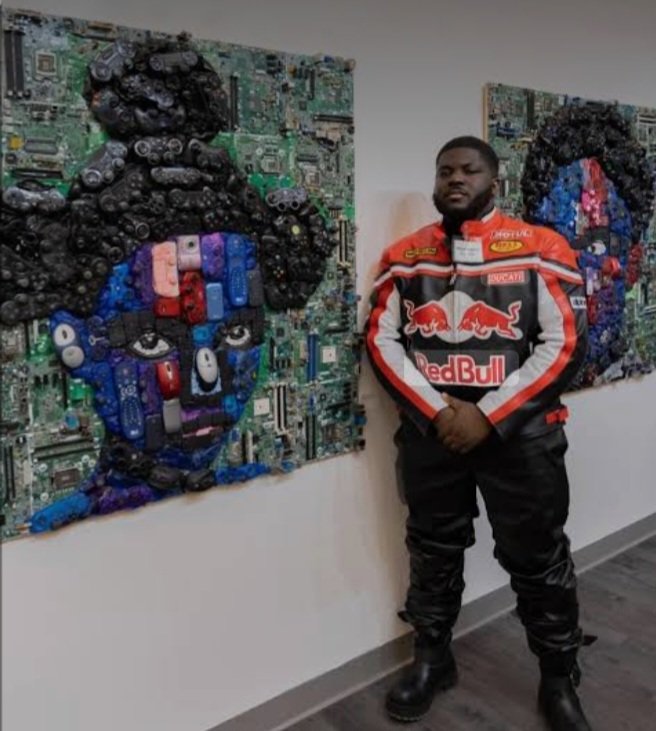
The physical demands are considerable: sourcing, organising and assembling thousands of components for each piece is both creatively and logistically demanding. Yet those challenges have shaped a practice that is distinctly his own.
Through his mosaic portraits, Michael Agwu offers a reminder that objects discarded as useless can still carry meaning, memory and power. His work encourages viewers to think differently about both the technology they throw away and the stories they choose to preserve.