

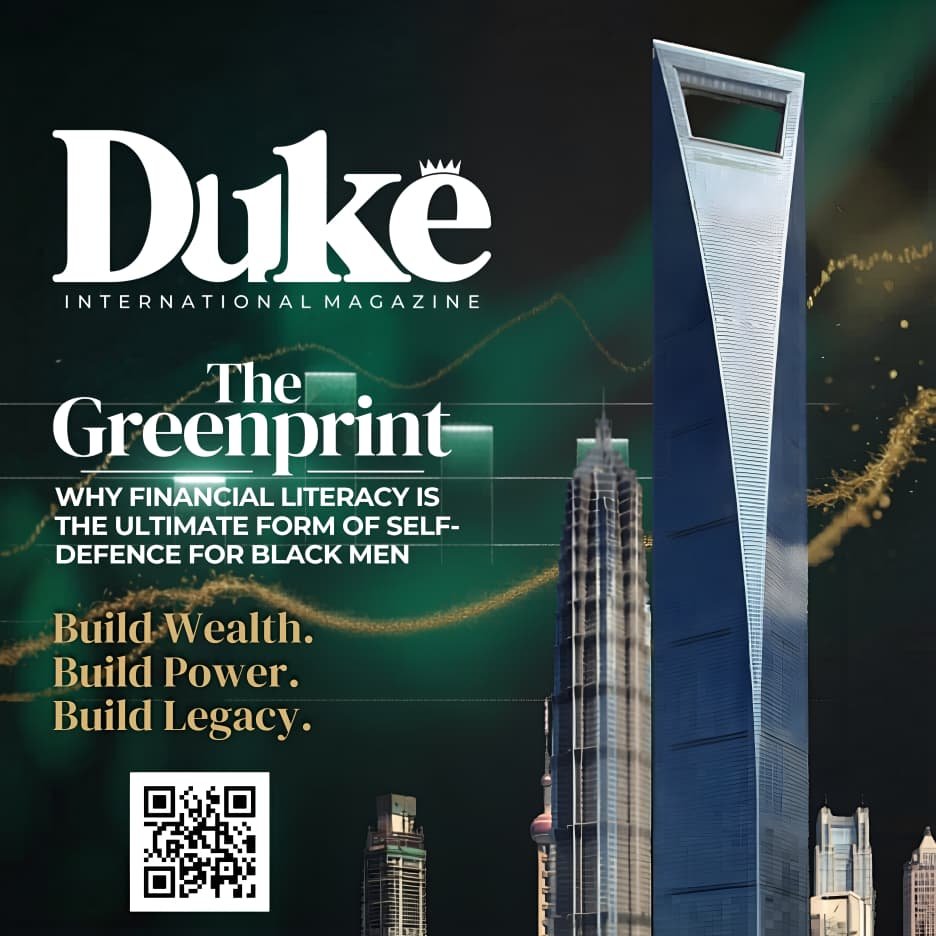
We spent decades building culture. Now we build wealth. You cannot call yourself free if you are always thirty days away from eviction.
That sounds harsh. But for too many Black men, that is the real maths. One car repair. One medical bill. One two-week gap between jobs. And the whole house of cards falls down. And when that happens, the world does not offer grace. It offers interest rates, late fees, and collection calls at 8am.
April is Financial Literacy Month. And while the banks flood your feed with generic advice, this conversation hits differently for us. We face wage gaps that never close. Predatory lending marketed to our neighbourhoods. And the simple, heavy truth that many of us are the first in our families to have any disposable income at all.
That is not an excuse. That is the starting line.
Financial literacy is not about getting rich quick. It is about options. It is about walking away from a job that is killing your spirit. It is about sending your child to the school you chose, not the one you could afford. It is about retiring with dignity after forty years of showing up.
For Black men, mastering money is not greed. It is protection.
The numbers do not lie
According to the Federal Reserve, the median white family holds roughly seven times the wealth of the median Black family. Black families have less than fifteen pence for every pound white families have.
That gap is the echo of generations denied homeownership, business loans, and fair wages.
But here is what the headlines miss. Despite all of that, Black entrepreneurs are now the fastest-growing group of new business owners in America. Young Black men are investing in real estate and the stock market at rates we have never seen before.
What has been missing is the roadmap. Financial literacy is that roadmap.
The four pillars
Master these one at a time. Do not rush. This is the rest of your life.
One: Earning. You cannot save your way to wealth. Negotiate your salary. Know what your skills are worth. Diversify your income. A single paycheck is a single point of failure.
Two: Saving and budgeting. Try the 70/20/10 rule. Seventy percent for needs. Twenty percent for savings and investments. Ten percent for wants. Turn on automatic transfers so the twenty percent moves before you can spend it.
Three: Investing. Saving keeps your money. Investing makes it work while you sleep. You do not need to gamble on meme stocks. You need simple, boring, consistent investing. Buy an S&P 500 index fund. Add money every month. Do not touch it for ten years.
Four: Protecting. What happens to your family if you die tomorrow? Too many Black men have no life insurance, no will, and no named beneficiary. Term life insurance is cheap. A simple will costs a few hundred pounds. Name a beneficiary on every account. It takes five minutes.
Real men, real moves
Marcus, 28, a teacher in Atlanta. He makes fifty-eight thousand dollars a year. By following the 70/20/10 rule and investing the twenty percent, he has accumulated over one hundred thousand dollars in six years. “I still drive a 2016 Honda,” he says. “My students do not know I have money. But I know. And that peace is priceless.”
Darnell, 41, a barber and landlord in Detroit. He owns a barbershop with two chairs. During the pandemic, he bought a duplex. He now owns four rental properties. “The shop pays my bills,” he says. “The properties are building my retirement.”
Terrence, 35, a lawyer in Houston. He graduated law school with eighty thousand dollars in student debt. He lived like a student for three more years and paid it all off by thirty-three. “Waking up debt-free at thirty-three? I would do it again every time.”
Breaking the silence
Many Black men carry shame around money. We hide bills. We avoid opening bank statements. We pretend everything is fine while the walls close in.
That shame is poison.
Your credit score is not your worth. A late payment does not make you a bad man. If you are struggling, talk to someone. A trusted friend. A financial coach. Some of the strongest men you know have been exactly where you are. The only difference is they asked for help.
This April, take one step
You do not have to fix everything this month. You just have to start.
Week one: Check your credit report. Dispute any errors.
Week two: Automate twenty pounds a week into a savings account. Name it something real. Freedom Fund. Legacy Account.
Week three: Read one book. The Wealth Choice by Dennis Kimbro or The Simple Path to Wealth by JL Collins.
Week four: Have an honest money conversation with a male friend. Not about how much you make. About what scares you and what you are building towards.
Duke Magazine is not just about how you look, dress, or talk. It is about how you live. And what you leave behind.
Build your greenprint now.