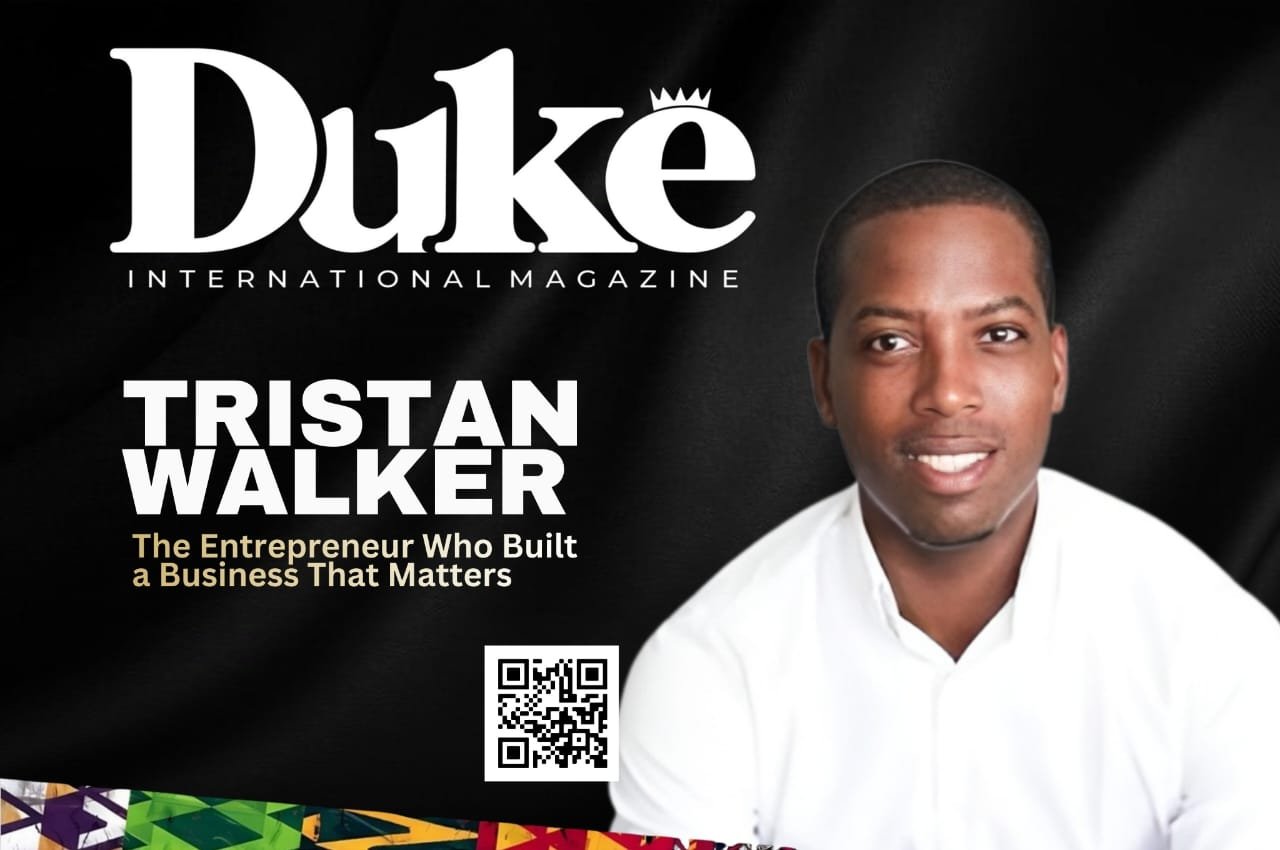
Tristan Walker is an entrepreneur who has fundamentally reshaped the health and beauty industry by building products for people who had been overlooked.
As the founder and former chief executive officer of Walker & Company Brands, he created a enterprise dedicated to making health and beauty simple for people of colour. His journey from a child in Queens, New York, to becoming a pioneering figure in Silicon Valley is a study in vision, persistence, and the power of personal connection to a problem.
Born on July 5, 1984, Walker’s early ambition was driven by a desire to build wealth, a goal he initially believed could only be achieved through athletics, finance, or entrepreneurship. He pursued a bachelor’s degree in economics from Stony Brook University, graduating as valedictorian in 2005, before gaining experience on Wall Street with firms like Lehman Brothers.
Recognising that a different path was required to achieve his long-term goals, he later earned a Master of Business Administration from the Stanford University Graduate School of Business in 2010.
The years following business school were formative. He interned at Twitter and the Boston Consulting Group before becoming the third employee and director of business development at Foursquare.
In this role, he led strategic partnerships with major brands, honing the skills that would later define his entrepreneurial career. Following a period as an entrepreneur-in-residence at the venture capital firm Andreessen Horowitz, Walker was ready to launch his own venture.
In 2013, he founded Walker & Company Brands, driven by a personal frustration with the lack of quality grooming products for Black men, particularly a solution for razor bumps. This authentic connection to the problem became the company’s foundation.
Its flagship brand, Bevel, a shaving system designed specifically for coarse and curly hair, addressed a long-ignored need within the community. He later expanded the portfolio to include Form, a women’s haircare line. Walker’s philosophy was clear: he was not just building a company, but a brand with the potential to endure for generations.
Building the business required overcoming significant hurdles. When venture capital funding became scarce, Walker and his team refused to give up, ultimately securing investment from high-profile figures such as Magic Johnson and John Legend. His focus on technology and a long-term vision paid off. In December 2018, Walker & Company Brands was acquired by Procter & Gamble.
In a historic move, Walker remained at the helm as chief executive officer of the subsidiary, becoming the first Black chief executive officer in Procter & Gamble’s 180-year history. Under his leadership, the Bevel brand achieved national distribution in major retailers such as Target and Walmart.
Beyond his commercial success, Walker has been a consistent advocate for inclusion in the technology industry. In 2012, he co-founded CODE2040, a non-profit organisation created to connect high-performing Black and Latino software engineering students with internships at Silicon Valley start-ups.
The organisation works to dismantle the structural barriers that prevent full participation and leadership for these communities in the innovation economy.
His achievements have garnered widespread recognition. He has been named to Fortune Magazine’s list of the World’s 50 Greatest Leaders and its 40 Under 40, selected as a TIME 100 Next honouree, and named a USA Today Person of the Year. He has also served on the corporate boards of Foot Locker and Shake Shack, and as a trustee for Children’s Healthcare of Atlanta.
Walker stepped down as chief executive officer of Walker & Company Brands in 2023, though he remains a significant figure in the business world. He now resides in Atlanta, Georgia, with his wife, Amoy, and their two sons.
Tristan Walker’s legacy is defined not only by the successful company he built, but by his demonstration that businesses serving underrepresented communities are not just viable, but essential. He turned a personal need into a movement, proving that the most enduring enterprises are those built with purpose and a deep understanding of the people they are meant to serve.