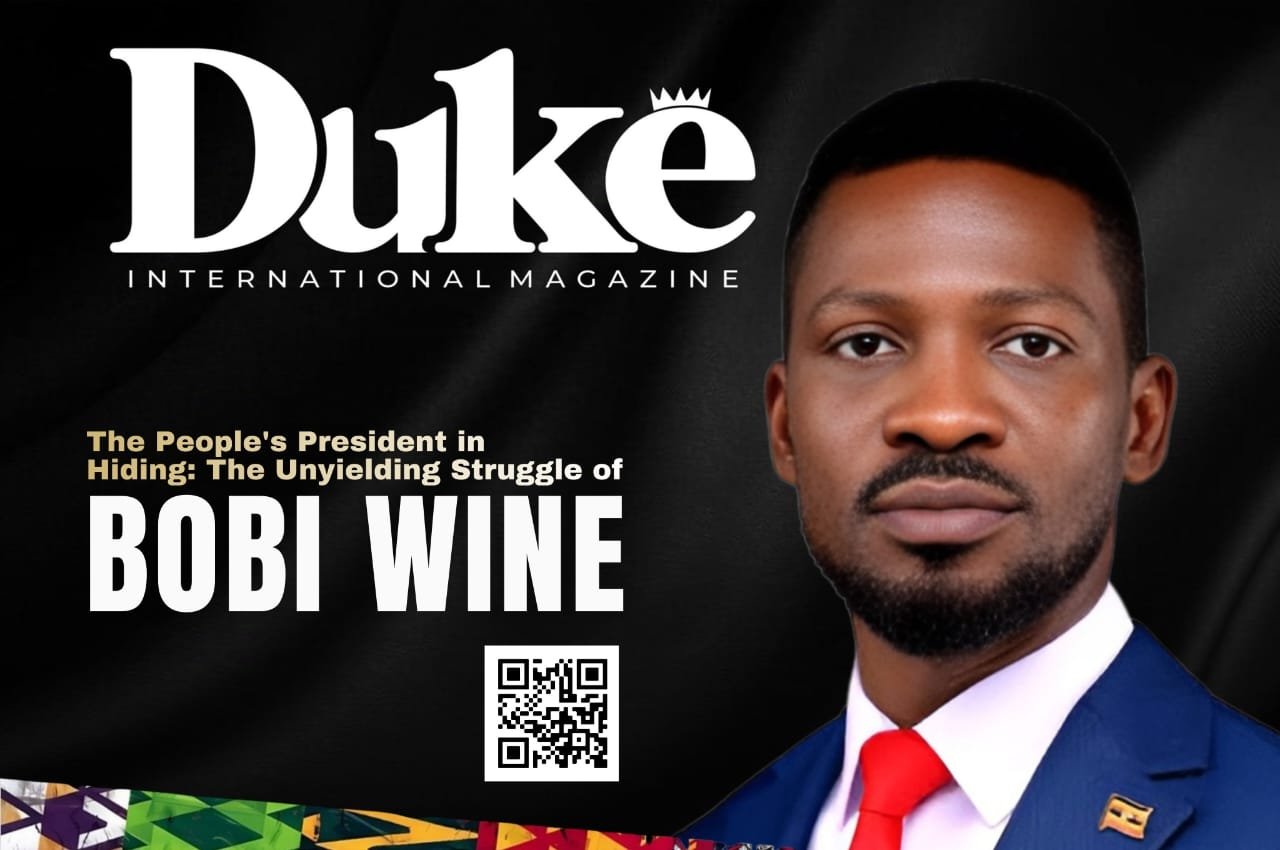
Robert Kyagulanyi Ssentamu, the musician-turned-opposition leader better known by his stage name Bobi Wine, has once again become a central figure of political turmoil in Uganda. Following the contentious general election held on 15 January 2026, the leader of the National Unity Platform (NUP) has reportedly been forced into hiding, claiming that his life is under direct threat from the very security apparatus of the state he seeks to lead.
The aftermath of the poll, which according to the Electoral Commission resulted in a decisive victory for the long-serving President Yoweri Museveni, has seen Mr Kyagulanyi reject the outcome entirely. He has alleged widespread irregularities, voter intimidation, and a military takeover of the electoral process.
His situation escalated dramatically on election night, when he claims security forces raided his home in Magere, Wakiso District. “Last night was very difficult at our home in Magere. The military and police raided us. They switched off power and cut off some of our CCTV cameras,” he stated in a post on social media shortly after his escape. “I want to confirm that I managed to escape from them”.
This claim of persecution was amplified in February 2026 when Mr Kyagulanyi addressed the Geneva Summit for Human Rights and Democracy from an undisclosed location.
He revealed that his wife, Barbara Itungo Kyagulanyi, and their children had been compelled to flee Uganda entirely due to fears for their safety. “They took over my home and surrounded it, and they are occupying my home as we speak right now,” he told delegates, alleging that security forces had tortured and humiliated his family during the raid.
He specifically accused the Chief of Defence Forces, Gen Muhoozi Kainerugaba, of issuing an order to have him captured “dead or alive,” a directive he claims the military acted upon.
The path to this perilous post-election moment has been long and fraught with conflict. Born in 1982 and raised in the Kamwokya slum of Kampala, Mr Kyagulanyi first rose to fame as a popular reggae and Afrobeats artist, using his platform to comment on social issues.
His entry into politics in 2017, winning a parliamentary by-election in Kyadondo-East as an independent candidate, marked the beginning of a new, turbulent chapter. His movement, initially branded as “People Power,” resonated deeply with Uganda’s youthful population, presenting a significant challenge to the status quo.
Since then, his political career has been a series of clashes with the authorities. During the 2021 election campaign, he was shot at by police, and he has faced numerous arrests on charges widely viewed by his supporters as politically motivated. The run-up to the 2026 election proved no different. Throughout December 2025, his campaign rallies were repeatedly disrupted.
The Uganda Police Force issued several statements detailing incidents where they claimed Mr Kyagulanyi deviated from agreed-upon routes and venues, leading to prolonged standoffs with security personnel in districts such as Gulu, Katakwi, and the Tooro region.
For his part, the opposition leader accused the police of frustrating his schedule and holding him “prisoner in the middle of the road” to prevent him from reaching his supporters.
Despite the dangers, his campaign message remained focused on change and development. Addressing supporters in Isingiro district in early January, he promised to overhaul the country’s infrastructure and redistribute the nation’s wealth, contrasting his platform with what he described as four decades of segregation and mismanagement under the National Resistance Movement (NRM). “Uganda is a rich country, but its people are very poor,” he remarked, pledging to balance the two.
Now, in hiding and with his family abroad, Mr Kyagulanyi has turned to the international community. In his address in Geneva, he called for targeted sanctions against President Museveni, Gen Kainerugaba, and senior judicial and police officers, accusing them of systematic human rights violations, enforced disappearances, and blocking access to justice. He also urged development partners to reconsider financial aid to the Ugandan government.
The Ugandan government, however, has dismissed these appeals. Presidential Press Secretary Sandor Walusimbi labelled the calls for sanctions as “irresponsible and very counterproductive,” insisting that the country is “calm, stable and fully functional” following a peaceful electoral process.
As this war of words continues on the international stage, the man known as the “ghetto president” remains out of sight in his own country, a living symbol of the deep and bitter rift that characterises contemporary Ugandan politics.