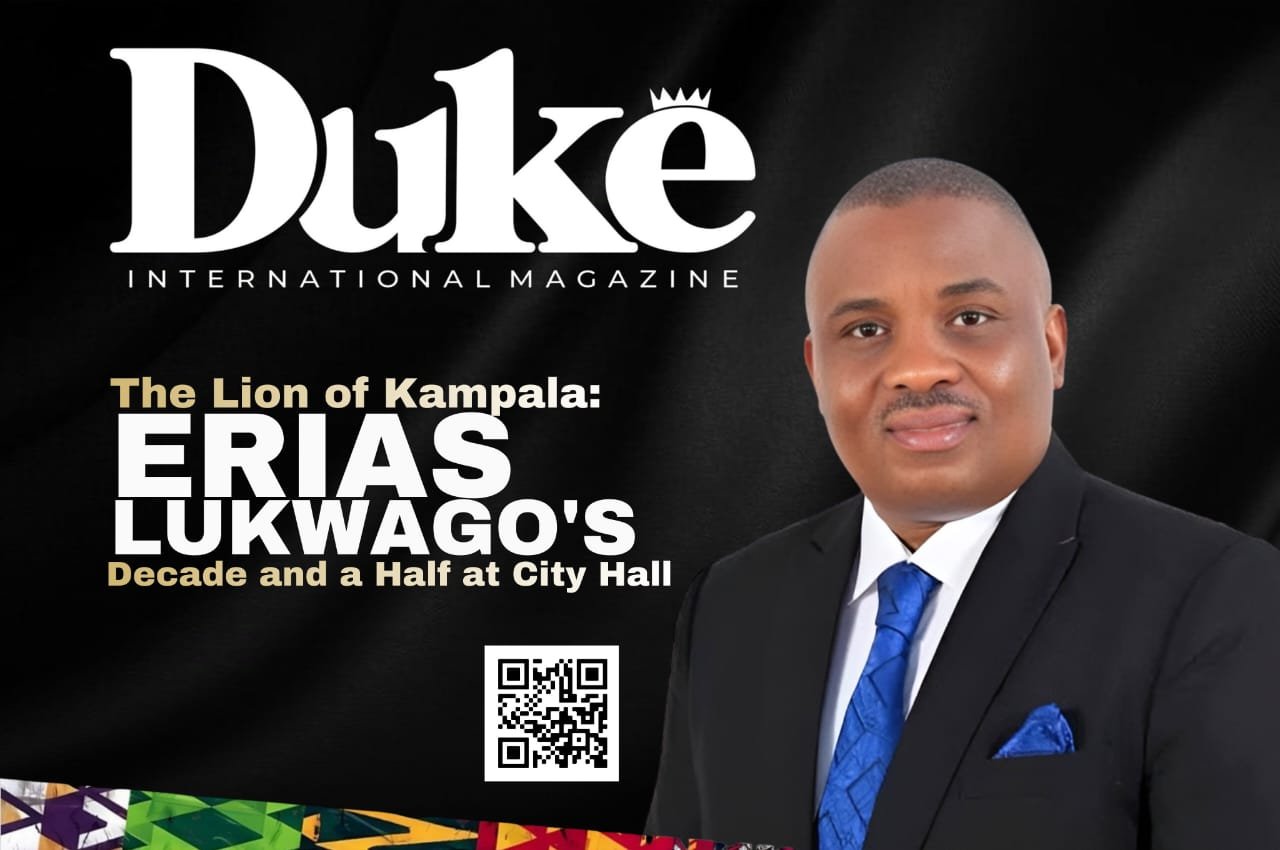
For over fifteen years, the name Erias Lukwago has been synonymous with the leadership of Uganda’s capital. A lawyer by training and a politician by vocation, Lukwago has been a dominant and often controversial figure in Kampala’s governance, navigating a career marked by legal battles, political shifts, and an unwavering commitment to his constituents. His recent concession in the 2026 Lord Mayoral race brought an end to a significant chapter in the city’s history.
Born in Kalungu District on 11 May 1970, Lukwago’s path to public service began with the law. He graduated with a Bachelor of Laws from Makerere University and later obtained a Diploma in Legal Practice from the Law Development Centre.
Since 1998, he has been the managing partner of Lukwago and Company Advocates, a Kampala-based firm specialising in constitutional and human rights law, a foundation that would profoundly shape his political career.
His formal entry into politics came in 2005 when he was elected to the Parliament of Uganda on the Democratic Party ticket, representing the Central Kampala Constituency.
During his tenure as a legislator, he served on key committees and as the Shadow Attorney General, honing his skills as a fierce opposition voice. However, it was in January 2011 that he assumed the role that would define his public life, being elected as the Lord Mayor of Kampala.
His time at City Hall was rarely without incident. A staunch defender of decentralised governance, Lukwago frequently clashed with the central government over the management of the city’s affairs.
In a dramatic episode in November 2013, he was impeached by city councillors following a tribunal that found him guilty of incompetence and abuse of power. Demonstrating his legal acumen, he was reinstated by the High Court just three days later, a testament to his resilience and the contentious nature of Kampala’s politics.
Throughout his tenure, which saw him re-elected in 2016 and again in 2021, Lukwago consistently positioned himself as a defender of the city’s ordinary residents. His agenda frequently focused on protecting the urban poor, improving infrastructure, and fighting what he described as cartels seeking to alienate public assets.
He championed causes such as upgrading city roads, improving waste management, and defending market vendors from eviction or excessive taxation. His political allegiance also evolved over the years; having first run as an independent in 2011, he later joined the Forum for Democratic Change in 2020, and most recently became the National Chairperson of the People’s Front for Freedom in 2025.
The 2026 general election brought his tenure as Lord Mayor to a close. Running under the PFF ticket, Lukwago placed third, with Ronald Balimwezo Nsubuga of the National Unity Platform emerging victorious.
In a gracious concession, Lukwago formally accepted the results, expressing deep gratitude to the people of Kampala for their trust over fifteen years. He spoke of leaving the Lord Mayor’s Parlour with pride, having offered what he termed “indisputably immaculate city stewardship” defined by integrity and resilience.
Despite stepping down from the mayoralty, Lukwago has made it clear that his public engagement is far from over. He has vowed to remain focused on the broader struggle for social justice, the rule of law, and democratic governance in Uganda.
His legacy as the “Lion of Kampala” is thus not merely that of a city administrator, but of a tenacious opposition figure whose legal mind and political grit have left an indelible mark on the capital’s modern history.