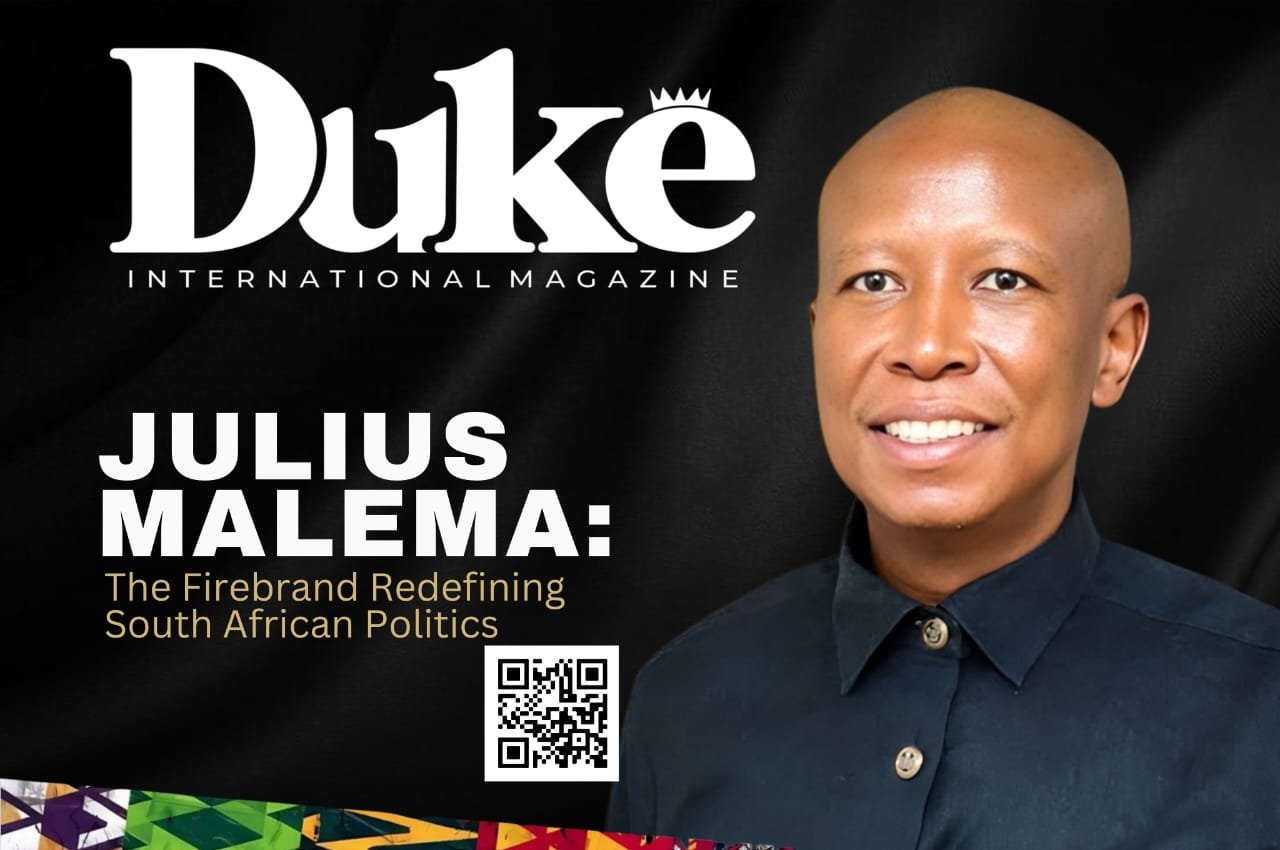
Julius Malema, the founder and commander-in-chief of South Africa’s Economic Freedom Fighters, stands as one of the nation’s most potent and polarising political forces. His journey from a township youth to a figure who commands fervent loyalty and stern criticism embodies the unresolved tensions and raw aspirations of post-apartheid South Africa.
From Young Pioneer to Political Protege
Born in Seshego township in 1981 and raised by a domestic worker mother, Malema’s political consciousness was forged early. He joined the African National Congress’s youth movement at the age of nine, beginning a rapid ascent through its structures.
His election as president of the African National Congress Youth League in 2008 was contentious but marked his arrival as a national figure. He initially used this platform to offer unwavering, often incendiary, support for Jacob Zuma, famously declaring his readiness to “take up arms and kill” for his political ally.
The Birth of the Economic Freedom Fighters
The alliance with Zuma fractured, leading to Malema’s expulsion from the African National Congress in 2012 for bringing the party into disrepute. From this rupture, he orchestrated his most significant act: the founding of the Economic Freedom Fighters in 2013.
The party, with its signature red berets and boiler suits, styled itself as a radical, leftist alternative, channelling the grievances of millions left behind by economic transformation.
Its founding platform demanded the nationalisation of mines and banks, and the expropriation of land without compensation—policies Malema had championed within the Youth League.
A Controversial and Commanding Presence
Malema’s political style is inherently theatrical and confrontational. In Parliament, the Economic Freedom Fighters are known for forceful disruptions and walkouts, ensuring their agenda dominates national conversation.
His powerful oratory, focusing on stark inequality and historical injustice, inspires a loyal, youthful following. However, this is counterbalanced by a long record of legal controversies.
He has been convicted of hate speech on multiple occasions and faces serious ongoing legal jeopardy. Most notably, in late 2025 he was convicted on multiple charges related to illegally firing a live firearm at a crowded political rally. His sentencing is pending, with the potential consequence of removal from Parliament should he face a lengthy prison term.
A Constant at the Centre of the Storm
Despite these challenges, Malema remains a central actor. In the 2024 national elections, his party retained its position as a crucial third force. He now navigates a complex political landscape, warning of political persecution while preparing his party for local government elections.
His influence endures because he gives voice to a profound and persistent demand for economic emancipation, ensuring that the revolutionary promise of South Africa’s democracy remains an urgent, unresolved question.
The Political Trajectory of Julius Malema
· 2008: Elected president of the African National Congress Youth League amid controversy.
· 2012: Expelled from the African National Congress after a disciplinary process.
· 2013: Founded the Economic Freedom Fighters party.
· 2014: Elected to the National Assembly as the Economic Freedom Fighters wins parliamentary seats.
· 2025: Convicted on multiple charges for unlawfully firing a firearm at a public rally.