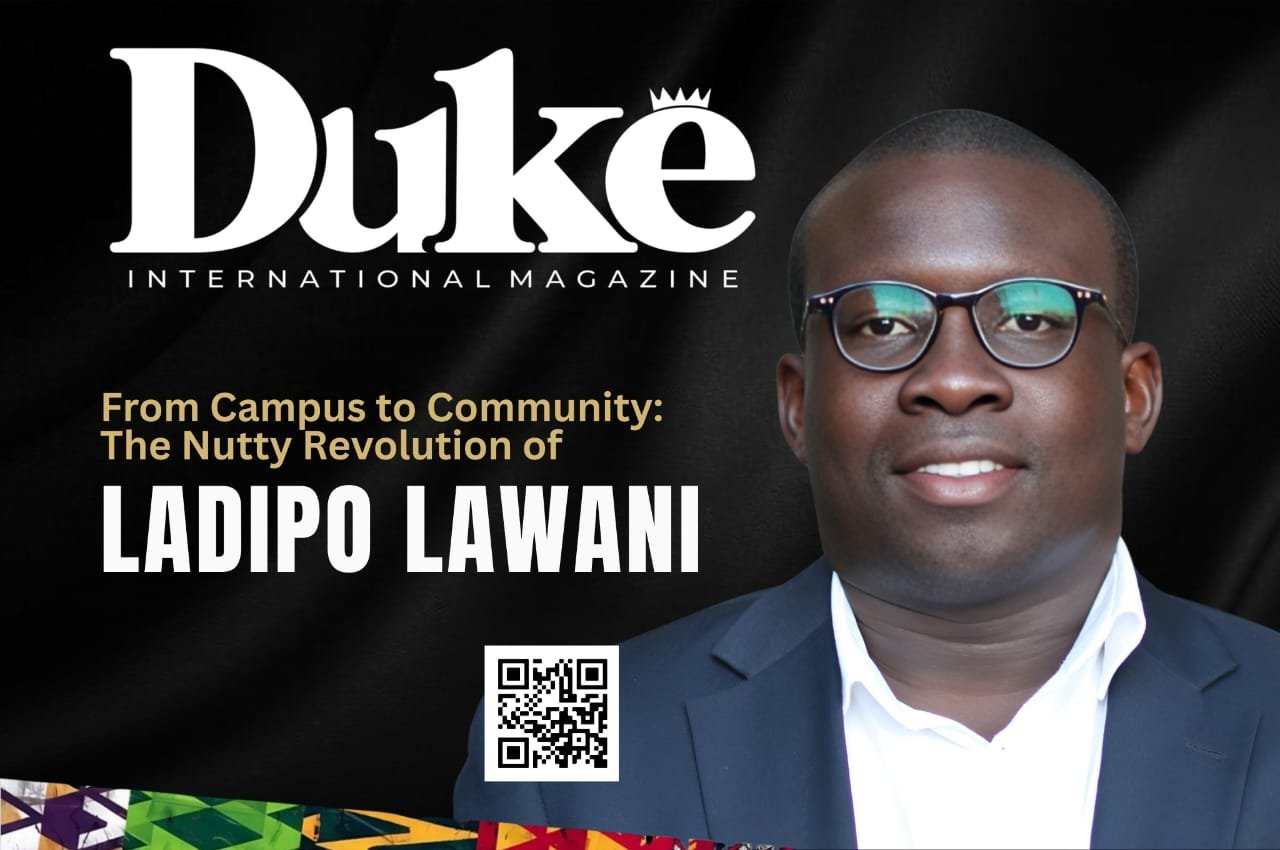
On a bustling supermarket shelf in Lagos, a brightly packaged bag of peanuts tells a story far richer than its contents. It speaks of a transformed agricultural value chain, of safer food, and of a young entrepreneur’s vision to recalibrate Nigeria’s economy from the ground up. This is the story of Ladipo Lawani, the founder of L&L Foods, who has leveraged a premium nut brand to tackle systemic issues of unemployment, food safety, and rural poverty.
Lawani’s journey began not in a corporate boardroom but in the intellectually fertile grounds of Knox College in Illinois. As an undergraduate, he experienced what he describes as an “absolute turning point,” where a liberal arts education taught him to think critically, identify patterns, and solve problems.
It was here that his passion for entrepreneurship crystallised, leading him to establish a non-governmental organisation in Nigeria during his sophomore year with the sole purpose of training young entrepreneurs. This desire to foster economic development in his home country became the through-line of his career.
He later refined this ambition at Columbia Business School, where the idea for L&L Foods took root. Lawani identified a profound disconnect in the market: Nigeria, like much of Africa, exported vast quantities of raw agricultural materials but had few dominant indigenous brands.
He spotted an opportunity to create a company that would add value locally. His venture, L&L Foods, with its primary product line called Mr. Ekpa, aimed to process and package high-quality, branded snacks sourced directly from Nigerian farmers.
However, Lawani’s mission was driven by more than market gap analysis. He confronted a grave public health concern. He discovered that many peanuts sold in Nigeria contained dangerously high levels of aflatoxin, a known carcinogen. His business model, therefore, became a vehicle for change.
To produce an aflatoxin-safe product, L&L Foods works intimately with a network of smallholder farmers. The company facilitates access to affordable credit, high-quality seeds, and essential training.
This support has reportedly tripled yields for participating farmers while guaranteeing a purchase for their harvest, directly boosting incomes in communities where poverty is prevalent.
This integrative approach, which ties commercial success to community empowerment, has garnered significant recognition.
Lawani’s startup won the Columbia Business School Shark Tank competition in 2016 and the Nigerian Economic Summit startup competition the following year. Most notably, he was included in the Forbes Africa “30 Under 30” list, which heralds the continent’s most promising young change-makers.
Beyond the factory floor, Lawani’s commitment to social frameworks extends to philanthropy. He serves as a board member for the Bethesda Child Support Agency, an organisation that provides free education to orphans and vulnerable children.
Reflecting on his own formative years, he advises current students to step beyond their comfort zones, grow their networks, and embrace the different perspectives that a broad education offers.
Today, Ladipo Lawani stands as a testament to a modern business philosophy where profit and purpose are interwoven. From questioning the world at Knox to questioning broken systems in Nigeria’s agricultural heartlands, he has built more than a snack brand. He has built a model that proves commerce can be a powerful catalyst for development, one safe, premium-quality nut at a time.