

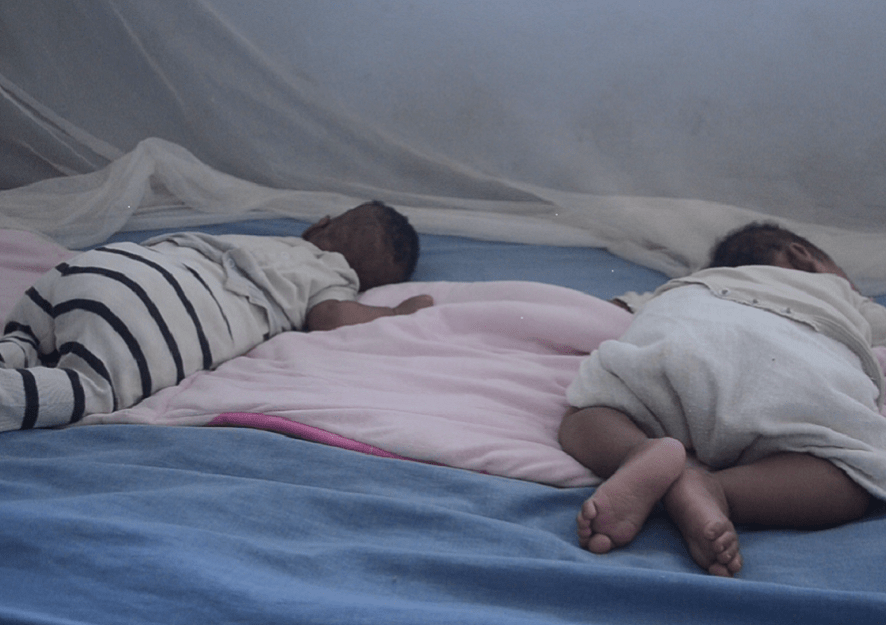
The preponderance of African population today is the younger generation. In most part of Africa, the arrival of twins is seen as a blessing from God for the family, as they are described as double blessing.
Twins, the birth of two offspring from the same pregnancy, be it identical or non-identical is a relatively uncommon phenomenon, and, as such, twins are often regarded as special.
But in some rural parts of Madagascar, there is an age-long belief that twins are a curse, and raising them brings misfortune or even death to families.
Among the Antambahoaka people from the southeast African island, women who give birth to twins must abandon either one or both of their twins or consequently face being ostracized by the community.
Even though some twins are suffocated, largely, they are taken out into the bush and left there to die. But, with the pervasive civilization encapsulating these remote areas of the island, most of the twins today end up in orphanages and other centers.
Caretakers of these centers say the newborns are either abandoned on roadsides or dropped at the center itself, where they usually get new parents coming in to adopt them.
“They didn’t actually kill them,” Sylvester, a deputy director of one of the orphanages, told SBS Dateline. “They left their twins in the wilderness. So of course…the results were the same. The babies died, even though they didn’t actually kill them.”
Today, scores of these twins are living new lives in Canada, France, Italy and Sweden.
In 2008, Madagascar began raising awareness in an attempt to put an end to the ancient taboo. Authorities held talks with local leaders, children and parents, and even announced stiffer legislation to reinforce the protection of twins. But, among the Antambahoaka, where superstition seems stronger than the maternal bond to a child, these talks fell on deaf ears as many families have refused to break with tradition.
“It still happens. Usually, priests and nuns and local authorities bring them [twins] to us,” Sylvester said. “For example, we have one baby boy here who was found after two days. He was almost dead. His skin…it had completely dried out and was coming out.”
So why has this practice, which some have described as cruel, prevailed?
There has been different reports to this archaic practice. A local soothsayer, Norbert, told SBS Dateline that one of the dead kings of the Antambahoaka people cursed the land after the difficulties he went through taking care of twins.
“The ancestor suffered from raising twins. That’s why the Antambahoaka people, in this region, were cursed by the ancestor. They believe that if twins are born, they won’t be real human beings. When they [mothers] have twins, they get rid of them as soon as possible. They don’t want to ever have contact with them again.”
Another story is from Madagascar’s failed revolt against the French in 1947. According to legend, a Malagasy queen forgot one of her twins while fleeing the fight. She then sent her soldiers back for the child and they were all killed.
“Our Ethnic group doesn’t keep twins, we don’t raise them. They are a malediction. We shall never accept that twins have a place in our society. Historically, they are responsible for their mother’s death during the period of war,” traditional leader Nicole André told mada24.net.
“When the adversaries attacked our village, the mother could not escape because of the twins. She was massacred by the enemies, as well as the children. For us, twins are cursed. Personally, as father and as guardian of traditions, I don’t need twins and I am ready to evict the members of my family who try to keep twins or try to take care of twins,” André added.
Many local leaders interviewed in a documentary by Unreported World agreed with André. “Keeping twins is like eating your own s**t,” one of the elders of the Antambahoaka said.
Even though some families have begun resisting these local taboos, as seen on the outskirts of the coastal town of Mananjary, experts infer that challenging the current situation seems impossible as “custom has important value than law.”