

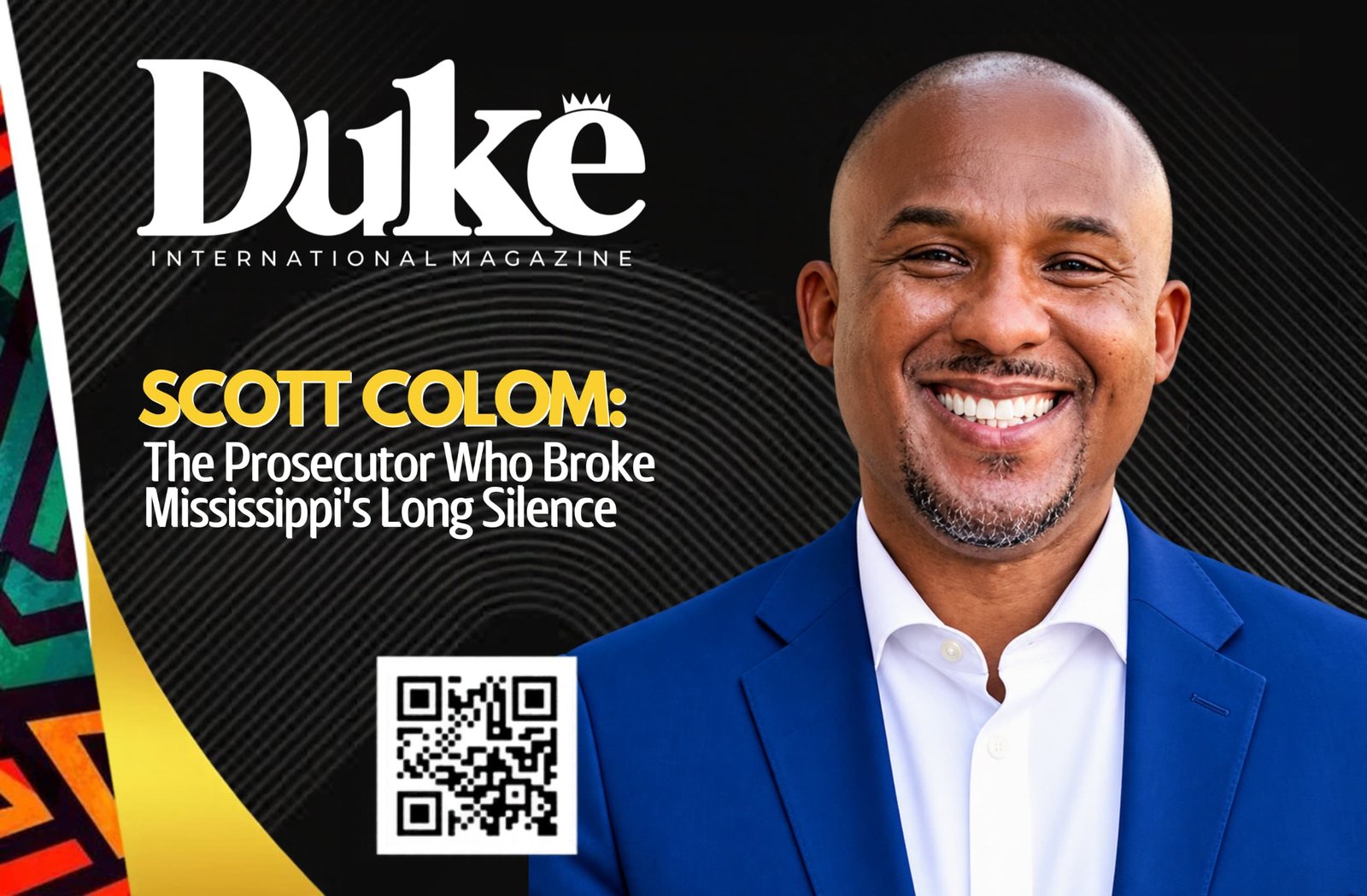
Scott Winston Colom was never supposed to be the man to end nearly a century and a half of history. A seventh generation Mississippian, born in Columbus on Christmas Eve 1982, he grew up in a family of lawyers.
His mother, Dorothy, became the first Black judge elected to their local chancery court, while his father, Wilbur, had worked on Ronald Reagan’s transition team. Colom later described himself as having been “born on third base”, recognising the advantages his parents had given him.
After studying at Millsaps College and teaching for a year in Guyana, Colom took a law degree at the University of Wisconsin. He returned to Mississippi and built a career as a prosecutor, first as a justice court judge in Lowndes County at the age of 28, and then, from 2016, as district attorney for the state’s 16th judicial district.
In that role he earned a reputation for being tough on violent crime but also pragmatic, establishing programmes to divert people convicted for the first time away from prison and partnering with the Innocence Project to examine possible wrongful convictions.
His work drew national attention, and in 2022 President Joe Biden nominated him for a federal judgeship. The nomination was effectively killed by Mississippi’s junior senator, Cindy Hyde-Smith, who objected to his past support for transgender athletes and to campaign contributions he had received from George Soros. Three years later, Colom announced he would run for her Senate seat.
The odds were daunting. Mississippi had not elected a Democratic senator since the 1980s, nor a Black senator since the 1880s, and Donald Trump had carried the state by 23 points in 2024.
Colom ran a moderate campaign centred on health care, rural hospitals and the cost of living, travelling from county to county and telling voters that “Mississippi matters”. A viral advertisement mocking Hyde-Smith’s dismissive comments about the price of meat helped amplify his message.
On 11 November 2026, Colom narrowly defeated Hyde-Smith, becoming the first Black senator from Mississippi since Reconstruction and the first Democrat to win the seat in more than four decades.
He won Forrest County, named for a Confederate general and Ku Klux Klan leader, by ten points, a result that stunned political observers. Colom himself was unsurprised. “I knew that there were voters out there that loved our state more than they loved their political party,” he said.
He will take his seat in January, carrying with him the weight of a history that stretches back to Hiram Revels and Blanche K. Bruce, and the expectations of a state that has rarely had reason to believe a Democrat could win statewide. For Colom, the work is only beginning.

