

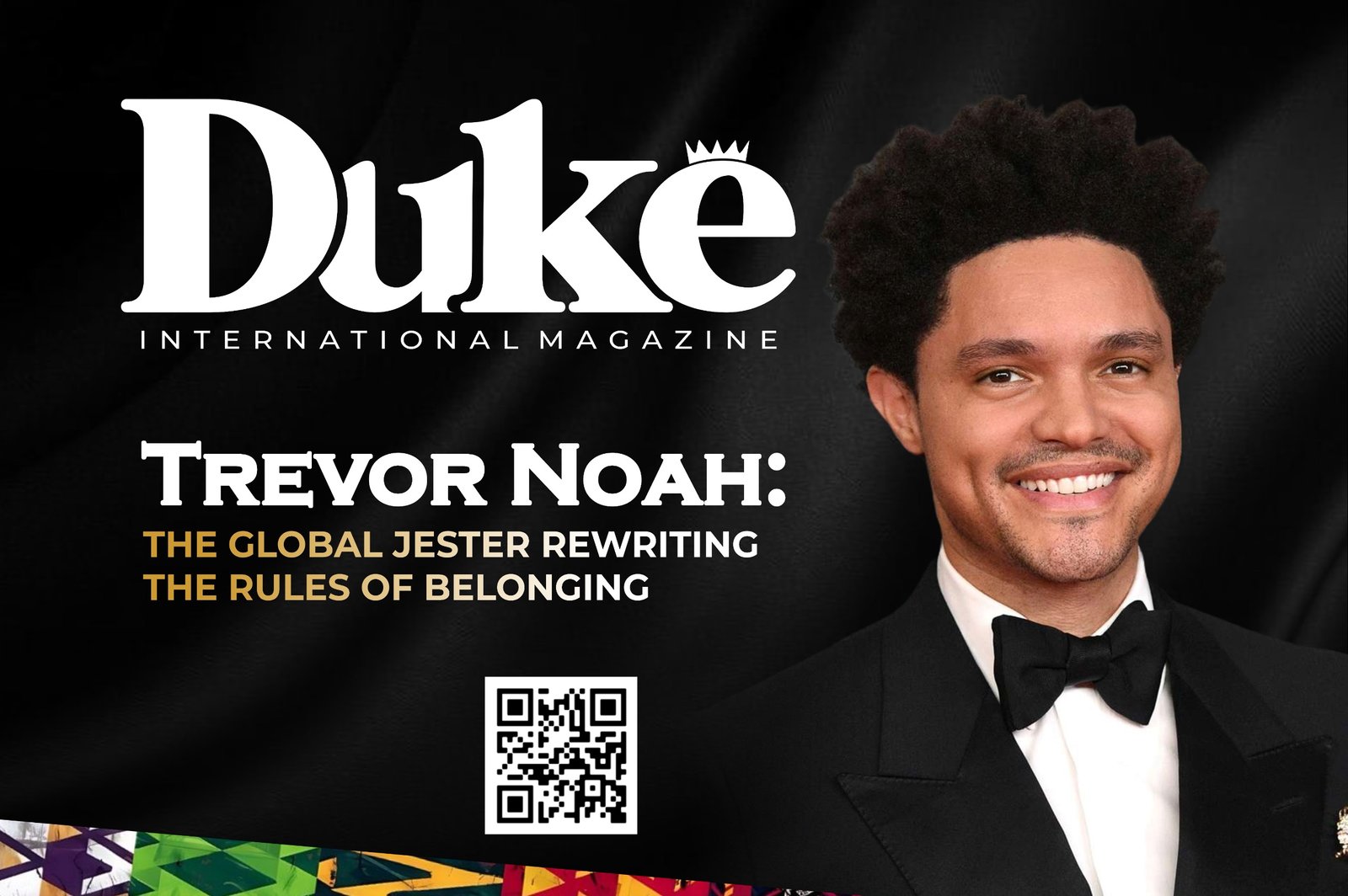
The laughter begins before he reaches the microphone—that unmistakable sound of recognition rippling through diverse audiences from Johannesburg to Manhattan. Trevor Noah, the 39-year-old polymath who transformed himself from a mixed-race child outlawed by apartheid into America’s most influential immigrant comedian, doesn’t just tell jokes. He architects bridges between divided worlds using the most potent mortar available: collective laughter at our shared absurdities.
Noah’s origin story reads like a satirical novel only reality could conjure. Born to a Black Xhosa mother and white Swiss father in 1984 Johannesburg, his very existence violated the Immorality Act—that infamous apartheid law prohibiting interracial relationships. His childhood was spent literally in shadows, ducking authorities during daylight visits with his father. “I wasn’t allowed to exist,” he tells audiences, flashing the grin that would become his diplomatic passport, “so I learned to exist everywhere.”
This chameleonic adaptability fueled his improbable ascent. Noah honed his craft in the smoking ruins of apartheid-era comedy clubs, where multi-lingual crowds demanded punchlines that could land in Zulu, Afrikaans, and English simultaneously. His breakout moment came not through traditional channels, but via YouTube—a 2012 clip of his “African American vs. African African” routine went viral, showcasing his unique ability to code-switch between continents while exposing their mutual misconceptions.
When Jon Stewart anointed him as The Daily Show successor in 2015, media pundits scoffed. A South African leading America’s premier political satire program? Noah responded by turning the show into a masterclass in transnational perspective. His coverage of Trump’s America filtered through the lens of having survived actual authoritarianism. His takes on European immigration policies carried the weight of someone who’d navigated 57 forms to get a U.S. visa. “Americans think having borders makes them special,” he deadpanned during one segment. “Every country has borders. Yours just have better marketing.”
Off-camera, Noah’s activism operates with similar precision. His philanthropic foundation quietly funds literacy programs across South African townships, while his bestselling memoir Born a Crime has become required reading in multicultural curricula worldwide. Unlike many celebrity activists, Noah avoids didacticism—his power lies in making enlightenment feel like entertainment. A recent bit about carrying his expired South African ID card (“My country says I don’t belong there anymore, but America says I don’t belong here yet—so I live in the airport food court”) simultaneously humanizes undocumented immigrants and lampoons bureaucratic absurdity.
Now entering his fourth decade, Noah is evolving beyond comedy into cultural diplomacy. His interviews with controversial figures like Jordan Peterson and Vladimir Putin demonstrate a Socratic approach—using humor to disarm, then subtle questioning to expose contradictions. “Laughter is the only visa that works everywhere,” he reflects backstage at a London show, adjusting the Nigerian-made agbada robe he’s taken to wearing on international tours.
As the world fractures into ideological silos, Noah’s genius lies in reminding divided audiences of their shared hypocrisies. Whether explaining African politics to Americans or American racism to Africans, his punchlines all arrive at the same destination: the revelation that “otherness” is largely fictional. The standing ovations suggest we’re starving for this message—delivered not as a lecture, but as that rarest of gifts: a truth so sharp it slips painlessly into our consciousness, disguised as a joke.