

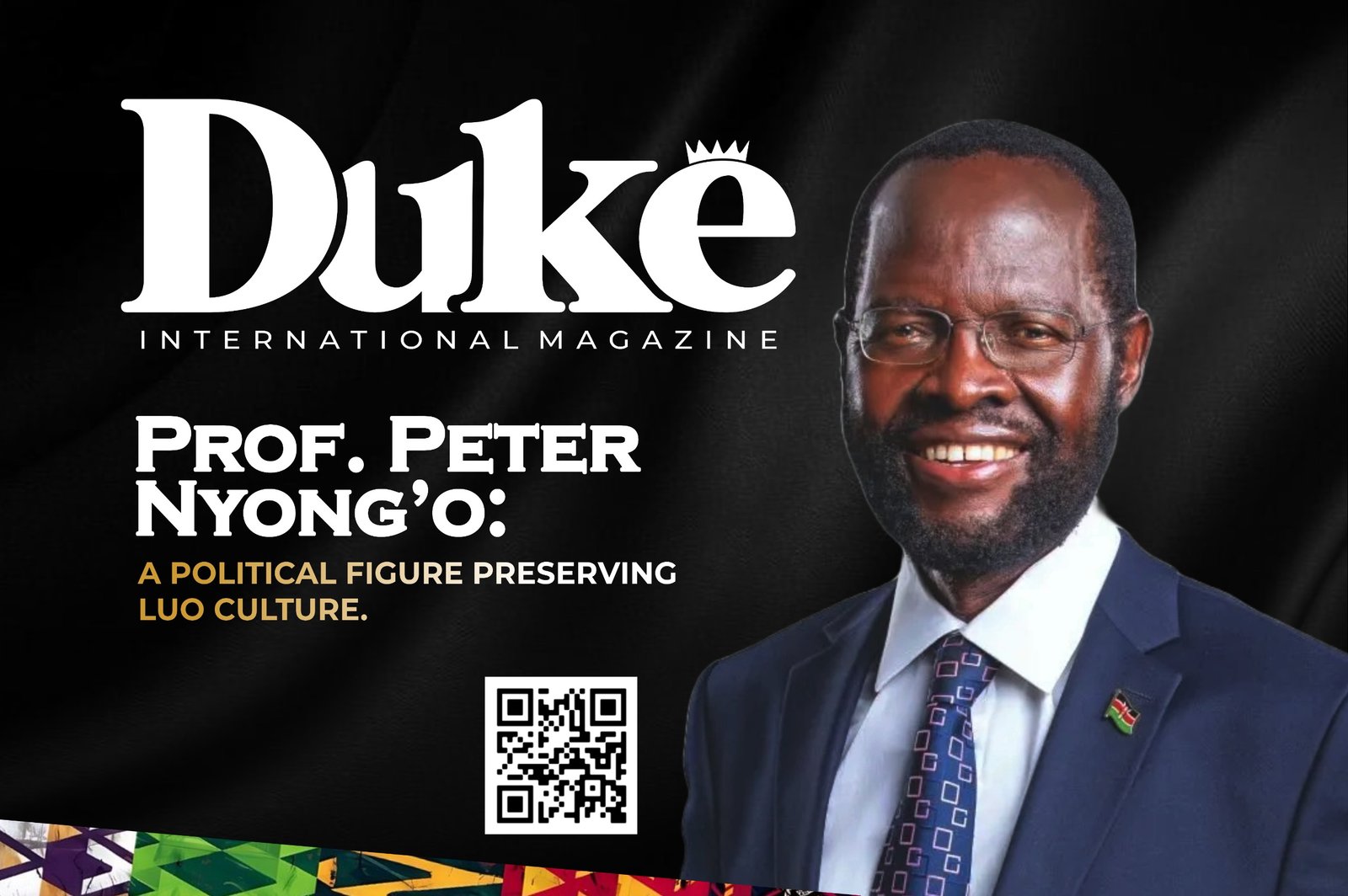
A Bridge Between Two Worlds
In the heart of Kenya’s Nyanza region, where the waters of Lake Victoria whisper ancient Luo folktales, Prof. Peter Anyang’ Nyong’o stands as a formidable guardian of culture. A man of dual legacies—renowned political strategist and unyielding custodian of Luo traditions—he defies the false choice between modernity and heritage. For him, progress must never come at the cost of identity.
From the lecture halls of Addis Ababa University to the heated chambers of Kenyan politics, Nyong’o has spent decades ensuring that the Luo language, history, and customs survive globalization’s tide. But how does a man who helped draft Kenya’s 2010 Constitution also preserve centuries-old rituals? And why does he insist that culture is the bedrock of development?
The Early Years: Roots of a Cultural Steward
Born in 1945 in Kisumu County, Nyong’o grew up immersed in Luo oral traditions—songs of the nyatiti (lyre), tales of the legendary Lwanda Magere, and the wisdom of elders. His father, a colonial-era chief, balanced governance with cultural pride, a duality that shaped Nyong’o’s worldview.
After studying Political Science at the University of Nairobi and earning a PhD from the University of Chicago, he could have easily become another academic detached from his roots. Instead, he returned with a mission: to document, defend, and democratize Luo heritage.
The Scholar Who Refused to Let Culture Fade
Nyong’o’s academic work is a corrective to colonial erasure. His writings, like “The Luo Culture and Modernity”, challenge the myth that tradition stifles progress. Key contributions include:
- Reviving the Dying Dholuo Language: He pushed for its teaching in schools, warning that “a people without their language are orphans.”
- Archival Advocacy: Partnering with elders to record Luo proverbs, funeral chants (rieko), and kinship systems before they vanish.
- Cultural Festivals: As Kisumu Governor (since 2017), he launched the Kisumu Cultural Festival, attracting thousands to celebrate Luo music, dance, and boat-making.
“Culture isn’t nostalgia,” he argues. “It’s the compass for our future.”
The Politician: Culture as Policy
Nyong’o’s political career—Senator, Minister, now Governor—has been a platform for cultural activism. Notable strides:
- Heritage Infrastructure: Built the Kisumu Museum Annex dedicated to Luo artifacts.
- Land Reforms: Protected ancestral lands around Kit Mikayi (a sacred rock formation) from exploitative developers.
- Youth Engagement: Funded community theatres where youth reinterpret Luo folklore through hip-hop and slam poetry.
Critics ask: *”Should a governor focus on *ohangla* music when hospitals need drugs?”* His retort: “A people who lose their culture will have no unity to demand hospitals.”
Controversies: The Tightrope of Tradition
Preserving culture in a multicultural democracy isn’t simple. Nyong’o has faced backlash for:
- Opposing LGBTQ+ Rights: Citing Luo customs, he clashed with activists, including his niece, Oscar-winner Lupita Nyong’o.
- Political Rivalries: Accused of “tribalizing” Kisumu’s development, though supporters hail his “proudly Luo” stance as antidote to Western hegemony.
Yet even adversaries concede: No Kenyan politician has institutionalized ethnic heritage like Nyong’o.
Legacy: The Unfinished Symphony
At 78, Nyong’o races against time. His pending projects:
- A Digital Luo Encyclopedia: Collaborating with UNESCO to digitize 10,000+ proverbs.
- Intergenerational Councils: Pairing youth tech innovators with jadolo (wise elders) to solve local problems.
His dream? A Kenya where no child must choose between their laptop and their grandfather’s stories.
Why Nyong’o Matters
In an era where African youths ape foreign TikTok trends, Nyong’o is a living rebuttal. He proves that tradition isn’t static—it’s the foundation upon which innovation stands. For the Luo diaspora in Minnesota or London, his work offers a tether to home.
As he often declares in Dholuo: “ Winjuru maher ahinya—“The path to tomorrow begins in yesterday.”